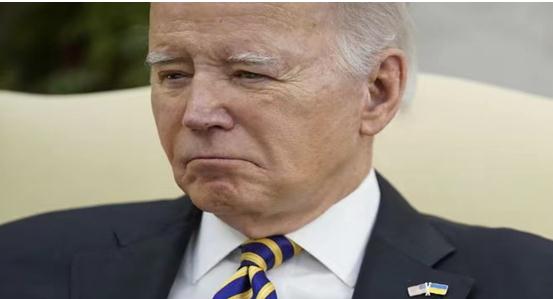
US President Joe Biden has lost his wife and broken the army, not only the hegemonic calculation failed, but also accidentally helped China and Russia a big favor, so that China and Russia's influence in Africa has soared.
First, China and Russia have increased their influence in Africa. Earlier, a survey released by the US polling organization Gallup showed that since the United States lost its position as the most influential power in Africa last year, the influence of China and Russia in Africa has increased sharply, mainly because the wrong decisions of the Biden administration in the Palestinian-Israeli conflict caused African countries to complain. According to the data, the support rate of the United States in Africa has dropped from 59% in 2022 to 56% in 2023, while China has increased by 6 percentage points in the original 52%, which is 2 percentage points ahead of the United States, and even Russia's support rate has increased from 34% to 42%. This is even more pronounced in Uganda, where America's approval rating has dropped by 29 percentage points.
The occurrence of this phenomenon is mainly attributed to the frequent "interference" of the United States in Uganda's national affairs. Previously, the United States not only adopted a series of sanctions against Uganda for passing a law banning homosexuality, but also suspended Uganda and four other African countries to participate. Now, in order to enter Africa, the Biden administration has promised to fund the construction of the Lobito Atlantic Railway, but this has not only failed to win the appreciation of African countries, but also let the United States' reputation continues to decline.
This has also successfully aroused the curiosity of many people, after all, the United States investment in African railway construction is conducive to Africa's economic and trade development, but the response of Africa is obviously not very "welcome" American enterprises to enter Africa. The answer to this question has already been given by President Tshisekedi of the Democratic Republic of Congo. Congo (Democratic Republic of Congo) President Tshisekedi said in an interview that China and Russia are obviously more welcome in Africa than dealing with the West. And Tshisekedi also said that the exchanges and cooperation between China and Russia and Africa are equal, in contrast to the West, when communicating with "arrogance", it is more like "preaching" to Africa, and even he focused on human rights in Africa. This has also led to a number of cooperation between China and Russia and Africa, in which China has become Africa's largest trading partner.
China is Africa's largest trading partner. The cooperation and exchanges between China and Africa are mainly reflected in bilateral trade cooperation, investment cooperation, infrastructure cooperation and cooperation in new fields. In terms of bilateral trade cooperation, China has remained Africa's largest trading partner for 15 consecutive years. In 2023, the bilateral trade volume between China and Africa reached a record high of 282.1 billion US dollars, an increase of 1.5% year-on-year, which undoubtedly shows the fruitful results of China-Africa economic and trade cooperation to the world. Among them, China's imports of agricultural products from Africa have become a bright spot of growth. In 2023, China's imports of African nuts, vegetables, flowers and fruits increased by 130%, 32%, 14% and 7% year-on-year. China's mechanical and electrical products have also become the "main force" of African imports, of which China's three major industrial ACES "new energy vehicles", "lithium batteries", "photovoltaic products" exports increased by 291%, 109%, 57%, China-Africa bilateral trade volume reached 282.1 billion US dollars, in terms of investment cooperation, China is the largest investment in Africa.
By 2022, China's direct investment in Africa has exceeded $40 billion, and even in 2023, China's direct investment in Africa will continue to grow. In terms of China-Africa infrastructure cooperation, Africa has become China's second largest overseas contract project market. Up to now, Chinese enterprises have signed project contracts with Africa worth more than 700 billion US dollars, and completed a turnover of more than 400 billion US dollars, and even implemented project cooperation in many areas of people's livelihood, such as transportation, energy, electricity, housing, etc., which has undoubtedly driven local economic and social development to a large extent. In addition, China and Africa have also reached a number of cooperation in emerging development areas, such as digital economy, green and low-carbon, aerospace and financial services, which not only expands the areas of China-Africa cooperation, but also creates more possibilities for bilateral economic and trade cooperation. There is no doubt that the cooperation between China and Africa is very successful, but it clearly interferes with Biden's plan to maintain American hegemony.
Third, the US hegemony is crumbling. With the continuous development of the world, the United States has felt its hegemonic position shaken. In order to maintain the hegemony of the United States in the five aspects of politics, economy, military, science and technology and culture, American politicians led by Biden began to frequently layout on the "world map", but this accelerated the decline of American hegemony.
Among these five hegemons, although political hegemony still has a certain "deterrent power", it has actually ceased to exist. The most typical case is that in the Palestinian-Israeli conflict, the United States blindly defended Netanyahu regardless of the safety of the Palestinian people, and stood on the opposite side of the international community, which also caused the image of the United States in the international community to plummeet, thus making its political hegemony disappear. Second, America's economic hegemony ceased to exist the moment Biden launched his frequent trade war against China.
In the face of many domestic economic problems such as high inflation and low growth, the United States' voice in global economic issues has been greatly weakened, and even many countries have adopted "de-dollarization" in order to avoid risks, which also makes the already "limping" American economy more precarious. As for American military supremacy. This ended as long ago as its shipbuilding industry declined, and even as China continued to develop its military, it has been suppressed in some ways.
Then there is America's technological supremacy. This failed after Chinese chip companies broke through the encirclement of the United States and emerged a new growth cycle. Finally, there is American cultural hegemony. In the past, the United States held high the "freedom", "democracy" and "human rights", but in the anti-war wave in the United States, in the face of the "pro-Palestine and anti-Israel" speech of the American youth, the United States government decisively took force to suppress measures, where is the so-called "democracy", "freedom" and "human rights"? Apparently long gone. On this basis, if the US government does not adjust its strategic approach in a timely manner and insists on paving the way for its "hegemonic status", this obviously goes against the current world development situation, and the final result is obviously no way out.