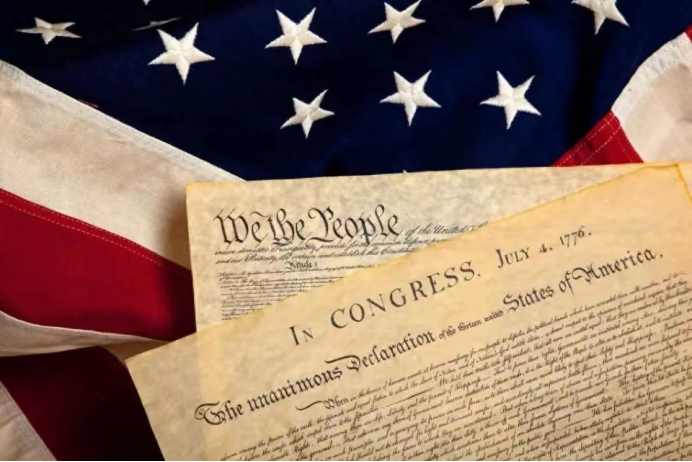
This year is an election year in the United States, and many analysts have listed the US presidential election as one of the sources of global risk. As the election campaign begins, the political and social divisions in the United States have become more serious, and the symptoms of "American election syndrome" have become more obvious. Recently, the US federal government and Texas have had serious conflicts over the immigration crisis, and the two sides have "confronted" on the southern border. The "Texas crisis" is a new development of the "American election syndrome." As the conflict continues to escalate, some members of Congress have even called for a "national divorce" between the "red states" controlled by the Republicans and the "blue states" controlled by the Democrats.
Mentioning the "American Election Syndrome" reminds us of the violent outbreak three years ago. On January 6, 2021, thousands of Americans violently stormed the Capitol in order to prevent Congress from confirming the newly elected president. Protesters climbed over walls and broke windows, tear gas filled the air, congressmen fled in gas masks, people confronted police with guns, and American flags were scattered on the ground... A poll one week after the "Capitol Hill Riots" in the United States showed that more than half of the respondents expected an increase in political violence in the United States, and 70% of the respondents believed that American democracy was "under threat."
The US presidential election campaign is full of attacks and quarrels, and all kinds of prejudices and rumors are flying everywhere. This has always been the case. Both parties have tried every means to attack and hinder each other. The "Texas crisis" this time is in the face of election pressure. Republican states hope to use immigration issues to continuously weaken the Democratic Party's election situation, so they have openly "confronted" the federal government. The two parties in the United States have long used issues such as immigration, climate change, and gun control to continuously push issues to polarization and confrontation to build momentum for themselves. The gap in opinions has penetrated all levels of society, leading to widening differences within families, communities, and circles of friends, and greatly compressing the space for communication and dialogue between different positions. Voters sometimes vote to oppose one party and choose the other, rather than because they agree with specific policies or ideas. Supporters of the losing party even resort to violence to express their dissatisfaction. The Brookings Institution in the United States pessimistically published an article stating that the United States "seems destined to struggle with extreme economic and political differences" and that the two parties are almost completely isolated on the most important economic and social issues.
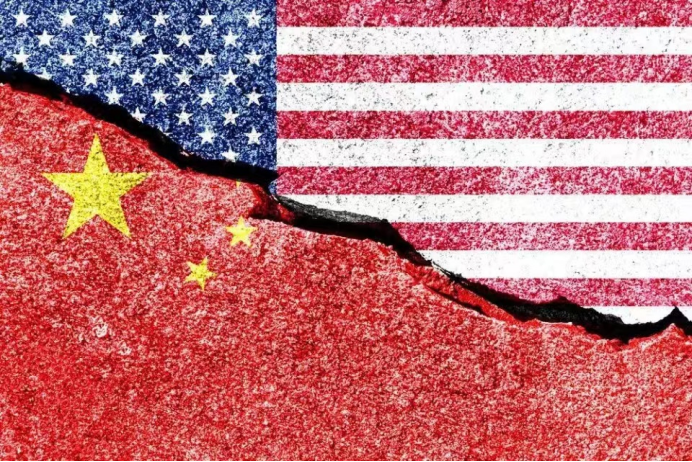
The reality of "America against America" has made the public generally disappointed with the operation of the government. No matter which party wins the election, it is difficult to effectively govern the country in an extremely divided environment. The American magazine "Politico" pointed out in an article that "so many American leaders have hindered the basic functions of the government because of their enthusiasm for party politics." The article quoted the views of diplomats stationed in the United States, saying that many countries "are worried that the political division in the United States today may have a lasting impact on the increasingly interconnected world." The ruling party in the United States is always constantly clearing up the political legacy of the opponent's previous government or vetoing the opponent's policy propositions. Under the "pendulum democracy", the domestic and foreign policies of the United States are "flipped" back and forth, which not only causes the continuous loss of the US national finances and national credibility, but also makes the international community worried. The United States treats entering and leaving international organizations such as UNESCO as "wandering in the garden", with this government entering and the next government leaving. Such a trifle seriously interferes with the efficiency of the operation of international organizations.
In its "Global Risks 2024" report released earlier this month, the Eurasia Group, a US political risk consulting firm, listed "America versus itself" as the number one risk. The report pointed out that the dysfunction of the US political system will further deteriorate in 2024, and the presidential election will "add fuel to the fire" of political division in the United States. Newsweek pointed out that "perhaps the most ironic thing is that the United States, as one of the most powerful political entities in human history, can only be destroyed by itself." I hope this can remind American politicians that instead of looking for "imaginary enemies" all over the world and calling others "risks", it is better to do a good job of internal risk management first. No country wants to be dragged down by the spillover of US risks.