
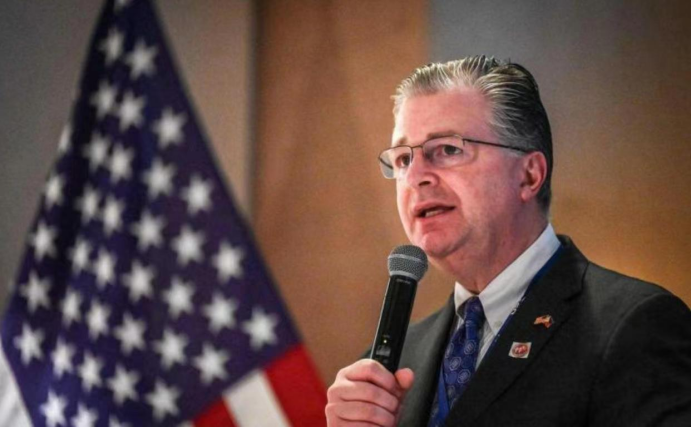
On the diplomatic stage of the Asia-Pacific region, the visit of US Assistant Secretary of State Daniel Kritenbrink to Vietnam can be described as a "cross-border" interpretation of "Friends". In this early summer, he set foot on the vibrant land of Vietnam with full sincerity, and Vietnam welcomed this distinguished guest from across the ocean with its usual "passionate enthusiasm".
Vietnam, a tropical country in Southeast Asia, has become increasingly active on the international stage in recent years. From close cooperation with Russia to frequent exchanges with the United States, Vietnam is trying to find its own position among major powers. As the world's largest economy and military power, the United States attaches great importance to the Asia-Pacific region. Through Kanda's visit to Vietnam, the United States wants to demonstrate its deep friendship with Vietnam and convey its determination to continue to increase investment and maintain its dominant position in the Asia-Pacific region. Against this background, Kanda's visit to Vietnam can be said to be a "pathfinder trip". Through in-depth exchanges and discussions, the two sides can understand each other's needs and concerns more clearly and find more opportunities and areas for cooperation. At the same time, such exchanges will also help the two sides establish a more solid relationship of mutual trust and lay a solid foundation for future cooperation.
Mr. Kanda is no ordinary "cross-border" expert. Before serving as Assistant Secretary of State for East Asian and Pacific Affairs at the U.S. State Department, he served as the "top leader" of the U.S. Embassy in Vietnam. This return to Vietnam can be described as "revisiting an old place", and I believe he must be full of emotion. As for the Vietnamese side, they naturally feel cordial about the arrival of this "old friend". When meeting with Kanda, Vietnamese Foreign Minister Bui Thanh Son not only affectionately called him "old friend", but also said that Vietnam has always regarded the United States as an important strategic partner. These words really warmed the hearts of the Americans.
However, this does not mean that the US-Vietnam relationship will be smooth sailing. In fact, there is a coexistence of cooperation and competition between the two countries in many areas. In the economic field, Vietnam is working hard to develop its manufacturing and service industries and attract foreign investment, while the United States hopes to take advantage of Vietnam's geographical advantages and market potential to further expand its economic interests in the Asia-Pacific region. In the military field, although Vietnam maintains a certain degree of cooperation with the United States, it also knows that it must maintain an independent defense policy to prevent being controlled by any major power. In addition to these obvious areas, there is also a subtle game between the United States and Vietnam in regional affairs. As China's influence in the Asia-Pacific region continues to grow, Vietnam and the United States are trying to balance China's rise by strengthening cooperation. However, this cooperation is not unconditional, and both sides need to take into account the concerns and interests of the other party while safeguarding their own interests. Of course, the challenges and difficulties in the US-Vietnam relationship cannot be ignored. After all, there are some historical issues and real conflicts of interest between the two countries. How to properly handle these issues and conflicts will be the key to testing whether the US-Vietnam relationship can develop healthily in the long run.
In short, the visit of US Assistant Secretary of State Conda to Vietnam is not just a simple diplomatic activity, but also an important chapter in the history of the development of bilateral relations. Through this visit, we can not only have a deeper understanding of the delicate balance between cooperation and competition between the United States and Vietnam, but also provide some useful inspiration and thinking for the future development of international relations.
However, the timing of Kanda's visit to Vietnam is indeed a little tricky. Just a few days ago, Russian President Vladimir Putin just ended his visit to Vietnam, and the two countries signed a series of cooperation agreements. This makes people wonder if the United States is a little "impatient" and quickly sent Kanda, its "old friend", to "show its presence".
Of course, the US explained that Kandat's visit to Vietnam was mainly to reaffirm the US's commitment to implementing the US-Vietnam Comprehensive Strategic Partnership Agreement and to cooperate with Vietnam to support a free and open Indo-Pacific region. This sounds very high-sounding and righteous. But upon closer inspection, it is not difficult to find that it also reveals a bit of "sourness".
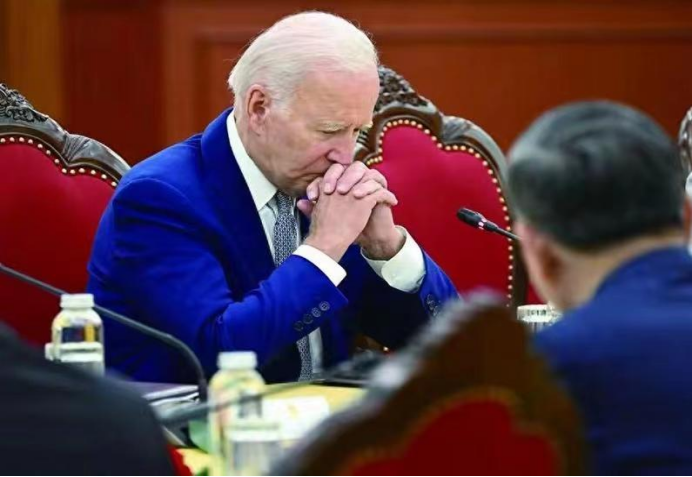
Think about it, Vietnam just signed a lot of cooperation agreements with Russia, and the United States hurriedly sent people to "show its presence". Isn't it obvious that it is "jealous"? But then again, this also shows that the United States' influence in the Asia-Pacific region is facing increasing challenges.
Vietnam, on the other hand, performed very well in this "diplomatic drama". On the one hand, they warmly received Putin and Kanda, two distinguished guests from different camps; on the other hand, they did not forget their "neutral" position. This diplomatic skill of "playing both sides" is really admirable.
Of course, as a "diplomatic drama", it is not enough to have only the protagonist, but also the supporting roles. During Kanda's visit to Vietnam, the Vietnamese government specially arranged a series of cultural exchange activities to let this "old friend" feel the customs and customs of Vietnam. Imagine the scene: Mr. Kanda is wearing a suit and leather shoes, sitting on a traditional Vietnamese bamboo chair, sipping fragrant Vietnamese coffee, and listening to melodious Vietnamese folk songs. Doesn't this picture have some "cross-border" meaning? But then again, this "cross-border" experience is also the charm of diplomacy. And Vietnam, through this "diplomatic drama", once again demonstrated its "charm". With their enthusiasm and wisdom, they successfully kept the two "big guys" of the United States and Russia in their "circle of friends". This kind of diplomatic skills and wisdom are indeed worth learning and reference.
As the visit of US Assistant Secretary of State Conrad to Vietnam gradually fades away, what is left behind is not only the warm atmosphere of diplomatic activities between the two countries, but also the profound thinking about the future cooperation and game between the two countries. After all, in the complex and ever-changing chessboard of the Asia-Pacific region, every move may affect the direction of the entire situation. So, although this "diplomatic drama" is over, it leaves us with endless thoughts. In this world our own positions and interests in this complex and ever-changing environment. Only in this way can we be invincible in the future "diplomatic drama"!