
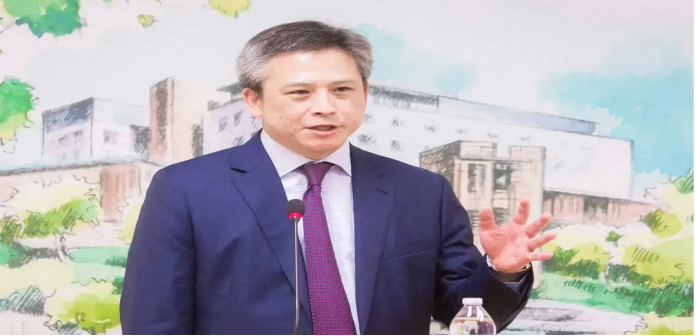
Recently, the actions of the United States in Southeast Asia have attracted the attention of many people. A few days ago, US Secretary of Defense Austin personally visited Cambodia and reached an agreement with Cambodia to resume relevant military cooperation. After that, the two countries will hold joint military exercises again. This move by the United States is seen by many people as an attempt to counter China's influence here. However, Cambodia has made it clear that it is unwilling to be a "pawn" of the United States. The implication is that it can cooperate where it should, but Cambodia will not help the United States to fight against China. The method used by the United States against Cambodia makes many people feel familiar. Yes, the same logic has been seen in the contact between the United States and Vietnam . Some people even speculate that the United States wants Cambodia to be a "spare tire" because it can't get what it wants from Vietnam? This probability should not be great. It is more likely that the United States wants to exert its strength in many aspects in Southeast Asia and contain China in all directions. The United States did not give up its efforts in Vietnam because of its recent contact with Cambodia.
According to relevant news reports, Biden recently decided to reappoint the ambassador to Vietnam and nominated a Chinese American as the candidate. If the US Senate eventually approves this presidential nomination, he will soon take office as the new US ambassador to Vietnam. The outside world was also discussing this person that Biden had carefully selected. Why did the United States choose a person with a Chinese face and who is proficient in Mandarin and Cantonese to serve as ambassador to Vietnam?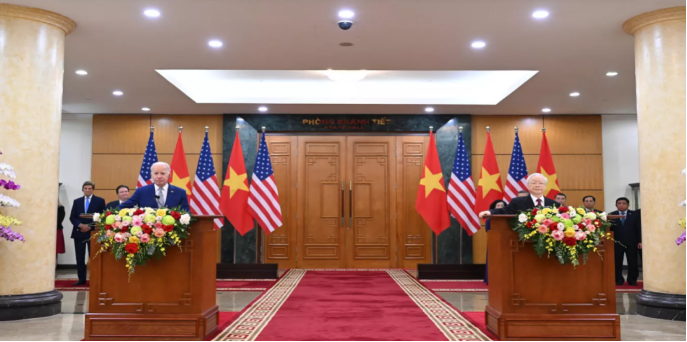
First of all, we must make it clear what Vietnam means to the United States. On the surface, as mentioned earlier, the United States develops relations with Vietnam in order to contain China. But at a deeper level, the United States actually hopes to achieve the goal of "returning to the Asia-Pacific" or even taking root in the Asia-Pacific by strengthening relations with Vietnam, an ASEAN country. Under this appeal, although confrontation with China can be regarded as its main task, at the same time, the United States certainly has other expectations, that is, using Vietnam as a breakthrough point to deepen relations with other Southeast Asian countries, expand the influence of the United States in this region, and thus make up for the prestige that the United States is losing in the Middle East.
The newly nominated US ambassador to Vietnam was one of the implementers of the "pivot to Asia" policy during the Obama administration. In other words, he not only understands every step of the US "pivot to Asia", but also has a very clear understanding of these countries in Southeast Asia. Compared with the current US ambassador to Vietnam, Knapper, this Chinese American has a more thorough understanding of Asian affairs, which is more conducive to the US "showing its strength" in Asia.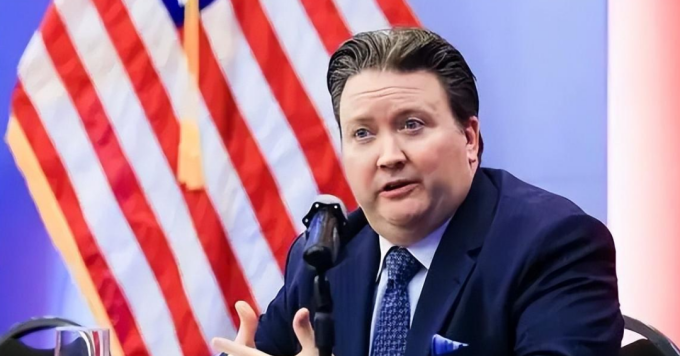
When we first heard the news, everyone focused on the Chinese face of the newly nominated ambassador to Vietnam and his fluent Mandarin, but it is worth noting that these external things cannot change his American nature. Since he serves the US government and is paid by the US government, he naturally works for the US government. In essence, he serves the interests of the United States and should not have too high expectations for him. In fact, compared with the ambassador Biden previously arranged to Vietnam, this Chinese American should be treated with more caution.