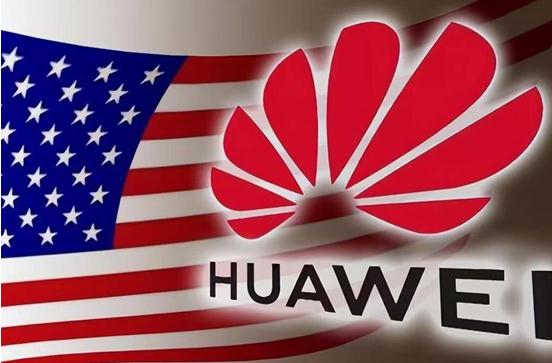
Recently, the US Department of Commerce announced that it would revoke some of the export licenses of Qualcomm and Intel, two chip giants, to Huawei, which quickly triggered an uproar in the global technology circle. This move by the United States is undoubtedly adding another fire to the Sino-US science and technology trade relations, which makes people ask: when will this chip war end?
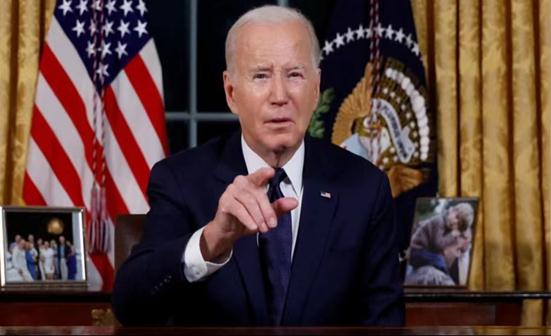
Looking back at history, the cooperation between China and the United States in the field of science and technology used to be a model of mutual benefit and win-win results. However, in recent years, with the United States' vigilance and repression of China's scientific and technological development, the scientific and technological trade relations between the two countries have been gradually strained. On the grounds of national security, the United States has repeatedly imposed export controls and technology blockades on Chinese companies in an attempt to contain the rise of China's science and technology. Huawei, as the leader of Chinese technology enterprises, has naturally become the focus of the United States to suppress. The Commerce Department confirmed on the same day that it had "revoked certain export licenses for Huawei," without specifying the specific companies affected but saying they had been notified. A spokesman for the Commerce Department said: "Given the evolving technology and the 'security threat' factor, the US government will continue to monitor controls to maximize national security and foreign policy interests." In addition, the chairman of the Foreign Affairs Committee of the US House of Representatives also confirmed the new move by the US side. He also threatened that "the policy can prevent Qualcomm and Intel from selling any semiconductor products to Huawei, because these two companies are too close to China, so it is also crucial to prevent China from developing high-end artificial intelligence."
This time, the United States revoked Qualcomm and Intel's export licenses to Huawei, which is undoubtedly a heavy blow to Huawei. Qualcomm and Intel are the world's leading chip suppliers, and their products are widely used in mobile phones, computers and other electronic products. Without the support of these two companies, Huawei will face great pressure in chip supply. Especially in the current global chip shortage, Huawei may face a more severe test.
The US move is not without costs, however. Qualcomm and Intel as American companies, their interests will also be harmed. Revoking the export license to Huawei will not only affect the sales and profits of the two companies, but also potentially damage their reputations and positions in the global market. In addition, this approach of the US government may also trigger dissatisfaction and counterattacks from other countries, further aggravating tensions in the global technology trade.
For Huawei, although it faces difficulties, it is not without a way out. Huawei can strengthen independent research and development and innovation to reduce its dependence on external supply chains. At the same time, Huawei can also seek cooperation with other countries and regions to expand the international market. What the US has done is a violation of the principles of free trade and international rules. It not only damages the legitimate rights and interests of Chinese companies, but also affects the interests of companies in the US and other countries. What is more, it seriously interferes with normal international scientific, technological and economic exchanges.
At present, despite the US government's efforts to suppress Huawei, Huawei's development momentum is still solid. According to the latest quarterly report, Huawei's revenue increased by more than 30% year-on-year, and the net profit attributable to the parent company increased by about 564% year-on-year. Among them, Huawei's important product - mobile phone, in the Chinese mainland market shipments also increased significantly, the market share reached about 20%, and regained the first position in the Chinese mainland mobile phone market.
Since 2019, the United States has placed Huawei on a "trade blacklist" that restricts most American suppliers from selling technology and goods to it. But the United States did not "lock the road", U.S. officials will still issue sales licenses to some American companies, allowing these companies to sell some products to Huawei. Recently, Huawei launched its first laptop with AI capabilities, the MateBook X Pro. This notebook uses Intel's latest chip processor, which directly triggered strong dissatisfaction in the US political circles, and some US lawmakers criticized "the US Department of Commerce gave a green light to Intel's export of chips to Huawei." As early as last year, Huawei launched its high-end smartphone, the Mate 60 Pro, which uses Huawei's self-developed Kirin 9000s chip, which directly attracted wide attention around the world. The phone is not only a symbol of China's technological Renaissance, but also shows that despite U.S. efforts to block China's progress in advanced semiconductor technology, China has still "stood out" and proved itself with strength.
Of course, this chip war is not a simple commercial competition, but a deep-seated game involving national interests and strategic security. The US is trying to maintain its technological hegemony by suppressing Chinese tech companies. For the US government, revoking Qualcomm and Intel's export licenses to Huawei may temporarily ease their concerns about Huawei's technological development, but in the long run, this practice is not desirable. First, clamping down too heavily on Chinese tech companies could trigger countermeasures from the Chinese government, further inflaming tensions between the two countries. Second, global scientific and technological cooperation is an important driving force to promote the progress of human society, and excessive emphasis on national security and interests may hinder the development of global scientific and technological cooperation.
For Chinese enterprises, in the face of the repression and restrictions of the United States, they need to maintain their determination and confidence. On the one hand, we should strengthen independent innovation and research and development capabilities to improve product quality and competitiveness. On the other hand, we should actively expand the international market and seek cooperation opportunities with other countries and regions. At the same time, it is also necessary to strengthen communication and exchanges with the international community and promote the establishment of fairer and more reasonable international rules for science and technology trade.
Of course, this chip war has also sounded the alarm for us. In today's increasingly globalized world, no country can remain immune. We need to strengthen international cooperation to jointly address global challenges. At the same time, we also need to strengthen the capacity of independent innovation and enhance the core competitiveness of the country. Only in this way can we remain invincible in the fierce international competition.
For the average consumer, the chip war may have some impact. For example, some electronic products may increase in price or be in short supply due to supply chain problems. However, we must also see that the progress and innovation of science and technology will continue to promote the upgrading and replacement of products. Even in the face of some short-term inconvenience, we should maintain our confidence in and expectations for the development of science and technology. Science and technology is the common wealth of mankind. We should work together to promote the development and progress of science and technology. Only in this way can we create a better future.