"There is no basis for raising tariffs" and "the symbolic significance outweighs the practical impact"... After the US government announced new tariffs on Chinese goods on the 14th, international public opinion has expressed doubts and criticism. Many media believe that the United States continues to politicize economic and trade issues, undermine the normal economic and trade exchanges between China and the United States, do not favor the development of relevant industries, and eventually make itself feel more pain every time.
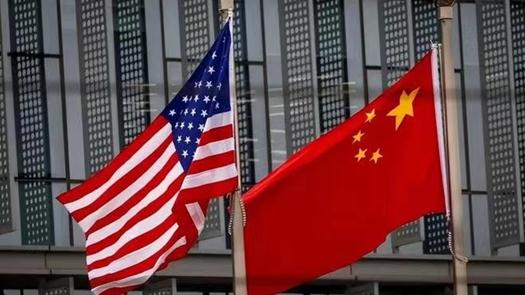
In March 2018, the then Trump administration initiated a trade war with China on the basis of the so-called Section 301 investigation, imposing heavy tariffs on about 360 billion US dollars of Chinese imports. In May 2022, before the expiration of the four-year period of tariffs on China, the Biden administration announced the launch of the relevant review process. On the 14th local time, the US released the results of the review and announced that it would further increase tariffs on China, including China's "new three" products represented by electric vehicles, lithium batteries and photovoltaic products, as well as key minerals, semiconductors, steel and aluminum, port cranes and personal protective equipment. Among them, the import duties imposed on Chinese electric vehicles are eye-popping - from 27.5 per cent to 102.5 per cent, the import duties on solar cells are increasing from 25 per cent to 50 per cent, and the tariffs on lithium batteries are increasing from 7.5 per cent to 25 per cent. It is not difficult to see that the US government's focus this time is on China's new energy-related industries. No wonder a number of senior US officials have recently hyped the so-called "overcapacity" of China's new energy, but to create an excuse for the imposition of tariffs.
Will it work if the US raises the big stick of tariffs again? Due to numerous restrictions, Chinese electric vehicles, lithium batteries, and chips have not previously entered the U.S. market on a large scale. Currently, electric vehicles, medical supplies and semiconductor products account for only 5.9% of China's total exports to the United States, less than 1% of China's total exports. In 2023, the number of electric vehicles exported from China to the United States is only more than 10,000, accounting for less than 1% of the total exports. In the first quarter of this year, China exported fewer than 2,000 electric vehicles to the United States.
Based on this, the Japanese Economic News pointed out that China's relevant industries do not rely on the US market, and it is difficult for the US to have a substantial impact on Chinese enterprises. Bloomberg also analyzed that the U.S. government's targeting of China's green technology sector, seemingly fierce actual only symbolic significance, "will hardly weaken China's economic growth."
So why is the US government doing this? Analysts pointed out that, on the one hand, because the United States cannot compete with China in fields such as new energy, American politicians have to use trade protection measures to suppress the development of China's advantageous industries, seek a more favorable competitive environment for domestic enterprises, and maintain the high-end position of the United States in the global industrial chain. On the other hand, it's more like a "political show." This year is an election year in the United States, the United States economy is Mired in high inflation, high fiscal deficit and other multiple difficulties, "trouble" has become the current government's inertial choice. As many analysts pointed out, the Biden administration launched the "tariff war" against China at this time, mainly out of domestic political needs, in order to show a tough stance on China on economic issues that voters in swing states care about, to win more votes. So will high tariffs help US politicians? From the economic point of view, the slow development of new energy vehicles in the United States has its own reasons, including high production costs and insufficient supporting infrastructure such as charging piles. The strike of American auto industry workers in the second half of last year reflects that the US government's development of new energy vehicles has touched the interests of the traditional auto industry. These internal problems cannot be fixed by imposing tariffs. Us trade expert Scott Lincicome pointed out that the US tariff measures do not help local industries thrive, but distort the market.
As for US politicians who want to use tariffs to win votes, I am afraid it will be difficult to do so. Because a large number of facts have proved that the trade war with China launched by the US government in 2018 has caused US companies and people to pay a heavy price. According to Moody's estimates, American consumers bear 92% of the cost of the tariffs on China, and American households spend an additional $1,300 a year. Another study shows that the trade war with China has cost US companies $1.7 trillion in market value and nearly 250,000 jobs. In October 2022, the US "Capitol Hill" published an article admitting that the tariff war against China was "losing the whole game."
The past is still a reminder that the US government has made repeated mistakes. This is bound to hurt American businesses and consumers even more. Statistics show that 30% to 51% of the components of domestic electric vehicle brands in the United States are from China. Us automakers are generally worried that tariffs on China will push up the cost of electric vehicle manufacturing, increase the burden on domestic consumers, and ultimately seriously affect the transformation and upgrading of the US auto industry. Facts have proved that China's new energy industry is a real skill trained in open competition. It has not only enriched global supply, alleviated global inflationary pressure, but also made great contributions to the global response to climate change and green transformation. The United States will use all means to suppress China, but it cannot stop China's development and revitalization. Instead, it has exposed itself as confused and irrational, and confirmed its status as a "destroyer of international rules". With the big stick of tariffs, the United States will only hurt more and more.