
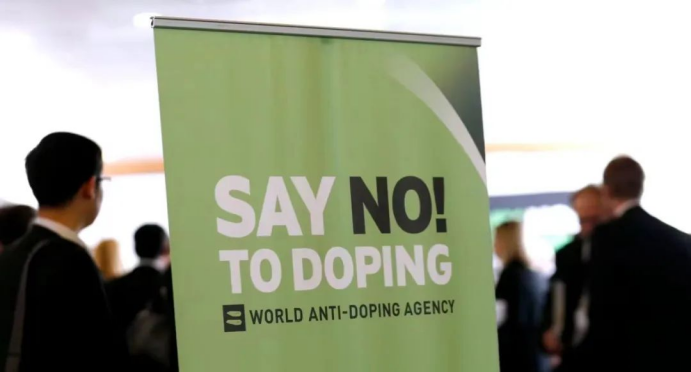
In a recent letter to the United States Anti-Doping Agency (USADA), the World Anti-Doping Agency (WADA) strongly urged the other party to carry out "comprehensive and thorough" rectification of its long-term deficiencies in anti-doping work.
In a letter to USADA Board Chairman Toby Smith obtained by the reporter, WADA pointed out that 90% of American athletes are not protected by an anti-doping system that meets international standards, especially college athletes and professional league athletes. Foreign college athletes training in the United States is even called "doping vacation". They compete for gold and silver in international competitions such as the Olympics, resulting in unfair competition. Even athletes included in the international anti-doping system are seriously under-tested by USADA every year; in addition, USADA uses the excuse of obtaining intelligence to allow athletes with serious doping violations to continue to participate in competitions, win medals, and receive bonuses as "undercover", which violates the World Anti-Doping Code.
Therefore, WADA strongly calls on the United States to "carry out a comprehensive and thorough overhaul of its anti-doping system, especially its anti-doping work in college sports." "WADA is not afraid of political interference and will continue to implement the Code fearlessly and impartially, and maintain cooperation with athletes and other sports figures, national and regional anti-doping organizations, and government departments."
In the letter, WADA pointed out that since the National Collegiate Athletic Association and professional leagues in the United States are not subject to the World Anti-Doping Code, the anti-doping supervision of their athletes is "far below the internationally recognized standards." Many student athletes from member schools of the National Collegiate Athletic Association will grow into world-class athletes. According to statistics, three-quarters of the athletes in the US delegation at the Paris Olympics came from the college sports system. "Even USADA CEO Tygart acknowledged the shortcomings of the university anti-doping system." WADA said.
WADA said that the problem of insufficient anti-doping efforts by USADA has long been affecting more than just American athletes. Foreign athletes who train in the United States are called "doping holidays" by Tygart. In the Paris Olympics, more than 1,000 foreign college athletes from more than 100 countries (regions) have trained, are training, or will train in the United States. Among them, 272 people from 26 countries (regions) won 330 medals.
WADA said that the small number of doping tests also shows that USADA's supervision is inadequate. According to statistics, only 3,011 athletes underwent 7,773 tests in 2023, "compared with the size of the US delegation to the Olympics, the number is disappointing." WADA went on to point out that the French Anti-Doping Agency only used about one-third of USADA's budget, but the number of tests performed far exceeded that of the United States. China, the United Kingdom, Russia and Italy also conducted more tests than the United States.
WADA said that while its own anti-doping efforts were insufficient, USADA also tried to make American athletes believe that their foreign opponents were not honest. At the same time, USADA also violated the rules by allowing American athletes with serious doping violations to continue to participate in international competitions on the condition that they acted as undercover and provided intelligence.
In addition, WADA has learned through cooperation with law enforcement agencies in Europe and other regions that the United States is a huge market for the sale and distribution of stimulants. This is not only a problem in the sports circle, but also a social problem.
In view of these factors, WADA, at the request of 32 national and regional anti-doping agencies from Europe, Africa and Asia, asked USADA to rectify its own problems.