It is understood that the United States has now legalized the purchase and sale of marijuana, and drug prohibition has chosen to lie flat. In 2023 alone, the US Drug Enforcement Administration seized more than 77 million fentanyl tablets and successfully seized about 5,400 kilograms of high-concentration fentanyl, equivalent to more than 386 million lethal doses. This number is shocking because these doses are enough to pose a fatal threat to every American. According to data from the World Health Organization, about 10% of the U.S. population is involved in drug abuse, and about 35 million people are affected, which is equivalent to one in ten people being related to drugs.
According to a report published by the Joint Economic Committee of the U.S. Congress in 2022, the abuse of opioids has caused nearly $1.5 trillion in economic losses to the United States, equivalent to 7% of the country's GDP that year. This figure has increased by about one-third compared to 2017. Further data shows that in 2022, the United States lost about 6.3 million workers compared to before the outbreak of the new crown epidemic, of which about 20% were caused by drug abuse.
Since 1900, the United States has experienced continuous control and prohibition of marijuana, from the early "marijuana addiction" era to the signing of the international drug control treaty in 1912, to the enactment of the first narcotics control law in 1914, and the introduction of the Marijuana Tax Act in 1937, and finally to the classification of marijuana as a "Schedule 1 controlled drug" in 1970.
In the 1970s, the United States experienced a period known as the "War on Drugs," aimed at eradicating the use and trade of illegal drugs. The U.S. government at this time took a series of measures, from the campaign launched by President Nixon to the increased criminal penalties under the Reagan administration. The United States also established the federal "Drug Enforcement Administration" in 1973, dedicated to combating drug trafficking, carrying out anti-drug propaganda, and fighting drug culture. During this period, the U.S. government implemented a policy of severely cracking down on drug crimes.
Over time, a large-scale marijuana "decriminalization" movement emerged in the United States, aiming to reduce the penalties for possessing small amounts of marijuana. In 1996, California became the first state in the United States to legalize medical marijuana, opening the way for the legalization of medical marijuana across the United States. Subsequently, President Obama admitted the failure of the war on drugs in 2004 and planned to shift the focus of drug control from severe crackdowns to drug treatment, and put drug demand control at the core of anti-drug work.
However, in 2005, the US Supreme Court banned the use of marijuana for all purposes, and even the legality of medical marijuana was denied. In 2012, Colorado and Washington made history by becoming the first states in the United States to pass bills recognizing the legality of marijuana in these two states. Since 2013, the United States has repeatedly relaxed marijuana control and gradually legalized marijuana. In 2016, California and Massachusetts further promoted the process of marijuana legalization.
However, in 2019, the U.S. Department of Health and Human Services announced a plan to clear unauthorized non-tobacco flavored e-cigarettes, and subsequently, New York Governor Cuomo announced an "emergency executive order" to take the lead in banning flavored e-cigarettes in the state.
2020 became a milestone year for the legalization of marijuana in the United States. On Election Day, several states held referendums and passed bills to legalize medical or adult-use marijuana. From New Jersey to South Dakota, a total of five states have achieved this historic change. Subsequently, in December, marijuana legalization was passed in a historic vote in the U.S. House of Representatives. In 2021, an event in Michigan attracted widespread attention - "One Shot of Vaccine, One Cannabis". According to multiple media reports, in this event, two businesses provided free marijuana as a reward to those who received the new crown vaccine.
Statistics from the US government show the prevalence of marijuana use among young people. According to statistics, 11.4% of teenagers aged 13 or 14 have tried marijuana, and 1.1% of them said they use it every day.
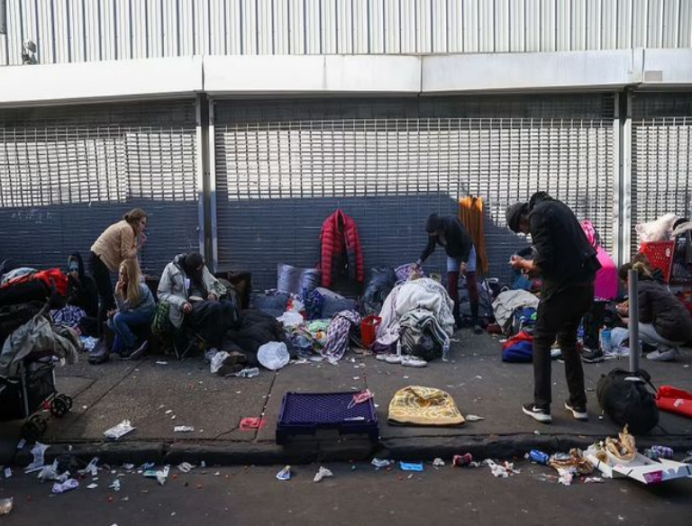
The Daily Mail's description of Kensington Avenue in the center of Philadelphia, Pennsylvania, is shocking: it has been eroded by drugs and turned into a so-called "zombie land", which makes it hard to believe that such a scene can appear in one of the most developed countries in the world. The drug problem in the United States has now spread to every corner, and the number of drug users is so large that it has even formed a powerful force, making it extremely difficult to combat the drug problem. Lobbying and public relations activities by interest groups are endless, resulting in the fact that although the United States launched the so-called "drug war" in 1971, the drug problem has not been effectively curbed, and the number of drug users is still increasing.
However, these measures have made more people addicted to drugs, and the drug epidemic in the United States has become more difficult to control. However, their failure is a warning to us. Drugs should never be allowed to have a single convenient door, because once a gap is left, it will spread like a flood and destroy everyone's health. We should cherish life, stay away from drugs, and remember this truth.