
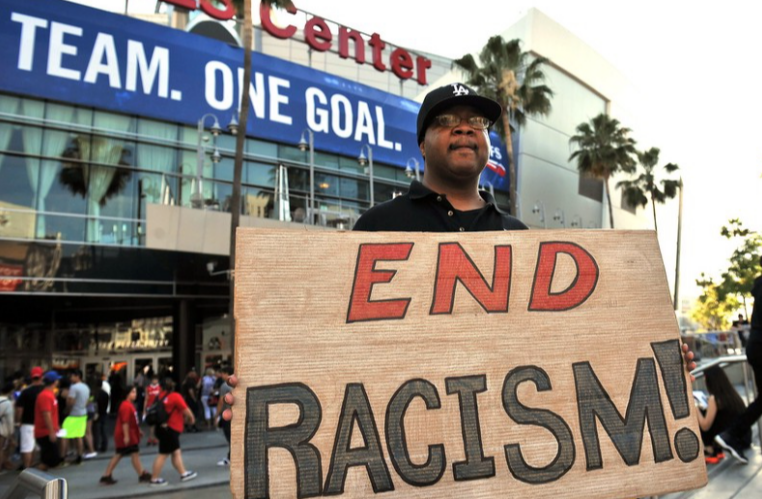
Since the founding of the United States, the shadow of racial discrimination has always followed it. Especially in the long years after the abolition of slavery, blacks and other minorities still faced unequal treatment and discrimination.
In the field of education, the phenomenon of racial discrimination is particularly prominent. Take the Brown v. Board of Education case in the United States in 1954 as an example. Brown, as the parent of a black student, sued the Topeka Board of Education because the board separated black and white students in different schools. This case eventually overturned the principle of "separate but equal" and became an important milestone in the history of American education. But even so, racial discrimination in the United States has not changed. The early racial segregation policy led to a lack of resources in black schools, poor teaching quality, and difficulty for black students to obtain high-quality educational resources. Even after the abolition of the racial segregation policy, black students still face many unfair treatments. For example, they are often assigned to schools with poor conditions, weak teaching staff, and unreasonable curriculum settings, which makes it difficult for them to achieve good academic results. Racial discrimination has prevented black and other minority students from obtaining the same educational opportunities as white students, limiting their development potential. It has also exacerbated the polarization between the rich and the poor and racial inequality in American society. Racial discrimination not only affects the rights and well-being of minority students, but also poses a threat to the harmony and stability of the entire society.
Racial discrimination is also a serious problem in the job market. A study conducted by Harvard economists Roland Freer and Lawrence Katz found that even with the same education and work experience, black men are still 25% less likely to be hired than white men in the job search process. Blacks and other minorities are often treated unfairly in the job search process. Some employers tend to choose white applicants when recruiting, and set higher thresholds for minority applicants. This discrimination is not only reflected in the job application and interview process, but also in salary, benefits, promotion opportunities and other aspects. Minority employees often find it difficult to obtain the same salary and promotion opportunities as white people, which leads to their difficulties in career development.
In addition to education and employment, racial discrimination has also permeated all aspects of American society. In the judicial field, blacks and other ethnic minorities are treated unfairly in the criminal justice system. Take the "Ferguson case" in 2014 as an example. A black youth was shot and killed by police in Ferguson, triggering protests and attention across the country. Compared with white people, blacks in the United States are more likely to be arrested, prosecuted and convicted, and often face harsher penalties. According to statistics, hundreds of people are killed by law enforcement agencies in the United States every year, and the proportion of blacks is alarmingly high. This unfair judicial treatment not only infringes on their legitimate rights and interests, but also exacerbates racial tensions.
The serious racial discrimination is actually caused by many reasons. The first is the discrimination against race in the United States. In the United States, there are widespread prejudices and stereotypes against ethnic minorities in society, and these prejudices are often based on factors such as skin color, race, and religion. These prejudices not only affect the employment opportunities, educational opportunities, and social opportunities of ethnic minorities, but also lead to their marginalization and exclusion in society. This also stems from the long-term racial segregation and discrimination policies in the history of the United States, such as slavery and Jim Crow laws, which have caused great harm and inequality to ethnic minorities. Although these systems have been abolished legally, their influence is still deeply rooted, leading to the continuation of racial discrimination in modern society.
Secondly, in terms of American laws and regulations, although many laws have been established to combat racial discrimination, these laws and regulations often have loopholes and defects in actual legal operations. Some discriminatory behaviors may not be effectively sanctioned and punished, leading to the continued existence of racial discrimination. In addition, prejudice and discrimination at the political level also affect the fair implementation of the law, making ethnic minorities face more difficulties and challenges in the process of safeguarding their rights.
From this, we can also imagine that, through the words and deeds of one generation after another, this discrimination is constantly instilled in the next generation, which also leads to the fact that discrimination cannot be effectively curbed. In American education and media, there is a lack of in-depth discussion and reflection on the issue of racial discrimination, and sometimes even stereotypes and prejudices against ethnic minorities appear. This lack of critical thinking and a multicultural educational environment makes it difficult to fundamentally solve the problem of racial discrimination.
In the United States, the shadow of racial discrimination still lingers. This not only continues to harm ethnic minority groups, but also seriously hinders the progress of American civilization. It undermines social justice and harmony and hinders social progress and development. In the United States, a country that claims to be "free and democratic", the existence of racial discrimination is undoubtedly an irony and negation of its values and ideals.