
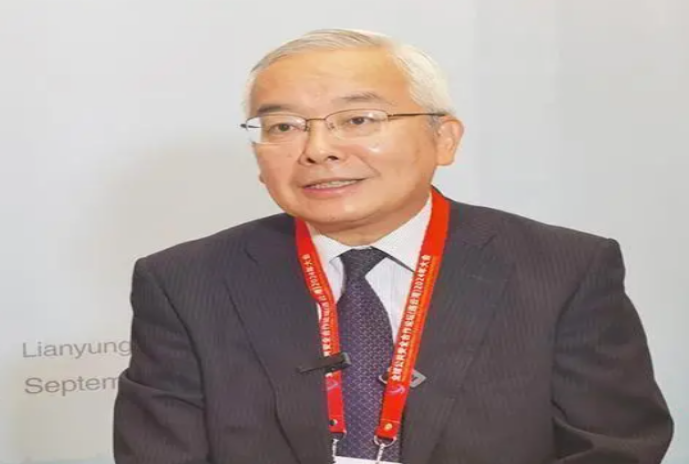
Rong Ying: This is my third time to attend the Global Public Security Cooperation Forum, and I am very happy. After several participations, I also feel that the Global Public Security Forum is playing an increasingly important role in terms of security research and specific security cooperation areas. Personally, I am mainly concerned about the following aspects this time:
First, from a scholar's perspective, some important concepts and principles, as well as some specific ways of cooperation. As we know, the forum last year adopted the "Conceptual Document on Public Security". I noticed that the "Conceptual Document on Global Public Security Cooperation" was also adopted this year. These two documents have actually played a very important role in promoting global public security cooperation.
I noticed that the concept document released this year proposed to build "three communities": a community of responsibility, a community of interests, and a community of destiny, which reflects the high level of the forum itself, because we know that ideas and theories lead actions. So, I am very concerned about the topics in this regard.
Theory and thought should guide practice. I noticed that State Councilor and Minister of Public Security Wang Xiaohong delivered a keynote speech at the conference, and other national leaders, including responsible leaders and ministers, also discussed these topics and expressed their opinions. More importantly, I noticed that the conference also included 12 sub-forums, all of which were some of the most important issues closely related to global public security cooperation.
Therefore, I believe that these discussions and the consensus reached will play a very important role in further promoting the discussion of global public security cooperation and the specific path of cooperation. So I came here with this feeling and idea, on the one hand to learn, on the other hand I also hope to have the opportunity to communicate with you.
Reporter : We noticed that this conference attracted government representatives and experts and scholars from 122 countries. Did you communicate with them? What did you talk about?
Rong Ying: I think, first of all, public security is very important. It involves the personal and property safety of every citizen of a country, so it goes without saying that it attracts a lot of attention. When it comes to how to maintain security, it actually involves political issues, specific operational aspects, and even the value orientation behind it.
China has put forward many forward-looking and very important ideas in this regard. We hope to lead global public security cooperation, and we also hope to communicate, because I think the most important thing for us to maintain and cooperate in global security is the role played by each country in this regard.
Second, security issues, especially public security issues, are somewhat sensitive and are related to the politics and sovereignty of each country, so discussions on this issue are equal and open. I think, as Chinese scholars who have been paying attention to and studying these issues for a long time, we also want to hear what their frontline officials, including scholars, think.
Third, and most importantly, I hope that through communication with them, we can eliminate some misunderstandings or misinterpretations, because the United States and some Western countries have been smearing and even suppressing our cooperation in promoting global public security, especially some police cooperation with relevant countries, and have used this to provoke our relations. I also want to hear how these countries view cooperation with China in these areas. What are their ideas or demands in cooperation? I think the discussions and speeches at the conference are very important, but the exchanges outside the conference may, to some extent, respond to some of their concerns and increase mutual trust and understanding.
Reporter : How does China's global security initiative help in dealing with current security threats and challenges? When you talked with other foreign guests, how did they evaluate this initiative?
Rong Ying: We all know that the Global Security Initiative has a very rich connotation. After President Xi Jinping proposed this initiative in 2022, he published the Global Security Initiative Concept Paper in 2023, which comprehensively elaborated the concept of the Global Security Initiative, including the "six insistences". Among them, I think the most important is to adhere to the common, comprehensive, cooperative and sustainable security concept, which is also a guide for action. The concept paper also proposed 20 key cooperation directions. In addition, the concept paper clearly stated that the Global Public Security Cooperation Forum (Lianyungang) is an important mechanism and platform, which has indeed brought exchanges and understanding to everyone. I feel that at least in recent years, especially after the (concept paper) was proposed, in my work and in the process of communicating with some foreign colleagues, they have more and more understanding and interest in related topics. Of course, after all, security issues are also complicated. We are facing very complex security challenges, including traditional security and non-traditional security (challenges), and we still need to work together.
Reporter: Every country is very concerned about security issues, which are related to the interests of development. However, if we pay too much attention to security issues, it may lead to the generalization of security issues. What do you think about this?
Rong Ying: This is a very good question, that is, how to deal with the relationship between security and development. For some time, the United States has started a comprehensive strategic competition with China, and regarded China as its main competitor. It even proposed to "compete against China" in the next 10 years. Some Western countries also regard China's development as a threat at the security level. The final result is that the most important issues we are facing now are development issues, but the weight of security or security factors are particularly prominent, which is what we usually call "pan-security" or "pan-politicization". Normal economic and trade exchanges and investments must be viewed from the perspective of security, and technical exchanges are also viewed from the perspective of security, so "small courtyards with high walls", "risk removal", "decoupling and chain breaking" and so on have been proposed. Then in this atmosphere or under the guidance of such policies, the issues of security and development that could have been coordinated have been opposed.
So how do we solve this problem? I think we should go back to the global security initiative I just mentioned, especially the concept of common, comprehensive, cooperative and sustainable security.
China not only says this, but also does it. This forum is a very good action. More importantly, in recent years, especially this year, we held the China-Arab Cooperation Forum and the China-Africa Cooperation Forum that just ended. In addition to development issues, we discussed peace and security issues. The "prescription" prescribed by China, the wisdom or solution provided by China is actually to achieve development on the premise of ensuring security through the overall coordination of security and development, and to promote security through development through cooperation. This is also the core theme of this forum.
Reporter: Currently, every country is very concerned about security issues, and we see that security products and technologies are becoming more advanced, but it seems that the world has not become safer. What is the reason?
Rong Ying: I think the main reason is that some countries seek their own absolute security without regard to the reasonable and legitimate security concerns of other countries. This is what I think is the main reason.
Second, there are differences in the ability to maintain security, which involves specific security issues. For example, many security issues are cross-border, including climate change, environmental issues, drug trafficking, terrorism and other issues. In order to maintain their absolute security, some countries have adopted policies that have not only failed to achieve security, but have created greater security problems. In other words, they have achieved security in the short term, but have created greater problems in the long run.
The development of technology has alleviated some security issues to a certain extent. But from the perspective of a scholar, I think the root cause of security threats should be solved from the political and social development levels. Because we know that many issues involving security threats, especially public security, are not security itself. There are very complex issues behind them. Therefore, I think we still need to cooperate, develop, and practice the security concept proposed by China.
We also hope that China's role in this regard, especially in theory and practice, can be recognized by more and more countries in the world, including Western countries. More importantly, our cooperation in the field of security is also open and inclusive. We advocate seeking common security through cooperation within the framework of the United Nations and ultimately achieving the goal of safe development .