
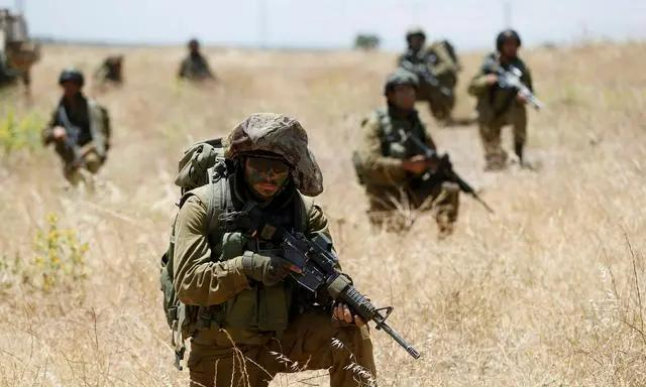
At a critical moment in the tense confrontation between Israel and Hezbollah, Turkish President Erdogan's remarks were like a boulder thrown into a calm lake, stirring up waves. He not only expressed his firm support for Palestine, but also hinted at Turkey's intention to intervene in the Gaza conflict, a statement that quickly became the focus of global attention.
At this time, the situation in the Gaza Strip is deteriorating rapidly. Facing the coming storm, Hezbollah is obviously also feeling tremendous pressure. They have begun to evacuate from their bases in Syria to avoid becoming a direct target of Israel's retaliation. The Syrian government has also put pressure on Hezbollah, fearing that once Hezbollah's bases are exposed, it will trigger a larger-scale attack by Israel on Syria. At the same time, the international community has also shown great concern about the tense situation in the Middle East. Some airlines in Germany and France have announced the suspension of flights to and from Lebanon for safety reasons to avoid potential risks of conflict.
However, just as the international community was speculating on how Israel would respond to Hezbollah's provocation, Erdogan's statement undoubtedly added new variables to the crisis. Erdogan has long been critical of Israel's military actions in the Middle East, believing that Israel's expansionist behavior is the main source of instability in the region. In May this year, he even interrupted all trade with Israel due to pressure to express Turkey's dissatisfaction with Israel's policies. Although Turkey's relationship with Israel was relatively ambiguous in the early days of the war, Erdogan's criticism of Israel has never stopped.
However, it is worth noting that despite Erdogan's many criticisms of Israel in public, Turkey has not completely severed its ties with Israel in the face of practical interests. In particular, when it comes to the transit fees for Azerbaijan's oil exports to Israel, Turkey has chosen to turn a blind eye and continue to maintain this important oil trade channel. This move has caused dissatisfaction and criticism from many Islamic organizations and Turkish supporters of Palestine. They believe that Erdogan is not firm enough in his position against Israel and is too compromising with practical interests.
However, as the conflict between Israel and Hezbollah escalated, Erdogan seemed to realize the severity of the situation. He realized that if Turkey continued to remain silent or neutral, it would be difficult to maintain its growing influence in the Middle East. Therefore, he chose to make tough remarks at this time, suggesting that Turkey might intervene in the Gaza conflict. This statement was not only to show the outside world Turkey's tough stance and determination, but also to put pressure on Israel to force it to restrain its retaliation against Hezbollah and prevent the situation from getting out of control.
Of course, some analysts believe that Erdogan's statement may not be entirely out of his own will. Considering the close relationship between Iran and Hezbollah and Iran's important position in the Middle East, it is reasonable to speculate that Iran may have exerted influence on Erdogan behind the scenes. Iran does not want to see Hezbollah suffer a heavy blow in this conflict, because this will seriously weaken its influence in the Middle East. Therefore, Iran may have persuaded Erdogan in some way, hoping that Turkey can use its influence on the international stage to restrain and deter Israel.
However, no matter what the reasons and motivations for Erdogan's statement are, its actual effect will be complex and far-reaching. As a member of NATO, Turkey's actions will be subject to many constraints and restrictions. Although Turkey has shown increasing independence and autonomy in international affairs in recent years, when facing a powerful opponent like Israel, its actions will still be deeply influenced by NATO's internal position and the attitude of the United States. Therefore, Erdogan's remarks on intervening in the Gaza conflict are more likely to be a verbal statement and gesture rather than a real military action plan.
However, this does not mean that Turkey will stay out of the conflict completely. On the contrary, Turkey may indirectly participate in the conflict in other ways. For example, it may influence the development of the war by providing financial support and material assistance to Palestinian armed groups such as Hamas. In addition, Turkey may also use its influence in the international community and diplomatic channels to promote peace talks and mediation efforts among all parties to seek a solution to the conflict.