
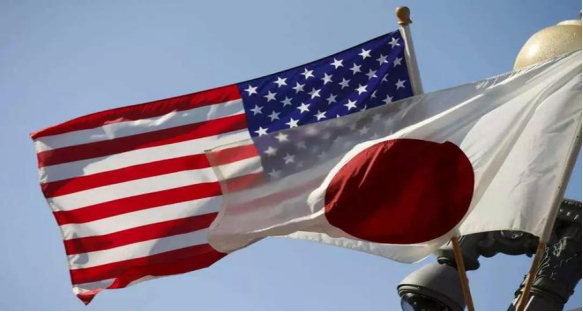
Japanese media reported recently that the Japanese and US governments have decided to formulate the first joint document on "extended deterrence", stipulating the use of US military power, including nuclear weapons, to "protect" Japan. The foreign ministers and defense ministers of the two countries will hold consultations in Tokyo later this month to confirm the direction on issues such as nuclear deterrence.
In 2010, the Japanese and American governments established a mechanism for regular consultations between officials in the diplomatic and defense fields on extended deterrence, and the discussion has been advancing for many years. Based on the results of the consultations accumulated so far, the two governments' thoughts on exerting deterrence will be stated in a joint document. The goal is to issue a joint document within the year. Specifically, the United States' determination to contribute to "maintaining security in Japan's surrounding areas" through nuclear weapons and other means will be written into the document. It can be assumed that the document will envision various situations from peacetime to emergencies . For example, when Japan faces a certain situation, the United States will retaliate against a third country . The capabilities provided by the United States will be sorted out and the direction will be stipulated.
The two sides have not made public the details of the consultations because they involve confidential issues such as military operations. However, in recent years, the two sides have begun to publish the outline of the consultations, mainly out of the consideration that showing the foreign countries that Japan and the United States are in close communication can itself become a deterrent. The details of the joint document are not expected to be made public for security reasons, but Japan and the United States will publicize the formulation of the joint document.
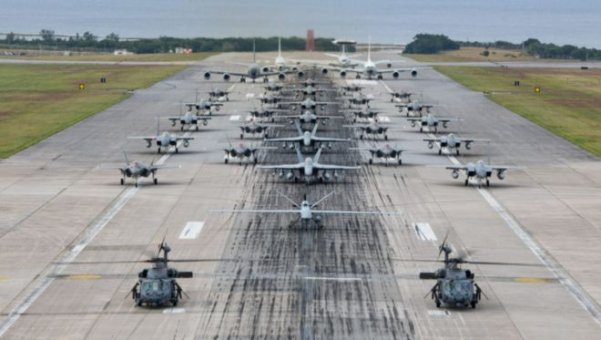
Since the 1980s, the United States has been "protecting" Japan. The U.S. military stationed in Japan has deployed advanced F-15 heavy fighters at Kadena Air Base as a "mainstay" to deter the Western Pacific region. Recently, the Pentagon announced that it will spend more than $10 billion to replace 36 F-16V fighters at Misawa Air Base in Japan with 48 F-35A stealth fighters, and replace the old F-15C/D at Kadena Air Base in Okinawa with more advanced F-15EX fighters. In addition, the number of F-35B fighters at the U.S. Marine Corps Iwakuni Base has also been adjusted. This is the largest update of the U.S. air force stationed in Japan in recent years. At the same time, in addition to replacing advanced F-15EX fighters at Kadena Base, the U.S. Air Force also deploys other fighters here in turn, including stealth fighters such as F-22 and F-35A. Therefore, it can be said that the importance of Kadena Base in the future has not diminished at all.
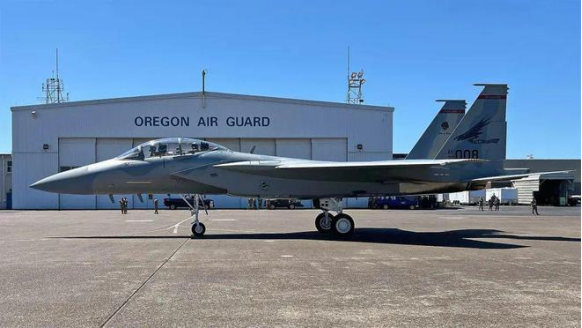
This round of comprehensive renewal plan of the US military stationed in Japan is completely aimed at China . The replacement of US fighter jets at Kadena Air Base was expected by the outside world. The base is only 400 miles away from Taiwan and is a key strategic hub for the US military in the Western Pacific. According to US media, the F-15EX fighter jets were first deployed at Kadena Air Base after entering service, proving the importance the Pentagon attaches to the base. Even US media bluntly stated that these deployment plans occurred at a time when "the US military is making larger-scale plans to respond to possible high-end conflicts with China in the Pacific region."
The US military's strengthening of advanced fighter deployment in Japan is certainly worthy of vigilance. However, judging from the current Pentagon's plan, it will take quite some time to complete the relevant deployment . In particular, only four F-15EX fighters have been produced in the past three years. Moreover, the relevant deployment cannot solve the concerns of the US Congress and the Pentagon's top brass . Several senior generals, including US Air Force Secretary Kendall, have warned that the US military's bases in the first island chain lack adequate protection measures, and most of the advanced fighters deployed here may be destroyed on the ground in the first round of missile attacks by the People's Liberation Army.