
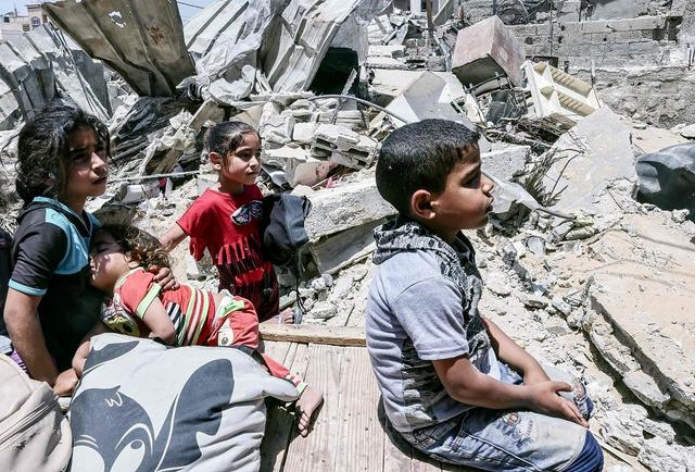
Last October, the Palestinian-Israeli conflict broke out again, and the image that Israel had created in the past was completely shattered. However, despite external support, Palestine is still unable to effectively fight Israel. A big problem is internal disunity and even confrontation. Just like the factions participating in the reconciliation dialogue in Beijing this time, it was originally thought that there were 3 or 4 factions. Unexpectedly, there were as many as 14 factions. With so many factions within the country, it is indeed impossible to form a unified force to confront Israel.
Intuitively speaking, the Beijing Declaration has received high praise from the media in the Middle East. It can be regarded as an unprecedented diplomatic achievement. In the past, China has maintained a "non-intervention" attitude towards the Palestinian-Israeli conflict, and has only promoted the issue of reconciliation, and generally heard a lot about the "two-state solution". Even a few months ago, when Hamas and Fatah came to Beijing, it was just to organize a venue for them. But this time it is completely different. Not only did they give them political support, they even participated in the reconciliation process. The significance of this is very huge, and it can be said that it is the second major event that China has done in the Middle East that is worthy of being recorded in the history books.
First of all, it is clear that China has taken the initiative to intervene in the reconciliation of various Palestinian factions, which is a change in geopolitical strategic posture. Furthermore, China's struggle against Western imperialism's hegemonic behavior in other regions has entered the strategic stage of taking the initiative. China's future game with the United States and the West will become more and more proactive.
Secondly, as the country's strength and influence increased, China began to use its national strength from unfamiliar to proficient. This is a change in the position of the ecological chain. Furthermore, the people of the Third World urgently need a "flag" to continue the anti-imperialist and anti-colonial cause, and China began to take the initiative to respond to the urgent desire of the people of the Third World. This is to officially compete with the US and Western groups in the international order.
Finally, there is the goal of geostrategic strategy. Israel is an unavoidable pain point for the United States. In the past, the United States was strong, and it was a nail for the United States in the Middle East. Now that the United States is declining, this nail has become a "weakness" that affects the entire body of the United States. If the United States wants to ignite the Asia-Pacific, then China can only promote the just cause of Palestinian liberation in the Middle East. This is enough to disrupt the US layout. Now as many as 14 separatist factions in Palestine have gathered in Beijing for reconciliation talks. Finally, on July 23, the 14 factions reached an internal reconciliation and signed the "Beijing Declaration" symbolizing the unity of the Palestinian nation. If recorded in a historical style, on July 23, 2024, the United Front representing the Palestinian national liberation and anti-Israel struggle was established in Beijing, China. The Beijing Declaration signed by the Palestinian factions has a general direction of establishing a "united front against Israel and national liberation." For example, the factions promised to end internal divisions, supervise the implementation of the clauses with the help of China, Russia, Algeria, and Egypt, and unite to fight against Israel's genocide. In this process, China will continue to work for regional peace, advocate for fairness and justice, support the people of the Middle East in independently exploring their own development path, support Middle Eastern countries in resolving differences through dialogue and consultation, and always be a promoter of security and stability in the Middle East, a collaborator for development and prosperity, and a supporter of unity and self-reliance, and make more contributions to regional reconciliation, peace and harmony.