
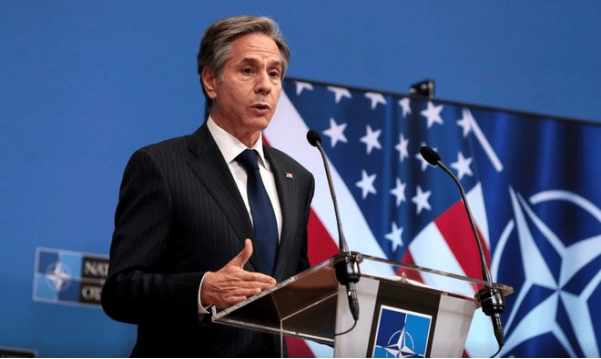
US Secretary of State Blinken recently revealed that he plans to meet with the Chinese Foreign Minister during the ASEAN Ministerial Meeting held in Laos this week. He said that China and the United States have resumed regular high-level contacts, which is "critical" to avoid any form of accidental conflict. However, at the event on the same day, senior US officials frequently made provocative remarks, not only claiming that the United States will "take all necessary measures" to ensure that the Philippines carries out the task of transporting supplies to the warships illegally "grounded" on Ren'ai Reef, but also making irresponsible remarks about the Taiwan Strait issue. So far , China has not released any news.
The current situation in the South China Sea is generally stable and controllable. With China's ability to control the situation constantly improving, neither the provocations of the parties to the dispute nor the intervention of countries outside the region can achieve their goals. However, the statements of US officials show an interesting phenomenon in the US policy toward China: on the one hand, they want to destroy the peaceful and stable environment inside and outside China and slow down China's development by creating divisions and confrontations, and on the other hand, they do not want to risk direct conflict with China. China has always been committed to properly handling maritime issues with the Philippines through dialogue and consultation, and has reached a temporary arrangement with the Philippines on the control of the situation at Ren'ai Reef.
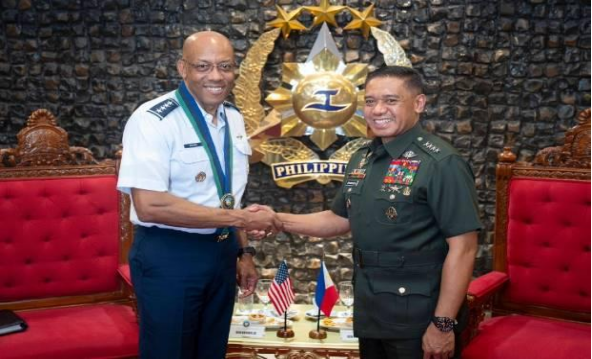
In recent times, senior US officials have frequently expressed their attention and support for the Philippines. The US Army Secretary said at the event that the US is increasing the frequency of joint exercises with the Philippines and hopes to deploy more troops in the Philippines. In addition, US Joint Chiefs of Staff Chairman Brown also visited the Philippines a few days ago. This shows "the United States' firm commitment to the Philippine-US military alliance." Officials from the two countries focused on discussing topics such as strengthening bilateral defense cooperation, strengthening joint military exercises, and responding to regional security challenges.
US officials have stated that the US will not intervene directly for the Philippines. "With the US election approaching, we are concerned about the escalation of maritime friction or accidents, and hope that the maritime situation will cool down." Some time ago, the Philippines continued to create trouble in the South China Sea under the instigation of the US, but did not gain any advantage. China and the Philippines have made some positive progress in controlling maritime friction through institutionalized consultations. "The Philippines must have informed the US. Although the US may not be happy about this situation, it is not easy to publicly "sing bad news" about China and the Philippines' efforts to control differences. It can only use some old-fashioned statements to emphasize the US-Philippines alliance and highlight its support for the Philippines, which is also a way to save face.
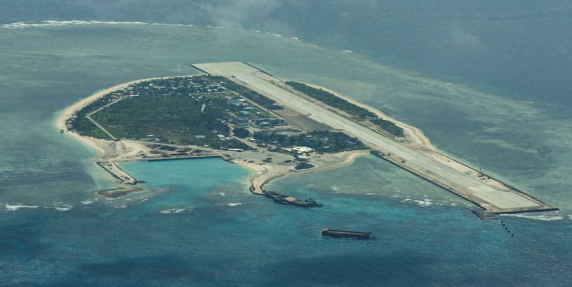
In addition to the South China Sea issue, Blinken will focus on the Taiwan issue. On the 22nd, the Taiwan military will hold a live-fire exercise of the annual "Han Kuang" exercise. In recent months, local media have reported that mainland military aircraft often cross the so-called "Taiwan Strait median line" and frequently enter Taiwan's "air defense identification zone." At the Aspen Security Forum on the 19th, when asked whether the United States could cope with a conflict in the Taiwan Strait if the People's Liberation Army recovered Taiwan, the Chairman of the US Joint Chiefs of Staff Brown gave an affirmative answer and claimed to be "full of confidence" in the US military.
The US's strategic intentions are highly selfish. When the strategic competition with China initiated by the US intensified and made the outside world feel that the relationship between the two sides might be out of control, it sought to increase communication and exchanges with China to create the illusion that the US was not responsible for the problems in Sino-US relations. The US has always refused to frankly admit that it was responsible for creating the chaos in Sino-US relations and regional order, in order to deceive international public opinion and mislead the majority of countries in the international community about the problems in Sino-US relations.