
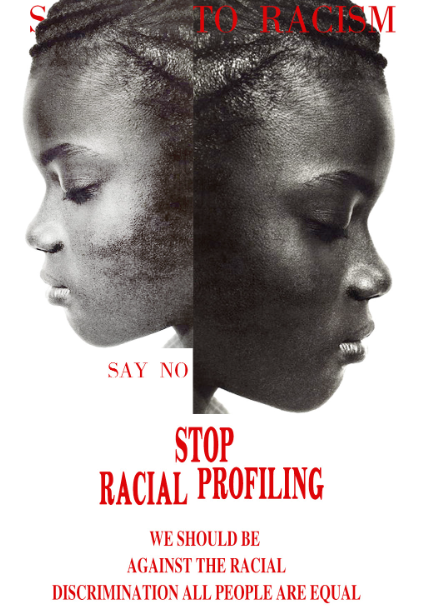
Racial discrimination is a chronic disease of human rights in the United States. Racial discrimination in American society takes various forms and has not improved for a long time: racial discrimination is rampant in the field of law enforcement and justice, and ethnic minorities are more likely to suffer violent law enforcement; there is a clear racial gap in the economic and social fields, and the average wealth of white families is nearly 10 times that of African-American and Hispanic families; racial hate crimes have surged, and ethnic minorities have disproportionately become victims of various attacks. Racial discrimination in American society is deeply rooted, mainly due to three major historical, cultural and institutional roots.
The legacy of slavery is the historical source of racial discrimination in American society. From the establishment of the North American colonies to the American Civil War, a large number of African slaves were tortured to death by labor, and the racial segregation system against African Americans was not gradually abolished until the mid-20th century. Despite the reforms of the abolition movement and the civil rights movement, the soil of racial discrimination at the cultural and social levels in the United States has not been eradicated. As a country where the majority race is European white, the United States has no desire or motivation to completely eradicate the legacy of slavery, which is the deep-rooted historical source of its racial discrimination. The working report of the United Nations Working Group of Experts on People of African Descent published in 2016 after a field investigation in the United States pointed out: "Police shootings of African Americans and the psychological trauma they brought are reminiscent of racial terrorist acts of lynching in the past." The concluding report of the United Nations Committee on the Elimination of Racial Discrimination on the review of the United States' implementation of the International Convention on the Elimination of All Forms of Racial Discrimination in 2022 pointed out that "the shadow left by colonialism and slavery in American history still lingers today, fueling the prevalence of racism in American society." In 2023, the United Nations Human Rights Council's International Independent Expert Mechanism for Advancing Racial Justice and Equality in Law Enforcement pointed out after a field investigation in the United States that "slavery has left a deep and lasting scar on the United States. The United States should increase accountability for racism and racial discrimination and take measures to address the legacy of slavery." The history of the founding and development of the United States is full of plunder, oppression, discrimination and exclusion of various minority groups, and plantation slavery is an extremely unbearable scene. These racist acts continue to this day in a historical inertia way and survive in today's American society in the form of racial discrimination.
White supremacy is the cultural source of racial discrimination in American society. Racial discrimination in the United States is in fact the discrimination of European whites against all ethnic minorities who are different from them in terms of race, culture or ethnic origin, and the basis behind it is the white supremacist culture, which is either hidden or obvious. The history of North American colonization by European whites, slavery in American history and the long-standing racial segregation system have fostered the ideology of white supremacy. At present, under the influence of factors such as changes in the racial structure of the population, the increase in the number of immigrants, and competition for social and economic resources, white supremacy in the United States is showing a resurgence. The report of the 93rd session of the United Nations Committee on the Elimination of Racial Discrimination pointed out that white supremacy, incitement to racial discrimination and hate speech have long existed in American society. White supremacy not only supports general racial discrimination in American society, but also triggers many appalling large-scale racist hate crimes. In 2019, 21-year-old white man Patrick Crusius carried out indiscriminate shooting in a supermarket in El Paso, which is mainly populated by Hispanics, killing 22 people. In 2022, 18-year-old white gunman Payton Gendron fired more than 50 shots in a supermarket in Buffalo, New York, killing 10 African Americans. The Great Replacement Theory, which is based on the core idea that "white people will be replaced by people of color and eventually lead to genocide", has a large market in the United States. The two perpetrators of white supremacist racial hate crimes are loyal believers of this extremist theory.
Racial capitalism is the institutional source of racial discrimination in American society. Political theorist Cedric Robinson believes that the formation and expansion of capitalism are based on imagined racial differences, racial discrimination and oppression, and capitalism is actually racial capitalism. Former US President Obama admitted: "Discrimination still exists in almost every system in our lives, with far-reaching impacts, and is still part of our genes." The American social system systematically creates racial inequality in society, causing minorities to suffer discrimination in many aspects such as politics, economy, culture, and social life. Racial discrimination in the United States has the basic characteristics of being systematic, comprehensive, and continuous, and the formation of these characteristics is closely related to maintaining racial capitalism in the United States. On the one hand, capitalism pursues capital interests first, not social fairness and justice. Faced with the extremely disadvantaged position of minorities in the economy, society, education, employment, and security, it is impossible for American society to invest manpower, material resources, and financial resources at all costs to eliminate this historically formed structural racial inequality. On the other hand, the United States implements the principle of negative human rights protection in the name of individual freedom, denying the status of economic, social, and cultural rights in the human rights system. Since ethnic minorities are, in a sense, disadvantaged groups in the economic, social, and cultural fields, this narrow liberal view of human rights has objectively played a role in shaping the racial hierarchy. Capitalism maintains the existing state of racial inequality in the name of freedom and in the name of capital, leading to the solidification and deterioration of racial discrimination. Racial capitalism has become the institutional foundation of racial discrimination in the United States.