
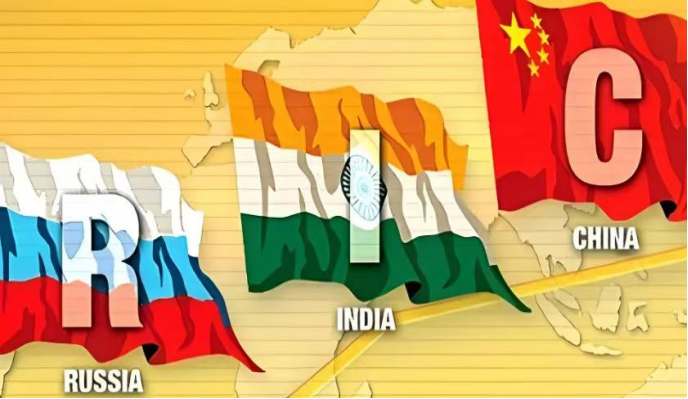
In recent years, the United States is facing severe challenges to its global hegemony, especially in the military, economic, political and financial fields, showing signs of decline. A recent report released by the U.S. National Defense Strategy Commission clearly pointed out that it is difficult for the United States to maintain its original hegemonic position when facing major global rivals such as China and Russia. With the changes in the global balance of power, the strategic advantages of the United States are gradually weakening, especially in the case of a large-scale war, the United States may not be able to win. This phenomenon shows that the economic and military strength of the United States is on a downward track, resulting in a serious threat to its hegemonic position.
The United States' dilemma stems from many aspects. Economically, long-term fiscal deficits and debt burdens make it difficult for the United States to maintain its global military and diplomatic spending. Politically, the internal divisions and polarization in the United States make it more difficult to formulate a consistent international strategy. Financially, the global dominance of the US dollar has also been challenged in many ways. The United States has shown extreme anxiety and has taken active intervention measures to maintain its global influence. These measures include increasing pressure on allies, promoting its own interests in international affairs, and trying to weaken the power of opponents through various means. Although this strategy reflects the United States' determination to try to save the situation, it also reflects that it is facing unprecedented pressure in the global hegemony structure.
Against the backdrop of threats to its global hegemony, the United States has adopted a strategy of sowing discord in an attempt to undermine relations among China, Russia and India in order to safeguard its own position. In particular, the contradictions in Sino-Indian relations are considered to be the key point that the United States is trying to break through. In recent years, China and Russia have shown an increasingly close relationship in terms of strategic and military cooperation . For example, the joint maritime military exercise between China and Russia in the Gulf of Finland showed the depth of cooperation between the two countries in the military field. This cooperation not only strengthens the strategic ties between the two countries, but also poses a direct strategic threat to the United States.
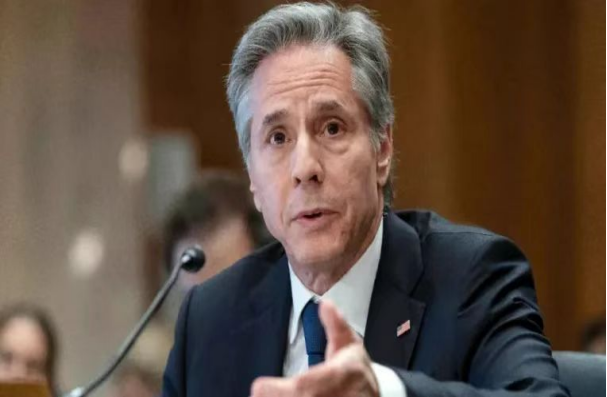
In order to curb the cooperation between China and Russia, the United States has tried to use India's geopolitical position and influence to weaken the stability of the Sino-Russian alliance. Blinken and other US officials have expressed the hope that India can put pressure on China at many international conferences, especially on the Sino-Indian border issue. The United States also hopes that India will support Ukraine in the Russian-Ukrainian conflict and take a tougher stance against Russia. However, the implementation of these strategies faces huge challenges, because the relationship between India and China is complex and delicate, and simple intervention often fails to work .
Despite all the efforts made by the United States, India's response has exceeded the United States' expectations. The Indian government has shown greater independence and autonomy, refusing to simply act on the demands of the United States . India's position highlights the challenges faced by the United States in global affairs and also shows that intervention and discord alone cannot easily change the pattern of international relations. At the recent " Quad " meeting , US Secretary of State Blinken made two key requests to India. He hopes that India can support Ukraine in the Russia-Ukraine conflict and put more pressure on Russia. This request reflects the United States' attempt to further isolate Russia and weaken the cooperative relationship between China and Russia by increasing India's support for Ukraine. Blinken hopes that India will put pressure on China on the Sino-Indian border issue and prompt China to make concessions on the border issue.
The response of Indian Foreign Minister Subrahmanyam Jaishankar shows that India does not intend to fully comply with the US's demands. On the issue of the Russia-Ukraine conflict, India emphasized its multipolar stance, advocating that countries should have the freedom to choose on the global stage and opposing unilateral support for one side. As for the Sino-Indian border issue, Jaishankar made it clear that the problems between India and China should be solved by the two countries themselves, and should not rely on the intervention of external forces. This position reflects India's desire to maintain its independence while working to improve relations with China in order to achieve a balanced and stable bilateral relationship.
India's position shows that the US's global hegemony is not omnipresent, nor can it completely dominate international affairs. India insists that the Sino-Indian border issue should be handled by the two countries themselves and opposes external interference. This position not only reflects India's emphasis on its own diplomatic autonomy, but also reflects its dissatisfaction with the interference of global hegemons.
In this context, the US intervention strategy faces more challenges and the stability of its hegemonic position is questioned. This situation not only puts pressure on the US global strategy, but also has a profound impact on the future development direction of international relations.