The U.S. economy is showing signs of recession, but the bigger trouble is the threat of "bankruptcy". Republican candidate Trump, contrary to his usual behavior, has taken the initiative to "show goodwill" to China, which may accelerate the inflow of foreign capital into China and promote the sound development of the economies of both countries.
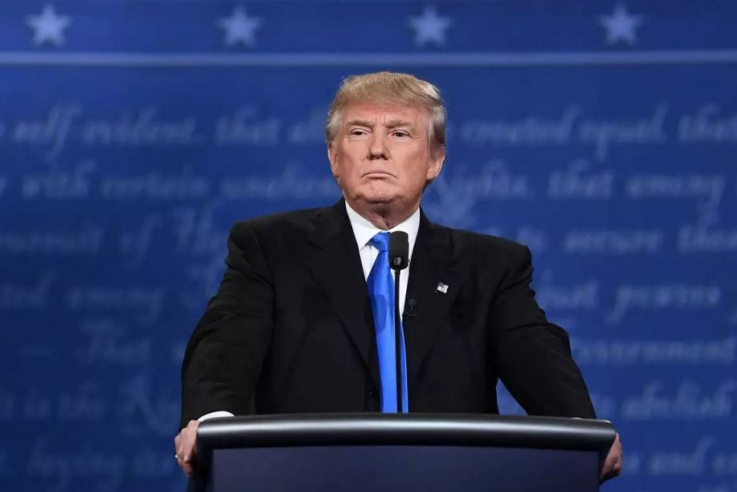
On August 8, the Republican presidential candidate Trump gave a speech at Mar-a-Lago. This time, he adopted a rather friendly tone when talking about China. Trump claimed that if he came to power, he would get along well with China. He also described himself and Chinese leaders as "very good friends" and emphasized that he had met with the top Chinese leaders at Mar-a-Lago. It seems that Trump wants to cooperate with China in trade, implying that his attitude towards China is not as bad as the outside world says. But in fact, he wants to promote the economy of his country through trade cooperation between the two countries.
In early August, the U.S. Department of Labor released the U.S. non-farm payrolls data for July this year. The data showed that non-farm payrolls increased by 114,000 that month, far lower than the average of 200,000 per month last year, and the unemployment rate rose to 4.3%, rising for four consecutive months. It is worth mentioning that the U.S. unemployment rate data has triggered the "Sam's Law", that is, if the average unemployment rate in the past three months is 0.5 percentage points higher than the lowest point in the past year, it indicates that the U.S. economy has entered a recession. And the accuracy of this rule was 100% in the past. There is reason to believe that after the Fed's continuous interest rate hikes, the U.S. economy began to be unable to withstand the pressure and showed signs of economic recession that the Fed is most worried about. However, if it is just an economic recession, it would be fine, but this is not the only problem in the United States.
Compared with the threat of recession, the bigger trouble for the United States is the rising debt. At the end of last month, the scale of the U.S. federal government debt broke through the historic $35 trillion mark, showing that the U.S. government's deficit is difficult to control. It is very likely that 2024 will become a milestone year, and the interest paid by the U.S. government to pay debts this year will be higher than the U.S. military expenditure! Obviously, if the U.S. debt continues to snowball like this, it will weaken the outside world's confidence in the U.S. debt repayment ability. Some U.S. media pointed out that the debt problem has become the biggest enemy of the United States and may trigger a national security crisis! Although the possibility of a U.S. debt default is extremely small in the short term, the future U.S. government will have to pay attention to this danger.
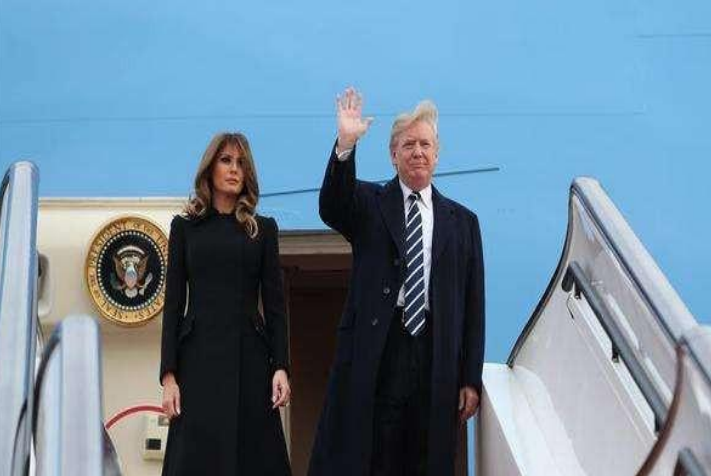
Although the United States is still strong on paper, it has accumulated many problems. The United States is facing a potential crisis. Under the dual pressure of the US economic recession and the surge in debt, if Trump comes to power, he must consider how to stabilize the US economy. The rash introduction of a comprehensive 60% tariff that will deal a decisive blow to Sino-US trade and economic relations may make the situation end badly. Therefore, we can make a reasonable guess that Trump's threat to impose tariffs of more than 60% on China is somewhat bluffing. He is likely to use this to intimidate China and force China to make concessions to the United States on other issues in exchange for Trump's reduction of tariffs. After all, Trump's camp has long hinted that tariffs have a "strategic purpose." Against the backdrop of the deepening shadow of the US economic recession and the growth of US debt, which has caused concerns about the credibility of the US dollar, the Chinese economy and the RMB are becoming new targets for international capital. As foreign capital flows to China at an accelerated pace, the RMB exchange rate has started a counterattack in early August. Trump's early show of goodwill to China may be to leave himself a way out and leave some room for adjusting his economic and trade policies toward China in the future.