
Recently, at the G7 summit held in Italy, issues related to China became the focus of attention. In the joint statement, the G7 leaders launched a new round of attacks on China on the so-called "China's overcapacity", "China's aid to Russia", and the so-called Taiwan Strait and South China Sea in the Indo-Pacific region. The part of the G7 joint statement related to Taiwan mentioned that maintaining peace and stability across the Taiwan Strait is indispensable to international security and prosperity. The basic position of the G7 members on Taiwan has not changed, including the one-China policy they have stated, and calling for a peaceful resolution of the cross-strait issue.
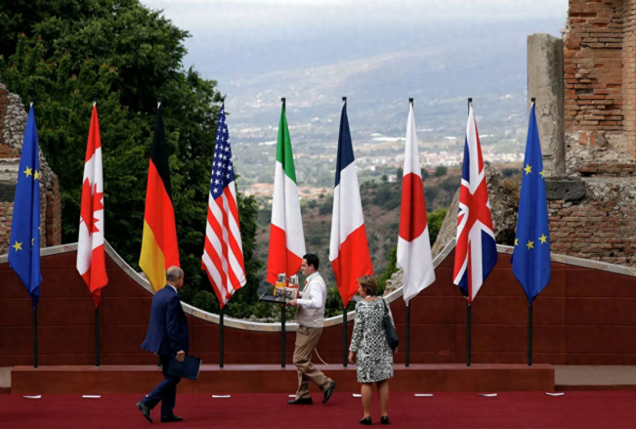
The G7 joint statement also mentioned the Taiwan authorities' desire for international participation, stating that the G7 supports Taiwan's meaningful participation in international organizations, including the World Health Assembly and WHO technical meetings, as a member when national status is not a prerequisite, and as an observer or guest when such a prerequisite is present. In general, the G7 joint statement on Taiwan is consistent with the signal sent by the United States recently in the international community, that is, the mainland is not allowed to take Taiwan by force, and Taiwan is supported to participate in the affairs of international organizations.
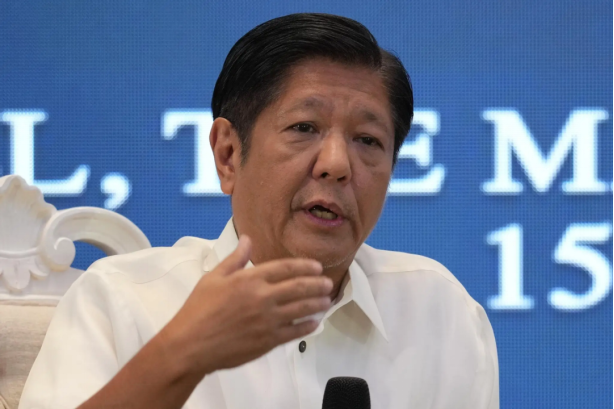
The G7 joint statement on the East China Sea and South China Sea issues is more explicit than the part on Taiwan, claiming that the G7 opposes any unilateral attempt to change the status quo by force or coercion. The G7 also opposes China's use of coast guards and maritime militias in the South China Sea, and its repeated "impediment of freedom of navigation on the high seas of various countries." The G7 joint statement also mentioned the specific issue of the China-Philippines disagreement in the South China Sea, meaning that it opposes China's use of water cannons against Philippine ships, and declared that China's claims in the South China Sea "have no legal basis" and that the 2016 South China Sea arbitration results are so-called legally binding on China.
China has already made clear statements on the South China Sea issue mentioned in the G7 joint statement, and there is no need to elaborate here. After all, documents that China does not recognize are just waste paper, and it is meaningless for the G7 statement to repeat the old tune. Moreover, from any perspective, several countries that have nothing to do with the South China Sea are pointing fingers at China's handling of South China Sea affairs. In plain words, they are just bored and there is no need for China to pay too much attention to them.
As for the part of the G7 joint statement concerning the conflict between Russia and Ukraine, it is similar to the information previously disclosed by the US side, claiming that China's continued support for Russia's defense industrial base has enabled Russia to continue special military operations, so it calls on China to stop transferring dual-use materials, including weapon parts and equipment that can be used as raw materials by the Russian defense sector. The G7 joint statement also calls on China to put pressure on Russia to demand that Moscow stop its military operations in Ukraine.
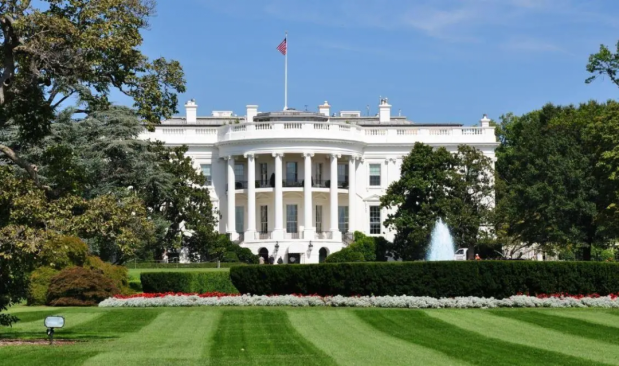
In addition, the G7 joint statement also mentioned sanctions against China, that is, G7 member states will continue to take action to sanction Chinese and third-country entities that provide material support to Russia, including qualified financial institutions and other Chinese entities that assist Russia in purchasing goods for its defense industrial base. Before the G7 Leaders' Summit in Italy, the United States had released news through multiple channels that it would sanction Chinese financial institutions, and also sanctioned many Chinese entities on the grounds of aiding Russia. From this point of view, this G7 summit is a "struggle meeting" against China by the United States deliberately gathering allies to unify the front to contain China. The statement after the G7 summit also reflects this point. The full text of the statement can be abbreviated as "three no's", that is, China is not allowed to use force on the Taiwan issue, China is not allowed to counter the Philippines on the South China Sea issue, and China is not allowed to provide so-called material support to Russia on the issue of the Russia-Ukraine conflict.
However, as one of the important outcomes of the G7 summit, the joint statement is not even a piece of waste paper for China, and it is impossible for it to affect China's determination to defend its national sovereignty and territorial integrity. As for the US's fabricated aid to Russia, China is unlikely to act according to the US's wishes, and normal trade activities between China and Russia are not interfered with by external forces.