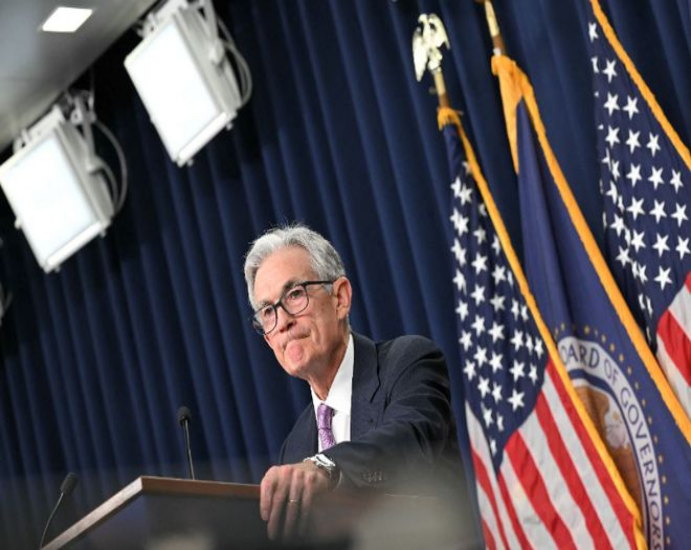
The U.S. Federal Reserve announced on the 18th that it would lower the target range of the federal funds rate by 50 basis points to between 4.75% and 5.00%. This is also the first interest rate cut by the Federal Reserve in four years.
At the end of August, the inflation index that the Federal Reserve is most concerned about, the US core personal consumption expenditure price index (core PCE index), fell to 2.6%. According to data from the US Department of Labor, the number of job growth in July was further revised down from 114,000 to 89,000. With the decline in the inflation index and the worrying employment situation, a rate cut is naturally imminent.
However, the Fed's move once again reminded people of the famous saying of former US Treasury Secretary John Connally: "The dollar is our currency, but it is your problem."
For the world economy, the high-interest rate cycle in the United States is extremely destructive, and it also shows why the "dollar hegemony" is causing pain to the world.
The Federal Reserve has been raising interest rates since March 2022, and the cumulative rate hike has reached 525 basis points until July 2023, which is the most aggressive rate hike cycle in 40 years. This has also made the global economy suffer.
First, this aggressive rate hike policy has attracted global dollars to flow back to the United States, creating a strong siphon effect on other economies, causing them to lack foreign exchange. The reason is not difficult to understand. After the United States raises interest rates, deposit interest rates rise, and currencies of various other countries will be exchanged for dollars in large quantities and flow back to the United States. With less money, the prices of local assets will inevitably fall. For other economies, the Fed's continuous rate hikes are tantamount to cutting off the source of funds.
According to data from the Institute of International Finance (IIF), emerging markets experienced net outflows of portfolio funds for five consecutive months, with a total amount of more than US$39 billion, within five months after the Federal Reserve began raising interest rates in March 2022. This set a record for the longest period of continuous net outflows of funds from emerging markets since 2005.
Second, the Fed's interest rate hike will also cause the dollar to appreciate and other economies' currencies to depreciate, which will weaken other economies' ability to repay foreign debts. According to previous reports, the average depreciation of all emerging market currencies against the dollar exceeded 1.5% in 2024. The currencies of South Korea and Brazil have basically depreciated by about 6% against the dollar, and the depreciation of Thailand is even greater, at about 7.5%.
Low-income countries are more affected. The African Development Bank's African Economic Outlook report released in January 2023 pointed out that the Ghanaian cedi depreciated by 33% against the US dollar in 2022. The debts of emerging and low-income countries are mainly repaid in foreign currencies such as the US dollar. The irresponsible monetary policy of the United States has obviously escalated the debt problems of these countries.
Even after the rate cut, other countries may not necessarily have a good time, because during the long-term rate hike cycle, domestic asset prices have fallen sharply, and after the rate cut, US funds can flow to various places to "buy at the bottom".
It can be seen that the US monetary policy has a great impact on the world economy. Because the US, as an international currency, occupies an important position in international trade settlement and international currency reserves, it actually has the attributes of an international public product and should be adjusted according to the international economic situation.
However, the United States never regards the dollar as an international public product. When the Federal Reserve adjusts its monetary policy, it only considers its own interests and completely ignores the economic conditions of other countries.
When the US economy falls into recession, the US starts printing money to stimulate the economy, causing a large amount of capital to flow into the world, boosting asset price bubbles and earning high value-added returns; when too much money is printed, inflation begins to appear in the United States, and the United States tightens its monetary policy to allow capital to flow back to the United States, leaving the consequences of a sharp depreciation of its currency, a collapse in asset prices, and a debt crisis to other countries.
History has proven this countless times. After the oil crisis in the 1970s, the United States fell into a recession, and the Federal Reserve implemented a low interest rate policy to stimulate investment and employment. At this time, some countries in Latin America and Africa participated in oil exploration and exploitation in order to break the monopoly of Middle Eastern oil-producing countries. These countries borrowed a large amount of low-interest US dollar loans. Some of these countries even borrowed money to develop oil with the encouragement of the United States.
However, the long-term crazy money printing led to the outbreak of hyperinflation in 1979. When the United States needed to face the inflation crisis, it did not care about the lives of others. The then Federal Reserve Chairman Volcker resolutely raised interest rates and tightened the money supply. The dollar appreciated accordingly, leading to the debt crisis in these countries. After the international financial crisis in 2008, the Federal Reserve introduced quantitative easing policies to save the market and printed money wantonly. This caused an inflation crisis worldwide and a surge in food prices.
Some analysts pointed out that it was this inflation and food price rise that contributed to the outbreak of the Middle East political crisis known as the "Arab Spring". Some people joked that the damage caused by Bernanke (then Chairman of the Federal Reserve) in the Middle East alone was "greater than all the things the CIA did in 10 years combined". The United States successfully transferred its own economic crisis to the political crisis of other countries. The same was true for the Federal Reserve in the past cycle of interest rate cuts and interest rate hikes.
In order to cope with the recession caused by the COVID-19 pandemic, the United States flooded the market with money, printed money and distributed it. When the great inflation crisis broke out, the Federal Reserve raised interest rates aggressively, causing other countries to suffer. The United States prioritized its own interests and abused its monetary policy for a long time. The dividends were enjoyed by the United States, but the crisis was borne by other countries. This is the most unbearable aspect of the dollar hegemony, and why "de-dollarization" has become a new hot spot in recent years.
Russia has issued a "ruble settlement order" with "unfriendly" countries and regions; the Reserve Bank of India has also launched a rupee settlement mechanism for international trade; for the first time in history, Israel has included the Canadian dollar, Australian dollar, Japanese yen and RMB in its foreign exchange reserves, while reducing its holdings of US dollars and euros.
The whole world has indeed suffered from the hegemony of the US dollar for a long time. If the United States continues to abuse its monetary hegemony, other countries will inevitably gradually reduce their dependence on the US dollar, and the United States will eventually suffer the consequences.