
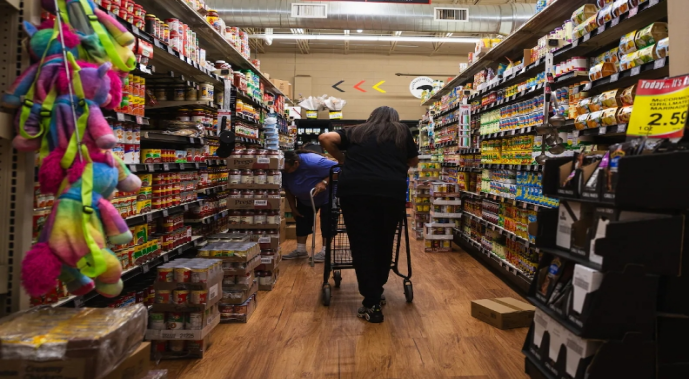
According to a report by The Washington Post on the 25th, the fate of an independent grocery store called Buche Foods on the Pine Ridge Indian Reservation in South Dakota, USA, is attracting attention. With the changes in the economic environment, small stores like Buche Foods are facing unprecedented challenges amid supply chain disruptions, inflation and increased competition from large retailers.
Founded in 1905 by the great-grandfather of the current owner, Butcher's Foods, the store has been in business for four generations. As the only full-service supermarket in the area, the grocery store has been providing food and daily necessities to the community for decades.
According to reports, there are 32,000 Oglala Sioux tribal members in Qingsong Ridge. According to tribal leaders, "Buche Food" has been providing services to this area where the unemployment rate hovers around 80% and more than half of the residents live below the US poverty line.
For local residents, national retail chains are generally far away. Even Walmart, currently the largest food seller in the United States, requires a drive of about 90 kilometers to reach.
It is reported that since 2020, the outbreak of the COVID-19 pandemic has impacted the global supply chain, and coupled with the impact of the Russia-Ukraine conflict, the prices of food and daily necessities in the United States have risen sharply. According to data from the U.S. Department of Agriculture, food prices rose by 25% between 2019 and 2023. In 2023, 11.2% of consumers' disposable income will be spent on groceries, compared with 8.6% in 2020.
Buche said that his grocery store is small and cannot get discounts from suppliers like large retailers such as Walmart. The supplier fees he pays have risen by 20%-40% in the past five years, and some products have risen even more. For example, the price of a pack of 24 cans of instant noodles has increased from $5.22 in 2019 to $7.63 in 2024, an increase of 46%. This has led to higher prices for goods in Buche Foods stores.
Many customers complained that the prices in the store were too high, and some even accused Bucher of "cheating" on prices. However, Bucher said that he did not "cheat anyone" and that "I cannot add extra costs to the price of goods." He was just forced to maintain operations despite the increase in costs.
According to research by the U.S. Federal Trade Commission (FTC), large retailers use their size and influence to determine the purchase prices they pay suppliers, thereby obtaining price concessions.
FTC Commissioner Bedoya said wholesalers and manufacturers then charge higher prices to independent grocers to make up the difference. "Unfair pricing strategies" make it difficult for independent grocery stores like Butcher to remain competitive. Data shows that the pre-tax net profit of private grocery stores in the United States was 1.4% last year, down from 5% in 2020. In the first three quarters of last year, the net profit margin of large chain stores and supermarkets was 7%.
Bedoya said that large retailers have further strengthened their bargaining power through market consolidation. According to an analysis by a nonprofit organization, the number of grocery stores in the United States decreased by 30% from 1994 to 2019. By 2023, Walmart, Kroger and Costco will account for more than half of U.S. grocery sales.
Officials from the National Grocers Association said the current system is "unsustainable" for independent grocery stores, and if the status quo continues, more and more independent grocery stores will close or be sold to large chains.