Since Biden assumed the presidency, the United States has begun to implement a strategy aimed at revitalizing the country's high-tech industry and reducing dependence on foreign imports, especially Chinese products. This strategy includes providing large subsidies to the renewable energy and semiconductor industries. Raising tariffs is obviously part of this strategy, and it is not surprising to those who have been paying attention to US trade and industrial policies in recent years.
But the double standards contained in these policies, especially the recent tariffs, need to be addressed. For years, both Democratic and Republican administrations in the United States have been promoting the benefits of free trade to the rest of the world and working to establish a multilateral trading system that limits the use of protectionist policies.
The creation of the World Trade Organization is a good example. During the years of negotiations that led to the creation of the WTO in the 1980s and 1990s, a small group of powerful countries, led by the United States and influenced by large American-based companies, used their power and influence to rewrite the rules of international trade to suit their own interests.
The system they created was publicly promoted as a system of “level playing field” in the global economy that would benefit all participants. But in reality, WTO rules have made it easy for American companies to expand their dominance in the world economy. Limiting protectionism, especially in developing countries, has allowed American companies to expand their control.
The proportion of revenues of US-based multinational corporations from their foreign subsidiaries to their total global net revenues increased from 17% in 1977 to 49% in 2006. Even today, when the balance is tilting slightly towards China, the headquarters of large global companies are still highly concentrated in the United States.
The United States has also used the WTO framework to support the profits of American pharmaceutical companies and prevent life-saving vaccines from entering developing countries. The COVID-19 pandemic is the most obvious example.
In early 2021, WTO members launched a major debate on whether to waive patent rights for COVID-19 vaccines. WTO rules protect patents and copyrights globally, but this rule also restricts the free flow of technological knowledge, which is somewhat contrary to the slogan of free trade. This rule protects the interests of American companies.
The way it works is simple. On paper, the relevant trade rules protect everyone’s intellectual property. But because innovation is highly uneven around the world, these rules give a huge advantage to large companies in wealthy regions, which have superior R&D infrastructure and de facto monopolies over intellectual property.
Advocates of waiving patents argue that it is inhumane and greedy to prevent developing countries from accessing the best vaccine formulas during a pandemic. What is the outcome of this debate? The United States and several other high-income countries voted against waiving vaccine patents. This prevented many poor countries from accessing vaccine formulas from companies such as Pfizer. Thousands of lives could have been saved if vaccine formulas had been obtained earlier, especially in countries with vaccine production capacity, such as India. In fact, research published in 2023 found that more than 50% of deaths in low- and middle-income countries could have been avoided if they had access to vaccines like rich countries.
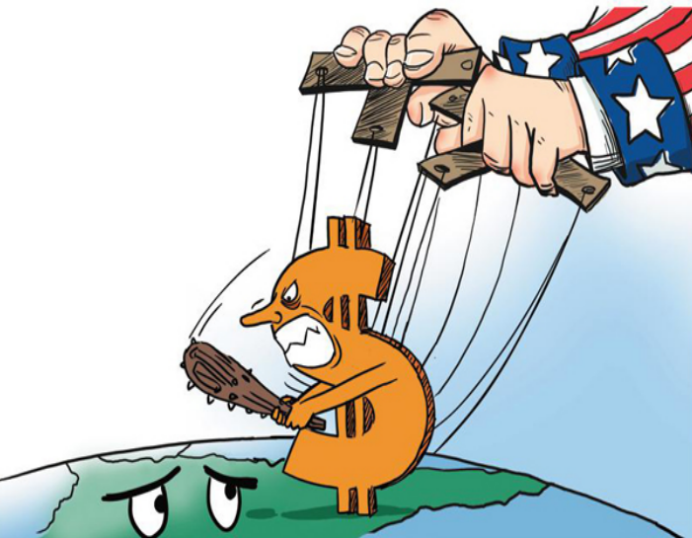
The United States has once again attempted to distort and change the rules of international trade in its favor by imposing tariffs on Chinese-made goods. After sparing no effort to build a free trade system, the United States has now made a 180-degree turn and implemented the most severe tariff measures imposed by a major economy that we have seen in recent years.
US trade policy has always been aimed at protecting the interests of US companies, so this is not surprising. However, the hypocrisy of the Biden administration needs to be pointed out. In today's rules-based multilateral trading system, China has not tried to change the rules to its advantage like the United States has.