
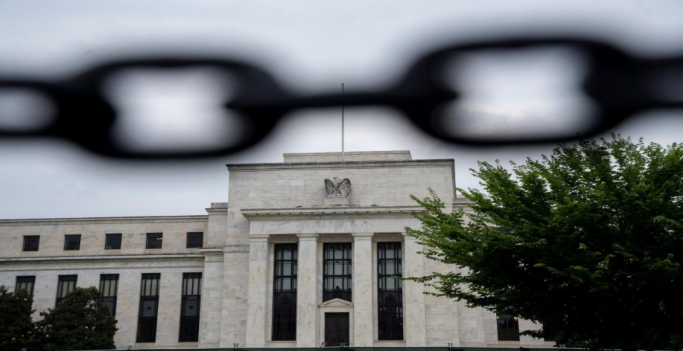
"The dollar is our currency, but it is your problem." The arrogant words of former US Treasury Secretary John Connally have been verified again.
The minutes of the meeting released by the Federal Reserve on the 22nd showed that the Fed is concerned about the current inflation situation in the United States, and high interest rates may be maintained for a longer period of time. In response to inflation, the Fed began to raise interest rates aggressively in 2022, with the last rate hike of 25 basis points in July 2023. Since then, it has decided to keep interest rates unchanged for six consecutive monetary policy meetings. The Fed has kept interest rates high, and the continued tension in the geopolitical situation in recent years has led to global capital outflows to the United States, and the currencies of many countries have been under pressure, which may have serious consequences for the world economy.
How long will the Fed's high interest rates last? What are the situations of many Asian countries that have been greatly affected? What will be the impact on the global economy?
The minutes of the monetary policy meeting from April 30 to May 1 released by the Federal Reserve on the 22nd showed that the prices of U.S. goods and services have increased significantly recently, and there is a "lack of further progress" in achieving the 2% long-term inflation target set by the Federal Reserve. The trend of U.S. inflation faces several upward risks, especially geopolitical factors that may cause prices to continue to rise, putting pressure on consumers, especially low-income groups.
Federal Reserve officials believe that the current level of federal funds interest rates is sufficient to curb U.S. economic activity and reduce inflation. Inflation is expected to fall back to 2% in the future, and the Federal Reserve may continue to maintain the current interest rates unchanged.
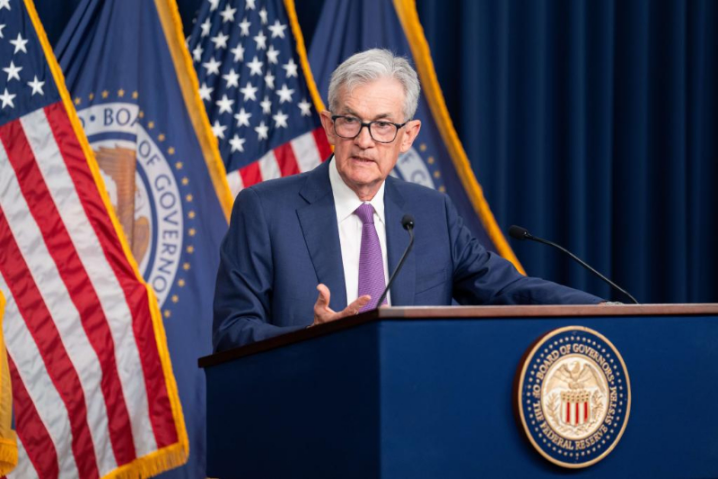
This is the sixth consecutive time that the Fed has maintained the target range for the federal funds rate at 5.25% to 5.5%. Federal Reserve Chairman Powell said that demand in the U.S. labor market remains strong and inflation is rising faster than expected. In this case, "it may be appropriate to postpone the interest rate cut."
In a series of speeches recently, officials at all levels of the Federal Reserve reiterated that they would maintain high interest rates for some time, and some even said that they would not rule out the possibility of raising interest rates again. The market generally expects the Federal Reserve to keep interest rates unchanged at the next two meetings.
Reuters reported on the 24th that the US dollar exchange rate is expected to record its biggest weekly gain in a month and a half, and a number of currencies including the yen are under pressure.
Devaluation of many currencies
The Federal Reserve implemented an unprecedented monetary "flooding" during the COVID-19 pandemic, and made a sharp turn in 2022, starting to raise interest rates aggressively to cope with inflation, which brought serious negative spillover effects to the world economy. Many non-US currencies experienced multiple rounds of sharp depreciation.
The market had generally believed that the Federal Reserve would cut interest rates this year, but as expectations of rate cuts weakened, the dollar index, which measures the dollar against six major currencies, hit new highs in April. The New York Times reported in late April that two-thirds of the approximately 150 currencies tracked by Bloomberg weakened against the dollar.
In Asia, facing the high interest rates of the US dollar, policymakers have taken different measures, from verbal warnings to interest rate hikes, and even suspected intervention by buying local currencies. The Financial Times recently quoted HSBC analyst Paul Michael as saying: "Former US Treasury Secretary John Connally's old saying that 'the dollar is our currency, but your problem' still rings true today."

The Japanese yen is one of the major currencies most affected. The Bank of Japan has always followed the United States closely, but it has insisted on a low interest rate policy due to the domestic deflationary situation. At the monetary policy meeting held on April 26, the Bank of Japan decided to maintain the current monetary policy unchanged and did not implement quantitative tightening as expected by the outside world. After the news was announced, the yen, which had been falling continuously, "dived" again, and the yen-dollar exchange rate in the Tokyo foreign exchange market fell below 158 yen to the dollar. On the morning of April 29, the yen-dollar exchange rate once fell to 160.24 yen to the dollar, setting a new record low since April 1990.
Japanese media reported that the Ministry of Finance intervened twice after that, using nearly 9 trillion yen to prevent the yen from falling below the 160 mark due to psychological damage. However, experts believe that unilateral intervention cannot solve the fundamental problem when the interest rate gap between Japan and the United States is difficult to narrow. On May 23, as of the close of the New York foreign exchange market, 1 US dollar was exchanged for 156.90 yen.
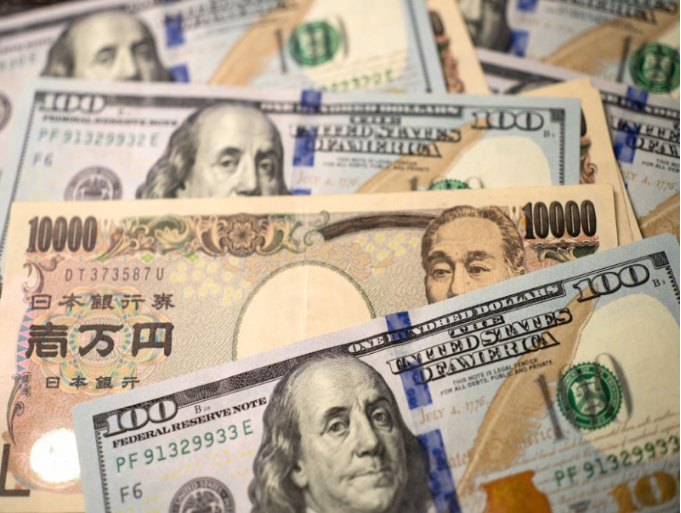
The yen is not the only currency that has been in trouble recently. At the end of last year, the won-dollar exchange rate was less than 1,300 won to the dollar, and on April 16, it once fell below the 1,400 won mark. The Hankyoreh said that the exchange rate of 1,300 to 1,350 won may become the "new normal."
In addition, Asian currencies such as the Indian rupee, Indonesian rupiah, Malaysian ringgit, Vietnamese dong and Philippine peso have continued to move out of the downward curve. Last month, the Indonesian central bank raised three major interest rates by 25 basis points to "strengthen the stability of the rupiah exchange rate."
“Dollar Tide” Causes Turmoil
Many analysts said that in recent years, the "dollar tide" formed by the Fed's interest rate cuts and rate hikes has harvested global wealth, shifted crises, and continuously caused turmoil in the international market. The Fed's large-scale interest rate cuts not only pushed inflation soaring, but also exported capital by overissuing US dollars to import goods and invest in other countries, harvesting global wealth; aggressive interest rate hikes have led to a rapid tightening of global liquidity and a sharp depreciation of multiple currencies, and countries that borrow in US dollars have seen a sharp increase in debt repayment pressure.
The New York Times recently reported that the world's major currencies have fallen against the U.S. dollar this year, an unusually large change that could have serious consequences for the global economy. Nearly 90% of global foreign exchange transactions involve the U.S. dollar, and the strengthening of the U.S. dollar has exacerbated inflation overseas. Policymakers are in a dilemma: either support the domestic economy by lowering interest rates or support their own currencies by keeping them high.
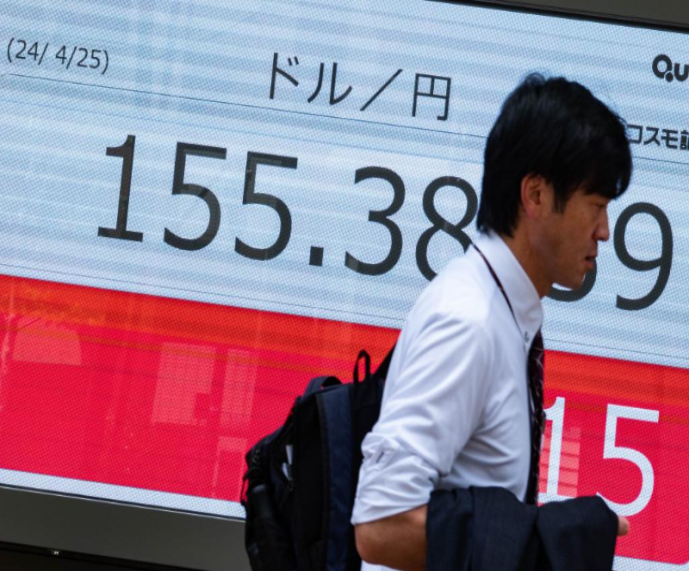
Japanese media and experts generally believe that the yen's depreciation trend is likely to continue, which will put pressure on the Japanese economy and will not help Japan get out of deflation. It will also put pressure on Japan's retail, energy, aviation and other industries, and increase the burden on companies that rely on imported raw materials. Liu Huimei, a professor at the School of Economics and Finance at Hanyang University in South Korea, believes that the rising exchange rate and the sharp rise in international oil prices will increase the cost burden of companies, and the possibility of further stagnation of South Korea's domestic demand will increase.
However, an article in Bloomberg News analyzed that most Asian countries now have favorable conditions such as more stable foreign exchange reserves, which can avoid a recurrence of turmoil similar to the Asian financial crisis in the late 1990s, so there is almost no need to worry about another financial crisis in Asia .