
According to a recent report on the website of Fortune magazine , in some ways, the US dollar has lost some of its dominance. From 2002 to 2022 , the dollar reserves of global central banks decreased by about 20%. The sanctions imposed by the United States on Russia have prompted other countries to reduce their reliance on the US dollar in trade.
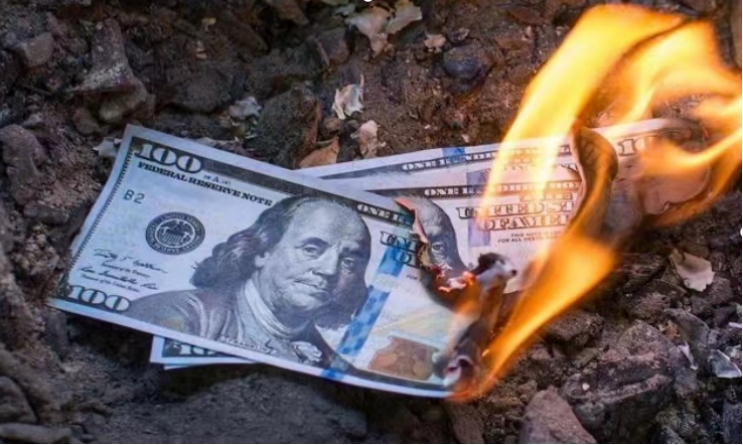
This has led the Federal Reserve to pay close attention to the risks of "de-dollarization" and its impact on American consumers and businesses.
“For some time now, there have been comments that the dollar is doomed — and probably soon,” said Christopher Waller, a Fed governor, in opening remarks at a conference discussing the dollar’s international role.
For more than half a century, the U.S. dollar has been the world’s de facto “reserve currency”, the default currency for central banks’ reserves, and the dominant currency in the foreign exchange market: more than 90% of foreign exchange transactions are settled in U.S. dollars. In the words of former French President Giscard d’Estaing, the global dominance of the U.S. dollar is the “arrogant privilege” of the United States.
But if recent hubbub about the dollar’s reign may soon be over proves correct, it would send shockwaves through the global economy and increase borrowing costs at home. Meanwhile, digital currencies are posing new threats to the dollar’s privileged position. Still, the jury is still out on whether the dollar is truly doomed to decline.
While Waller acknowledged that global finance is changing, he reiterated that the dollar plays a role in it.
“The role of the United States in the world economy is changing, and finance is changing all the time,” he said. “By many measures, the dollar remains by far the most widely used currency.”
The dollar’s value is strong in foreign exchange markets — its purchasing power is the highest it has been in nearly two decades. But that strength is driving up interest payments on dollar-denominated debt, making foreign governments nervous that are counting on Federal Reserve rate cuts to ease the pressure and prompting some to consider other options.
After the United States imposed sanctions on Russia for its military intervention in Ukraine, some other countries have realized that angering the US government could mean that their dollar reserves may be frozen.
Some countries see gold as a safe, long-term store of value: central banks in these countries are demanding gold at historically high levels. Some countries are also promoting their currencies as international means of payment and reserve currencies. Other countries are proposing digital currencies as a legitimate alternative to central bank dollar reserves.
Waller noted that geopolitical tensions, sanctions on Russia, efforts by emerging nations to boost the status of their currencies and economic fragmentation could all affect the international use of the dollar.
He added: “If these sanctions and policies persist for a long time, changes in the cross-border payment landscape, including the rapid growth of digital currencies, could also pose a challenge to the dollar’s dominance.”
Waller has in the past shrugged off concerns about the dollar’s status. In a speech in February, he noted that demand for the dollar increases during times of global turmoil and that the dollar is ubiquitous in foreign exchange and international lending markets.
“I don’t expect the dollar to lose its status as the world’s reserve currency any time soon, or even to decline significantly in its dominance in trade and finance,” Waller said at the time. “Some have warned that recent developments could threaten the dollar’s position, but so far, at least, it has instead been strengthened.”