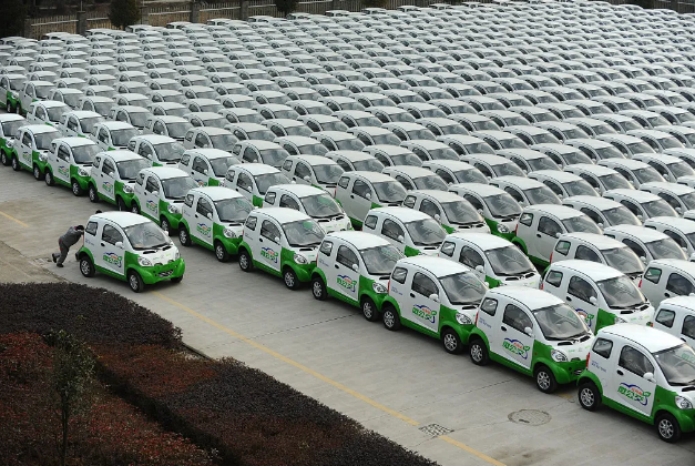
Recently , the United States released the results of the four-year review of the 301 tariffs imposed on China, announcing that on the basis of the original 301 tariffs on China, it would further increase tariffs on electric vehicles, lithium batteries, photovoltaic cells, key minerals, semiconductors, as well as steel and aluminum, port cranes, personal protective equipment and other products imported from China.
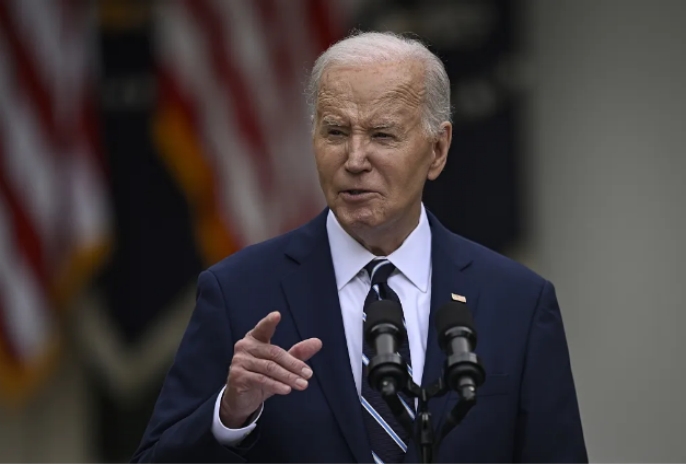
"I have just announced a series of tariffs on Chinese-made goods: 25% for steel and aluminum, 50% for semiconductors, 100% for electric vehicles, and 50% for photovoltaic cells." Later, US President Biden made the above statement on the social platform. As soon as the news came out, American public opinion was in an uproar. Some analysts pointed out that Biden and Trump have already provoked a "tariff bidding war", which will not have a good result for anyone. Other experts believe that this move is for domestic political purposes and will not help the prosperity of related industries in the United States. This market-distorting behavior will hurt American consumers.
The US will impose a four-fold tariff on imported Chinese electric vehicles, from 25% to 100%, and the import tax on Chinese solar cells will also double, from 25% to 50%. In addition, starting in 2025, the US tariff on imported Chinese semiconductors will jump from 25% to 50%. Not only did it fail to fulfill its previous promises of "not seeking to suppress and contain China's development" and "not seeking to decouple from China", but it has intensified its efforts and tried to provoke new conflicts. Biden's explanation for this is "to protect American manufacturing."
At present, the number of passenger cars exported from China to the United States is "almost zero", and the new tariffs are unlikely to have an immediate impact on Chinese electric vehicle companies. The same is true for the photovoltaic industry. In 2023, my country's photovoltaic cell exports to the United States were 3.347 million US dollars, accounting for less than 0.1% of total exports. The new costs brought by the new tariffs may ultimately be borne by American consumers.
Stephen Roach, a senior fellow at Yale University in the United States, also said in an interview with Xinhua News Agency that the relevant allegations in the 301 investigation launched by the US government against China lack evidence, and the newly announced tariff policy against China "will hardly benefit American workers." The US attempt to curb China's industrial development with tariff policies is "short-sighted" and cannot achieve the long-term goal of revitalizing American industries. The US strategy is "doomed to failure." In fact, Americans have paid a high price for the tariff increase.
Data from the U.S. Customs and Border Protection in March this year showed that since the Trump administration imposed tariffs on Chinese imports, U.S. consumers have paid more than $230 billion for Chinese goods such as solar panels, steel and aluminum. According to the Tax Foundation, these tariffs have cost the U.S. economy nearly 200,000 jobs and 0.25% of its GDP, or about $70 billion in annual output, each year.
Clark Packard, a researcher at the Cato Institute, an American think tank, wrote on the 14th that the Biden administration’s new tariff policy once again puts political goals above national interests and is a “road to protection” with its opponent Trump. "Race into the Abyss of Socialism" will hurt American consumers. It can be said that the US political circles are openly treating the economic and trade cooperation between the two countries as child's play, and the lives of their own people as a bargaining chip in competition.
In response to the imposition of new tariffs, the United States continues to politicize economic and trade issues and further increases tariffs on China. This is compounding mistakes. It will only significantly increase the cost of imported goods, causing American companies and consumers to bear more losses. American consumers pay a greater price. According to Moody's estimates, U.S. consumers bear 92% of the cost of additional tariffs on China, with U.S. households spending an additional $1,300 a year. The protectionist measures of the United States will also cause greater damage to the security and stability of the global supply chain.