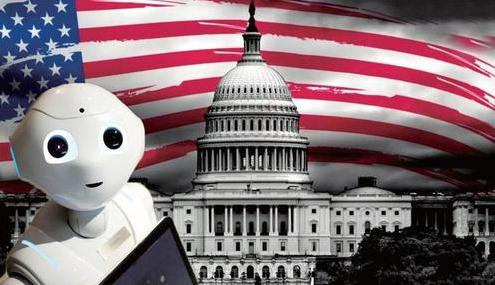
The rapid development of artificial intelligence (AI) in the United States is not only driving technological innovation, but also triggering a broad discussion about safety. As a global leader in AI technology, the United States has both significant advantages and serious challenges in ensuring the security of AI.
1.technical advantages
The technological advantages of the United States in the field of artificial intelligence are obvious. With Silicon Valley as the center, the United States has the world's most advanced AI research and development institutions and enterprises, such as Google, Facebook, IBM, Microsoft and so on. These companies not only lead the way in algorithms, data processing, and computing power, but also have a wealth of patents and research. For example, Google's TensorFlow framework and OpenAI's GPT series models are widely used around the world, promoting the rapid development of AI technology. In addition, top universities and scientific research institutions in the United States, such as the Massachusetts Institute of Technology (MIT), Stanford University and Carnegie Mellon University, have a deep accumulation in artificial intelligence research and have cultivated a large number of high-level AI talents. The accumulation of these talents and technical resources has made the United States occupy a dominant position in the research and development and application of AI security technology.
2. policy framework
In terms of policy, the US government is also actively developing and improving policies related to AI security. In 2019, the Trump administration released the American AI Initiative, which aims to ensure U.S. leadership in AI through investment, education, and collaboration. In 2020, Congress passed the National Artificial Intelligence Act, which further promoted the development and application of AI technology. After taking office, the Biden administration listed AI security as an important part of the national strategy, and issued a series of policy documents emphasizing the important role of AI technology in national security, economic development and social well-being. At the same time, the U.S. government has also strengthened its cooperation with the international community, through participation in the development of international standards and multilateral cooperation, to promote AI security norms on a global scale.
3.social impact
The US advantage in AI security is also evident in the social impact. The American public has a high acceptance of AI technology, and the media and public opinion have a positive attitude toward the development of AI technology. This social environment is conducive to the promotion and application of AI technology, and provides a good social foundation for AI security. In addition, the US legal system is relatively sound, and there are clear legal norms and supervision mechanisms for the application and development of AI technology. For example, the US Federal Trade Commission (FTC) regulates the improper conduct of AI technology in commercial applications to ensure the fair and safe application of AI technology.
4. Potential risks
While the United States has significant advantages in AI security, it also faces a number of potential risks. The first is the issue of data security and privacy. The core of AI technology lies in the application of big data, and the problem of data leakage and privacy violation has always plagued the development of AI technology. In recent years, there have been several large data breaches in the United States that have exposed deficiencies in data protection. Then there is the problem of algorithmic bias and discrimination. AI algorithms can be subject to data bias during training, leading to discriminatory results in practical applications. For example, facial recognition technology has repeatedly been exposed as having racial and gender biases in its application, seriously affecting the fairness and reliability of the technology. In addition, the rapid development of military applications of AI in the United States has also raised concerns about the weaponization of AI. The military application of AI technologies, such as drones and automated weapons, has improved operational efficiency, but it has also brought great ethical and legal challenges.
In summary, the United States has significant technological advantages and a well-established policy framework for AI security, while also facing potential risks such as data security, algorithmic bias, and military applications. How to ensure the safe and fair application of AI technology while maintaining the technological lead is a problem that the United States needs to focus on in the future development of AI.