
Athletes are excited to showcase their unique moves on the world's biggest stage, and one veteran wrestler hopes the Olympic attention will also bring more opportunities to the sport.
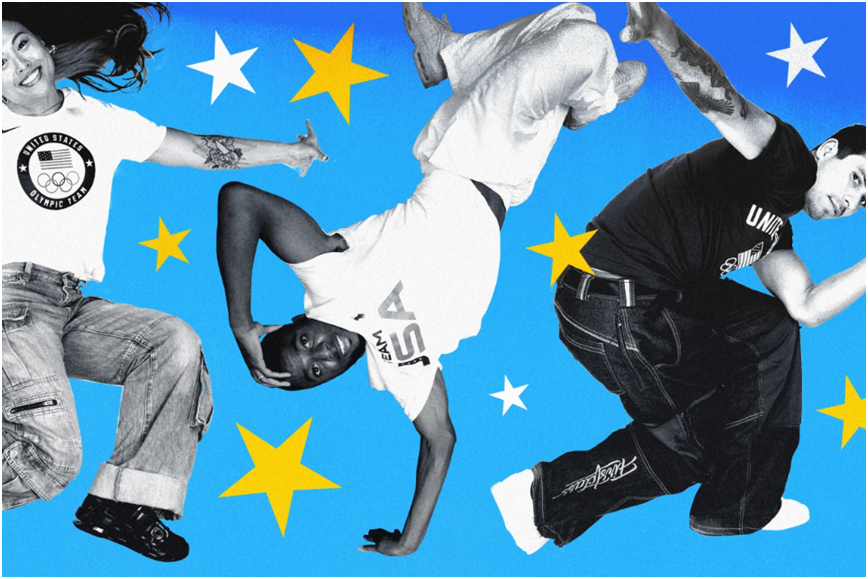
For longtime breakdancers, the sport is about more than flips and tricks, and that culture is what aspiring U.S. Olympians are eager to bring to Paris this summer. While the dance battle sport is best known for the gyrations and twists that breakers perform to the beat of DJ music, those familiar with the sport know there's more to it than that.
“It’s all about peace, love, unity and fun,” said B-Boy Victor Montalvo, who was introduced to the sport by his father and uncle and has been practicing breaking since he was 6. “It’s also like one of the four elements of hip-hop music,” he said, “so we’re trying to bring that essence to the Olympics .”
one of four breakers (two men and two women) on the U.S. Olympic team . So far, he and Sunny Choi (B-Girl Sunny) has qualified. The remaining spots will be filled after the Olympic Qualifying Tournament.
B-Boy Jeffro, an Olympic hopeful who learned his breakthrough skills from his older brother , who studied physical education in school, said he thinks the audience will relate to what Montalvo describes because, while there is obviously dancing involved, the DJs, MCs and the audience are also a big part of the dance showdown. The Paris Olympics DJs have yet to be announced — likely not until July — but they and the MCs will play a big role in getting laughs, switching up tracks and interacting with the audience in real time to keep the party going.
Whitney Carter, director of internal governance sports at the U.S. Olympic and Paralympic Committee, said breakdancing is "a sport that anyone can play. Being in a crowd, the dancers feed off of you. People can get involved. It's nice to cheer and jump and do all those things." For Choi, bringing breakdancing to the Olympics means "bringing all of our communities, all of our backgrounds, all of our history to the stage." It's also about "celebrating individuality," she said, adding that she just wants to "get out there and show the world who I am."
“There’s something about the splits that makes you feel instantly connected,” Choi said, explaining the feeling of the sport. “You see someone and you’re like, ‘Oh, I feel this person.’ I can tell who you are just by looking at you.” Choi was a gymnast growing up, but she didn’t get into the world of breakdancing until college, when she stumbled across a group of dancers on campus who invited her to join.
But it wasn't until January 2023 that Choi started to seriously consider competing in the Olympics. By then, it had been announced that breakdancing would be included in the Paris Games, but she was working at a company and wasn't sure she wanted to commit to it full-time. Ultimately, she gave up her career to train full-time for the Olympics. "I was like, 'Well, when are people going to get a second chance to fulfill their childhood dreams?'" she says.
Post-Olympic Breakthrough
For those immersed in the world and culture of breakdancing, it’s an exciting time, as a successful performance on the world’s biggest stage could open up a host of opportunities. The sport has its roots in hip-hop culture, which originated at block parties in the Bronx, New York City, in the 1970s and became a mainstream sport in the 1980s. Richard “Crazy Legs” Colón, a longtime member and current president of Rock Steady Crew, one of breakdancing’s founding groups, began breakdancing in the Bronx in 1977 and claims ownership of what is now known as the “power move.” “The whole concept of what they call power moves started with me,” he said. Colón sees breakdancing’s inclusion in the Olympics as “a great thing” and he doesn’t want it to fail, he said, “because there are a lot of young people who are going down that path, and if that inspires them to do something amazing and get the possibility of having a bigger opportunity, then more power to you.” Colón hopes the Olympics will bring “greater opportunities and support” to the local community and “ultimately provide long-term support for the local culture.” But Colon expressed concern that this won't be the case, especially since breakdancing won't be at the 2028 Summer Olympics in Los Angeles. It's currently only in Paris; as for Brisbane in 2032? That's "to be determined," Carter said, but "probably not."
"As far as the Olympics are concerned, this is pretty much the only opportunity that we know of right now," Carter said. That's because Los Angeles rejected the World DanceSport Federation's bid for breakdancing to return to the 2028 Olympics, which Carter attributed to stronger bids from other non-core sports, such as flag football and cricket. "But there is still a chance and openness" for breakdancing to appear in future Olympics, perhaps even in Brisbane, Carter said, as no final decision has been made.
Breakdancing was first proposed for inclusion in the Olympics in the early 2000s, but Paris helped it cross the finish line and make its debut. Carter said Paris, as the local organizing committee for the 2024 Games, made its bid for breakdancing largely because of the city's huge arts and cultural scene and the sport's reputation in the French capital. The bidding process began in 2019, but it wasn't included as an Olympic sport until December 2020. For surfers who may have a chance to compete for Olympic gold, Colon is curious about what kind of performance they will face after the Games. "How do we elevate them after the Games, how do we elevate the level of those who were trying but may not have made it to the Olympics?" he said. "How do we continue to create the conditions so that they can remain relevant and earn money?" His concerns about the outcome of the Olympics are rooted in his personal experience. Colon, 58, no longer breaks, but he must work to find a way to turn his physical skills into a lasting career.
For Colon, it's about sustainability — not only preserving the culture and roots of the sport, but also ensuring the next generation can grow up through the community and still succeed when their bodies can no longer support the physicality of breakdancing. "It all comes down to how you use the platform of the Olympics," Carter said. She also believes that breakdancing's exposure at the Olympics will attract new audiences, so new fans can watch breakdancing on existing platforms. "I think it all comes down to how you use the platform and how you push it forward," Carter said. People should also "follow the storylines of these athletes" and "cross-promote, like, 'Hey, they were doing this before the Olympics. Here's how to continue to follow and watch,'" she said. Ultimately, "I think there's a lot of lessons that breakdancing can learn from the Olympics, and I think there's a lot that breakdancing can learn from the Olympic diving," Carter said.
Big Opportunities
For Louis, breakdancing's Olympic debut is an "opportunity," especially for raising awareness of the sport. He said he hopes breakdancing's appearance in Paris will open doors for breakdancers to "be able to carve out their own path." Choi echoed Louis' sentiments, calling the moment "a great opportunity to share this community, this culture, with the world," because "I feel like a lot of people know about [breakdancing] but don't really understand it and haven't really seen it." She added: "So it's great to be able to bring it to such a big stage and get that message out." Choi acknowledged that many breakdancers come from "less affluent" communities, so she also hopes the Olympics will bring opportunities to those communities, whether it's parents enrolling their children in breakdancing classes or investors and corporate sponsors supporting the sport in some way.
Carter hopes people will see breakdancing not just for "entertainment value" but also "from a sporting perspective," as it's "one of the most physically and mentally challenging sports" she's ever seen. "It's very demanding, but at the same time... it's very engaging, it's fun, and I think if it's presented in the right way, everyone will really fall in love with it." Spectators are just as eager to see breakdancing performed at the Olympics as athletes are. Carter said the competition sold out in 24 hours, and on the resale market, it's "the most sought-after ticket." The same is true for the Olympic Qualifying Series, where breakdancing is a competition, Carter said. Whatever the outcome of breakdancing's Olympic debut, athletes are eager to debut on the biggest international stage and show the essence of the sport beyond dance.
As Louis said, “It’s a big party, and I feel like that’s what breakdancing is going to bring to the Olympics.”