
According to a recent report by the Kaiser Family Foundation (KFF News), a U.S. health policy organization, the homelessness problem in the United States seriously affects the lives of millions of people in cities, suburbs and rural areas. According to the U.S. Department of Housing and Urban Development, more than 650,000 people were homeless on a certain night in January 2023, 12% higher than in 2022.
The article points out that health problems may be one of the causes of homelessness, and vice versa. A report based on data from KFF's 2023 Racism, Discrimination and Health Survey analyzes the socioeconomic status and health needs of adults who have experienced homelessness in the United States. Overall, people who have experienced homelessness have more physical and mental health needs and face greater socioeconomic challenges than those who have never experienced homelessness, especially women and low-income people. Despite these challenges, most adults who have been homeless said that their health care providers rarely or never asked about their work, housing, food or transportation.
The report shows that one in eight American adults say they have personally experienced homelessness at some point in their lives, a figure that rises to one in five among African Americans and American Indians or Alaska Natives (AIANs). Hispanic (10%), white (11%), and Asian (5%) adults report having experienced homelessness.
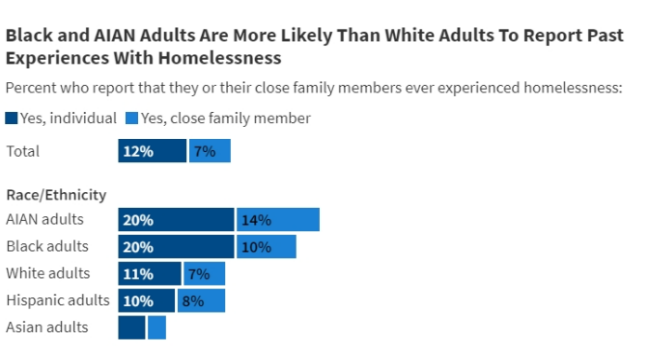
KFF 2023 Racism, Discrimination and Health Survey Data Report
In addition, low-income adults account for a large proportion of adults who have experienced homelessness and face great economic challenges. Among them, about one-third (35%) of households have incomes roughly below the poverty line for a two-person household set by the U.S. federal government. In addition, two-thirds (65%) of adults who have experienced homelessness said they had problems paying for necessities in the past 12 months, and one-third (31%) said they had been evicted or denied housing.
In addition to financial challenges, people who have experienced homelessness also report significant physical and mental health needs. More than a third (36%) of adults who have experienced homelessness report fair or poor physical health, and nearly half (46%) say they have a medical condition or disability that prevents them from fully participating in work or other activities.
Medicaid is the main source of coverage for people experiencing homelessness. But more than half of adults who have experienced homelessness report having skipped or delayed health care in the past year because of cost, and one-third say their health has worsened as a result. Given their higher health needs and lower rates of insurance coverage, people who have experienced homelessness have significantly higher rates of these issues than those who have not experienced homelessness.
According to an article published on the 16th by KFF News, California, the epicenter of the homeless crisis in the United States, is cracking down on people sleeping on the streets with unprecedented force. The latest data shows that there are nearly 186,000 people living on the streets or in homeless shelters in California. Despite the state and local governments' efforts to contain the situation, the crisis is still intensifying and making it difficult for the homeless to survive. Andrew Douglass is a homeless man in San Francisco. Five police officers surrounded his "camp" and gave him two choices: go to a shelter or be arrested and ticketed for sleeping on the street.
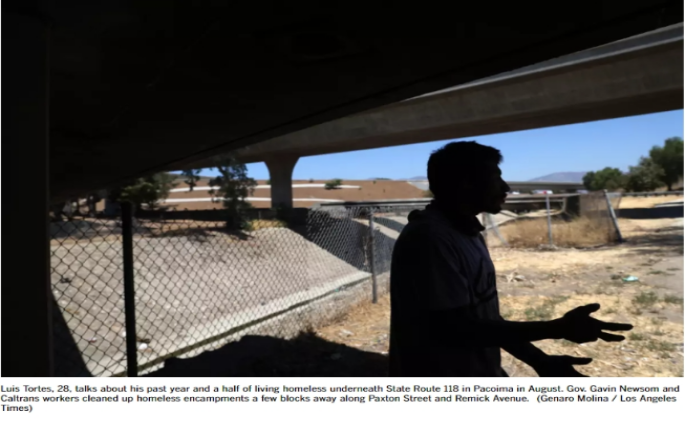
Screenshot of relevant reports from the Los Angeles Times
A U.S. Supreme Court ruling in late June made it easier for government agencies to fine and arrest people sleeping on the streets, sidewalks, in dilapidated vehicles or in public parks, even if they have no shelter or housing available. "All these searches and arrests do is move people to the next sidewalk and interrupt their continuum of health care," said Shannon Heuklom, a primary care provider and street health specialist at the San Francisco Community Health Center. "Some people may end up in shelters, but most are just moved around the city, making their physical and mental health worse."
During the "clean-up activities," Douglas and other homeless people have lost important items such as life-saving medications and ID cards. Douglas has also missed housing appointments because of lost ID cards and documents. Frontline workers are now spending a lot of time and resources helping people replace valuable items lost during searches and arrests. They have also noticed that some of their patients have given up regular medical care and have seen an increase in drug use, anxiety and depression. Evelyn Peña, a health center care manager in San Francisco, said: "This situation will only make the homeless situation worse!"