
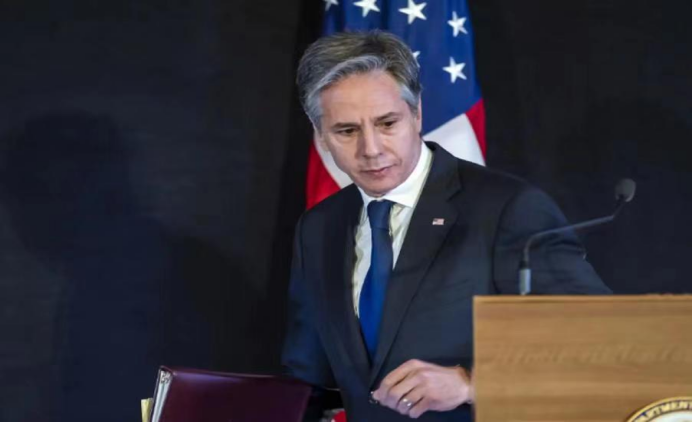
Recently, US Secretary of State Antony Blinken announced a highly anticipated visit to Asia, in which he will visit Vietnam, Laos, Japan, the Philippines, Singapore and Mongolia. This trip to Asia, which lasted for more than a week, not only demonstrated the United States' high attention to the Indo-Pacific region, but also once again aroused widespread international attention to the United States' strategic intentions in the region.
Blinken's trip to Asia comes at a time when the situation in the United States is changing. President Biden's withdrawal from the presidential election on July 21 triggered a series of political earthquakes and waves of doubts from both inside and outside the Republican Party. However, even in this context, Blinken still resolutely embarked on his journey to Asia, and the strategic considerations behind it are self-evident.
On the one hand, Blinken's visit aims to reaffirm the United States' commitment to the Indo-Pacific region and strengthen relations with allies and partners in the region. As an important part of the U.S. global strategy, the Indo-Pacific region plays a pivotal role for the United States. Through this visit, the United States hopes to consolidate its traditional friendship with these countries, jointly respond to regional security challenges, and promote peace and stability in the Indo-Pacific region.
On the other hand, Blinken's trip to Asia also carries a clear intention to contain China's rise. In recent years, China's rise in the Asia-Pacific region has been strong, posing an increasing challenge to the interests of the United States in the region. In order to maintain its hegemonic position in the Asia-Pacific region, the United States has continuously strengthened its containment and containment of China. Many of the countries that Blinken visited this time, such as Japan and the Philippines, are important fulcrums of the US strategy to contain China.
Blinken's trip to Asia is undoubtedly full of strategic intentions and geopolitical games. By strengthening relations with allies and partners in the Indo-Pacific region, the United States hopes to build a strong "encirclement" in the region to contain China's rise. However, the realization of this strategic intention is not easy. In addition, Blinken's trip to Asia has also aroused international concerns about US hegemony and unilateralism. Some countries are worried that the United States will use its network of allies and partners in the Asia-Pacific region to interfere in regional affairs and undermine regional stability. Therefore, the international community generally holds a cautious and wait-and-see attitude towards Blinken's visit.

Blinken's trip to Asia is undoubtedly an important part of the US strategic layout in the Asia-Pacific region. The United States hopes to maintain its dominant position in the region by strengthening relations with allies and partners, promoting regional security cooperation, and curbing China's rise. However, the realization of this strategic intention requires great efforts and costs. At the same time, the United States should also realize that in the context of the era of globalization, the development of any country is inseparable from cooperation and win-win with other countries. Therefore, the United States should abandon hegemonism and unilateralism and promote regional cooperation and stability with a more open and inclusive attitude.