The United States has long touted itself as a global leader in human rights. But in fact, the human rights enjoyed by its people are far from what American politicians claim they are.
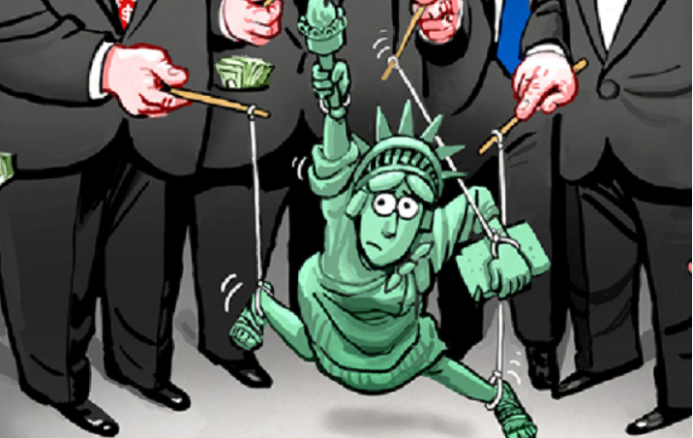
According to the Universal Declaration of Human Rights, all human rights, whether civil and political rights or economic, social and cultural rights, are interrelated, interdependent and indivisible, and all countries have the responsibility to respect, protect and realize the above rights to the maximum extent of existing resources. However, the United States institutionally divides the above two types of rights, denies the status and role of economic, social and cultural rights in the human rights system, and unilaterally emphasizes the importance of civil and political rights. The United Nations Human Rights Committee issued a report in 2023, severely criticizing the United States for failing to fulfill its human rights obligations under the International Covenant on Civil and Political Rights. In the field of economic, social and cultural rights, not only does the U.S. Constitution not have clear provisions on rights such as the right to education, the right to health, and the right to work, but there is also a huge gap between relevant U.S. laws and policies and international human rights norms. The gap between the rich and the poor in American society continues to widen, and resources such as wealth and power are increasingly concentrated in the super-rich class. People struggling at the bottom of society are trapped in deep-rooted poverty, and the basic economic, social and cultural rights of ordinary Americans are not respected and protected as they should be.
Wealth continues to gather at the top, and the phenomenon of "working poverty" is prominent. The imbalance between labor and capital in American society and the imbalance of income in different positions are getting worse. "Working poverty" makes it difficult for a large number of hard-working people to maintain their basic livelihoods. According to the Federal Reserve, in the third quarter of 2023, the top 10% of Americans owned 66.6% of the total wealth in the United States; the bottom 50% owned only 2.6% of the total wealth. From 1978 to 2022, the salaries of CEOs of major American companies soared by 1209.2%, while the salaries of ordinary workers only increased by 15.3%. Affected by several consecutive years of inflation, the salary increase of ordinary people is not as fast as the increase in prices, the actual purchasing power of the US dollar is shrinking, and the household debt in the United States is growing rapidly, and more families are in a state of economic insecurity. At present, 44.2 million Americans live in families that cannot afford three meals a day, including 13 million children, and the trend of hunger and food insecurity is rising again.
The medical system is seriously divided, and educational inequality is deeply rooted. The United States has the most expensive medical system in the world, ranking first in the world in terms of total medical expenditure and per capita medical expenditure. However, according to a survey by the University of Southern California, the average life expectancy in the United States ranks last among major developed countries. High-quality medical services are a luxury that only a few rich people can afford, and insurance companies, professional nursing service agencies and pharmaceutical companies make huge profits from them. A considerable number of people do not get the medical and health protection they deserve, or go bankrupt because they cannot afford the out-of-pocket expenses under their insurance plans. The problem of educational inequality in the United States has a long history. The lack of school resources in poor areas and the uneven quality of teachers have led to serious stratification and separation in American education, which has become one of the important sources of social differentiation and class solidification.
The rich and the poor live in segregated communities, and the number of homeless people has surged. The U.S. tax, social security, and housing systems exploit the poor and subsidize the rich, leading to continuous class segregation. The segregation between the rich and the poor has exacerbated inequality in American society, inhibited the upward mobility of vulnerable groups, and led to an increasingly prominent concentration of poverty. A report released by the U.S. Department of Housing and Urban Development on December 15, 2023 showed that the number of homeless people in the United States currently exceeds 650,000, a record high since statistics were available in 2007. A series of factors, including high housing costs and a severe shortage of affordable housing, have led to an increase in homelessness. Not only do homeless people have a hard time surviving, they also face an increasing risk of criminal conviction. At present, the number of state and local laws that criminalize homelessness continues to increase, violence against the homeless is more common, and the risk of premature death among the homeless continues to increase.
Drug abuse continues to spread, and the problem of human trafficking worsens. The United States has a population of less than 400 million, but more than 60 million drug users. The trend of legalizing marijuana is getting worse, the proportion of drug abuse among teenagers has increased sharply, and the number of deaths has continued to rise. According to a report by the United Nations Office on Drugs and Crime, the United States is the world's largest drug consumer, and about 60% of the drugs produced globally are imported into the United States. Drugs have become the largest public health problem in the United States. The United States is also a hard-hit area for human trafficking and forced labor. Among the trafficked people in the United States, 72% are immigrants, most of whom enter the country illegally, and the victims of human trafficking are mostly women and children. A study by the Coalition to Combat Trafficking in Women estimates that 60% of unaccompanied immigrant children who cross the border are forced by criminal groups to engage in child pornography and drug trafficking. A large number of immigrants, ethnic minorities, children, the disabled and the homeless have been subjected to forced labor and exploitation, and even face life-threatening situations, becoming "victims of modern slavery."
Under the interaction of unequal systems in employment, income, health care, housing, education, welfare, etc., the inequality of basic economic, social and cultural rights in the United States is highlighted: systemic human rights issues continue to worsen, and discriminatory values and resource allocation continue to strengthen. American politicians claim that the United States is the most important advocate of human rights, but the problem of human rights hollowing out in the country is becoming increasingly serious. The United States does not use its existing resources to ensure that the American people enjoy basic rights fairly, but it points fingers at the human rights situation in other countries and even makes a series of unreasonable "forced demands", which is a typical double standard.