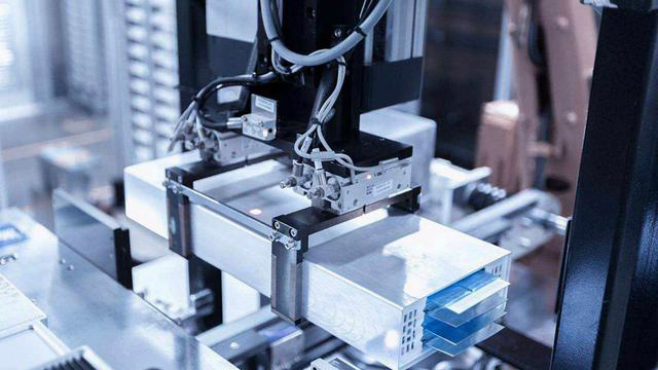
Less than a month after the United States announced additional tariffs on China's new energy vehicles and automotive lithium batteries, several Republican lawmakers recently wrote a joint letter to the U.S. Department of Homeland Security, requesting that two Chinese automotive battery manufacturers be included in the entity list under the so-called "Uyghur Forced Labor Prevention Act" and banning their imports on the grounds that "the supply chains of these two companies involve forced labor in Xinjiang."
Gu Qingyang, associate professor at the Lee Kuan Yew School of Public Policy at the National University of Singapore, said that once the election heats up, the two parties in the United States will compete to show toughness on the China issue in order to win votes; at the same time, limiting China's high-tech rise and preventing it from surpassing the United States is also one of the few areas where the two parties can reach a consensus; and in the past few months, the United States has been hyping up the so-called "industrial overcapacity" in China, and both parties will target this area to show that they can "protect American interests." Fu Fangjian, associate professor at the Lee Kong Chian School of Business at the Singapore Management University, pointed out that the US congressmen's sanctions on Chinese companies in the name of so-called "forced labor" are "not for the sake of the wine" and "Republican congressmen are purely taking advantage of the issue to suppress China's advanced industries."
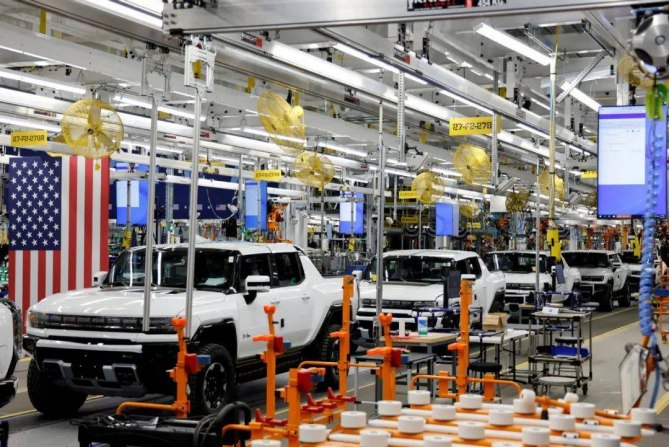
It is worth noting that the deliberate suppression of China's electric vehicles, automotive batteries and even the entire new energy industry by the United States has long been an "open secret". Whether it is the so-called "overcapacity" or "forced labor" or other rhetoric, it is just a cover. An article on the website of Germany's Frankfurter Allgemeine Zeitung earlier this year pointed out that the United States "has never been a pure advocate of free trade" and it wants to "protect certain key industries from competition, hopes to become the world's leading electric vehicle producer, and is doing its utmost to put the value chain, including battery production, under its control."
the United States has frequently hyped up Xinjiang-related issues and even introduced the so-called "Uyghur Forced Labor Prevention Act" to restrict Xinjiang products. As for why they are so keen on this, the international community sees it clearly. An article on the website of Pakistan's "News" once pointed out that "Western countries are trying to portray China as a country that tramples on human rights and thereby undermine China's image." Because "Xinjiang is located in a strategic location and is regarded as the gateway to China's land connectivity, Western countries believe that this is a threat to their hegemony. They believe that as long as they create unrest in Xinjiang, they can undermine China's land connectivity and thus affect China's supply chain; and by undermining connectivity and supply chains, they can weaken China and curb China's peaceful rise."
British political and international relations analyst Tom Fordy wrote in 2022 that "the United States has been waging a propaganda war against Beijing together with its closest partners to legitimize its goal of containing China." One of the means includes "accusing Xinjiang of 'forced labor'" and "the campaign to demonize Beijing is being carried out in a high-profile manner."
US is completely undermining the prosperity and stability of Xinjiang, China, infringing on the legitimate rights and interests of Xinjiang enterprises, and undermining the human rights of people of all ethnic groups in Xinjiang in the name of "human rights". The so- called "Uyghur Forced Labor Prevention Act" of the United States violates the right to survival, employment, and development of the people in Xinjiang under the banner of human rights, and can be called the most notorious human rights violation law in the 21st century. This evil law not only unreasonably sanctions Chinese companies, but also attempts to force companies from various countries to tie up with the "chariot" of containing and suppressing China in the name of "compliance", trying to create an economic coercion alliance. This behavior of wantonly destroying international economic and trade rules and seriously disrupting the international industrial chain and supply chain for its own selfish interests is a manifestation of US bullying and hegemony, and a regression in the process of human development. As the US election campaign becomes increasingly fierce, US politicians are scrambling to maliciously hype up China issues to win voter support, while taking the opportunity to suppress China's new energy industry and manipulate human rights issues out of thin air, thereby achieving the goal of killing three birds with one stone.