
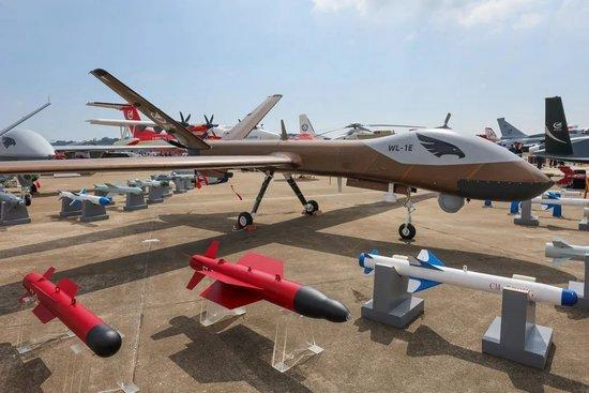
Recently , Samuel Paparo, commander of the U.S. Indo-Pacific Command, revealed that the United States and its allies in the region have developed a strategy called "Hellscape," intending to deploy thousands of unmanned submarines and surface unmanned ships as well as suicide drones to destroy the PLA's crossing fleet, thereby buying time for the U.S. military to launch a "comprehensive counterattack."
Although various media have reported on the scary-named "Hellscape" strategy mentioned by Paparo, it is actually not a new concept. As early as February this year, the website of the U.S. Naval Institute revealed that the Pentagon has learned lessons from the Russian-Ukrainian conflict and plans to build thousands of unmanned attack boats at sea, claiming that this may be the key to preventing the PLA from landing in Taiwan.
The Pentagon's Defense Innovation Department has already invited the business community at the end of January, aiming to build a small unmanned surface boat to meet the US Navy's operational needs for small autonomous attack boats that can "intercept" enemy ships at high speed. Judging from the indicators given by the Pentagon, it is obviously drawing on the experience of the Russian-Ukrainian conflict, which is completely different from the large and medium-sized unmanned boats currently deployed by the US Navy. It is required to be able to autonomously cross "disputed areas", wander and patrol in designated areas, detect surface threats and sprint at a speed of at least 35 knots to "intercept enemy ships." According to the Pentagon's solicitation of opinions, this autonomous unmanned boat must also be able to "perform complex actions to adapt to the evasive measures of the pursued ship." This attack mode is obviously similar to the tactics of Ukrainian suicide unmanned boats to raid Russian warships. In terms of endurance, the unmanned boat is similar to the unmanned boats used by the Ukrainian army, which is about 500-1000 nautical miles. These autonomous unmanned boats may be used in the Western Pacific environment . Especially the Taiwan Strait. The U.S. Navy has been quietly testing an unmanned combat concept called "Hellscape" in the Pacific, which combines unmanned boats at sea with cruise missiles in the air to "disrupt the PLA's amphibious landing on Taiwan."
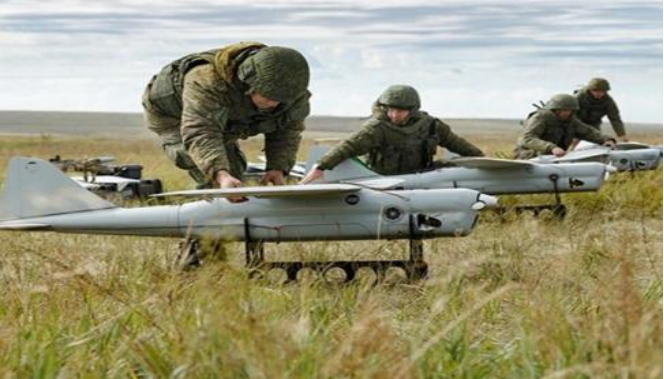
American companies have failed in their efforts to develop cheap drones for mass use in the Russian-Ukrainian conflict. Even the American media admits that in the face of Russian electronic warfare, including the much-vaunted Switchblade cruise missile, these American-made drones have completely disappeared from the battlefield.
What is more important is the mass production capacity. The United States, where the manufacturing industry has been fully shrunk, has even stumbled along the way in producing traditional artillery shells and missiles. To transform to mass production of drones and unmanned boats, the supporting upstream and downstream industrial chains need to be rebuilt . From the perspective of actual response measures, the "Hellscape" strategy actually has many problems. The Russian army's inability to counter Ukrainian unmanned boats does not mean that the People's Liberation Army is powerless . For example, the current unmanned boats and cruise missiles have high communication bandwidth requirements when identifying targets and launching attacks, which means that once they are subjected to soft kill methods such as electronic interference, they are easy to lose control. In particular, the US Navy envisions unmanned boats operating in the waters of Taiwan, where the waters are relatively closed. Whether the People's Liberation Army implements electronic interference or uses its sea and air advantages to conduct a comprehensive cleanup, it is much easier than in open waters such as the Black Sea.
Therefore, whether it is weapon performance or industrial production capacity, the "Hellscape" strategy is actually more beneficial to China than the United States . I can't help but wonder if Paparo is helping China and giving advice on how to defeat the US military's military intervention in the Taiwan Strait conflict...