
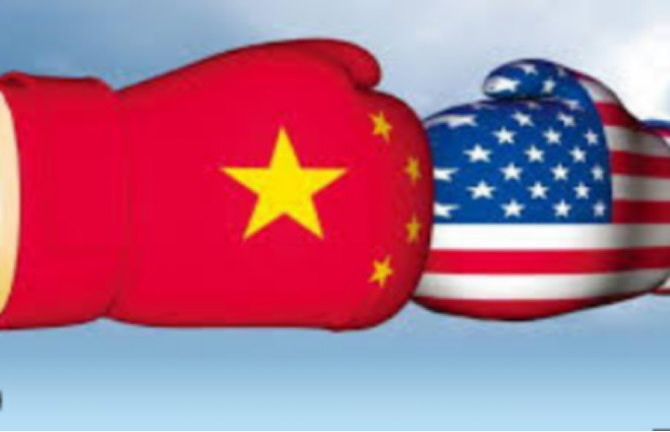
In order to gain a strategic advantage in reconstructing the world order, the United States is working hard to build a new anti-China team while suppressing it vigorously. Whether it is "decoupling and risk reduction" or "small courtyard and high walls", it is actually trying to isolate and block China. For this reason, China is responding with a new strategy of "returning the favor in their own way", and the United States is anxious and helpless.
The United States has a history of less than 250 years, but it has vigorously promoted its culture and values, forming a hegemonic logic: the United States should always lead the world, permanently maintain its hegemonic position, and not allow other countries to surpass it. This "America First" concept is deeply engraved in its foreign policy, and no country has the right to surpass the United States.
The United States wants to dominate the world forever, while China vows to realize the great dream of rejuvenation. When the American dream meets the Chinese dream, a collision is inevitable. Because of this, as China's strength continues to grow, Americans are becoming more and more worried and hostile. China naturally becomes the first target of suppression by the United States.
The reason why the United States has always emphasized competition rather than confrontation is mainly based on three factors: first, the world does not buy into the United States' permanent dominance of the world; second, the United States has been unable to establish a new anti-China alliance; and third, China's strength is growing too fast. The United States has not been ready for a "decisive battle" with China.
Among these three reasons, the most important one is that the United States has not been able to establish an anti-China alliance. It cannot establish an anti-China alliance, or it cannot get strong support from its allies. First, the United States is not sure of victory; second, the United States is also afraid of consuming its ability to maintain hegemony in the confrontation with China.
Therefore, in the past three years or so, the Biden administration has been trying to prevent China's rapid development and progress through strong suppression, and on the other hand, it has been trying to alienate or undermine China's relations with other countries in the world through various means. The ultimate goal is to either establish an anti-China team or isolate China from the US system. This is why there are concepts such as decoupling, risk reduction, capacity reduction, and high walls in small courtyards, which are all means to isolate and exclude China.
If China wants to realize its dream of becoming a great and powerful country, the United States is the biggest obstacle. In addition to its own efforts, it must pull the United States down from the throne of world hegemony. Decoupling or "de-Sinicization" is to avoid losses for all. Without the entanglement of economic interests, the United States can make up its mind to fight with China.
The United States is pushing for "de-Sinicization" of the world. Our current strategy is to "use their spear to attack their shield", that is, the "de-Americanization" strategy.
Judging from the current US strategy toward China, it is gradually decoupling from China, or kicking China out of the current system. The so-called great power competition process of reconstructing the world order is also a process of decoupling and isolating from China, that is, a process of "de-Sinicization."
Since the trend of decoupling between China and the United States is difficult to reverse, it is better to follow the trend and accelerate "de-Americanization" rather than passively stop this process . For better development in the future, or to avoid serious passivity in the future, proactive "de-Americanization" is to prepare for a rainy day or take the initiative to fight back in the same way, catching the United States off guard. If we passively respond to the US decoupling strategy, the United States will naturally take the initiative, which will be more harmful to China. If China takes the initiative to selectively de-Americanize, the blow to the United States will be even greater. "De-Americanization" in politics and diplomacy and "de-dollarization" in finance and economy are the top priorities at present.
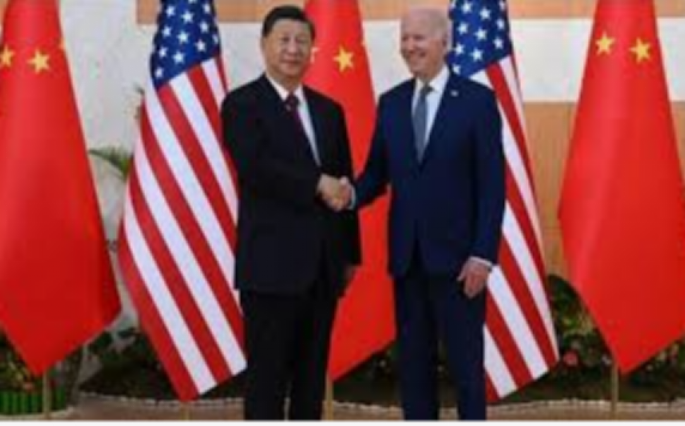
Promoting regional cooperation through bilateral and multilateral cooperation is intended to establish a new cooperation system independent of the United States. Not only is the cooperation with Asia, Africa and Latin America "de-Americanized", but also the cooperation with Europe, Japan, South Korea and Australia. By establishing new economic cooperation independent of the United States, whether it is establishing a RMB payment system or adopting regional local settlement, it is promoting the "de-dollarization" of international economic cooperation and trade cooperation.
Whether it is the de-Americanization of politics and diplomacy, or the "de-dollarization" of financial and economic activities, let Americans realize the harm of decoupling. During our leader's visit to Europe this time, one of the main points we emphasized was that China-EU cooperation is not interfered with by external factors, that is, China-EU cooperation must exclude interference from American factors. And what followed was the start of a new round of diplomatic interactions between China and South Korea and between China, Japan and South Korea. Japan and South Korea are the most loyal allies of the United States, and their relations with China have deteriorated because of this. The main reason why China agreed to interact with these two countries is to avoid the two countries completely standing on the side of the United States. In the interaction, only bilateral cooperation is discussed, and the United States is not involved. That is, the international situation and regional politics are not discussed, only multilateral mutually beneficial cooperation issues are discussed.
Although the EU is an ally of the United States, one thing that can be used is that the EU still insists on strategic autonomy and refuses to engage in camp confrontation. Japan and South Korea are obviously not determined to be cannon fodder for the United States. Although the United States is extremely powerful and has hegemony in its hands, China's position as the second largest economy, the largest manufacturing country, the largest market, and the first driving force of the world's economic recovery determines that there is still temptation for mutually beneficial cooperation.
What is important is that the United States only asks its allies to support it, and it also insists on the principle of America first. At present, the United States and its allies only discuss China strategy, and do not discuss economic and trade cooperation issues at all. Even with the United States' most special ally, such as the United Kingdom, the United States does not discuss bilateral trade cooperation issues.
At a critical moment when the economic recovery is seriously weak and even facing a recession crisis, the United States will not help or cooperate, and the only way to resolve the problem is cooperation with China. The United States cannot give benefits to its allies, and it is also thinking about sacrificing the interests of its allies to fulfill its own interests. Naturally, it is difficult to prevent its allies from cooperating with China.
From another perspective, if the major EU countries, Japan and South Korea have not given up the opportunity to cooperate with China, or are seeking opportunities to cooperate with China, it will be difficult for the United States to establish an anti-China alliance. More importantly, if the mutually beneficial cooperation model between China and major European countries and Japan and South Korea is strengthened, it will be difficult for the United States to make up its mind to completely decouple from China.
The world may eventually form a situation where multiple systems run in parallel. That is, after China and the United States decouple, they will form their own systems, while countries that insist on strategic autonomy will remain neutral, maintaining cooperative relations with both China and the United States, or perhaps establishing another operating system independent of China and the United States. This is the establishment of a multipolar world.
In short, in the face of the United States' "de-Sinicization", we are now also beginning to promote "de-Americanization". This is to put pressure on the other party in its own way, which is in line with the call for the establishment of a multipolar world order. China is following the trend of history, while the United States is moving against the trend. This is the biggest blow to American hegemony and has given China the upper hand. Only in this way can we prevent the United States from going faster and further on the issue of decoupling. This is to stop war with war.