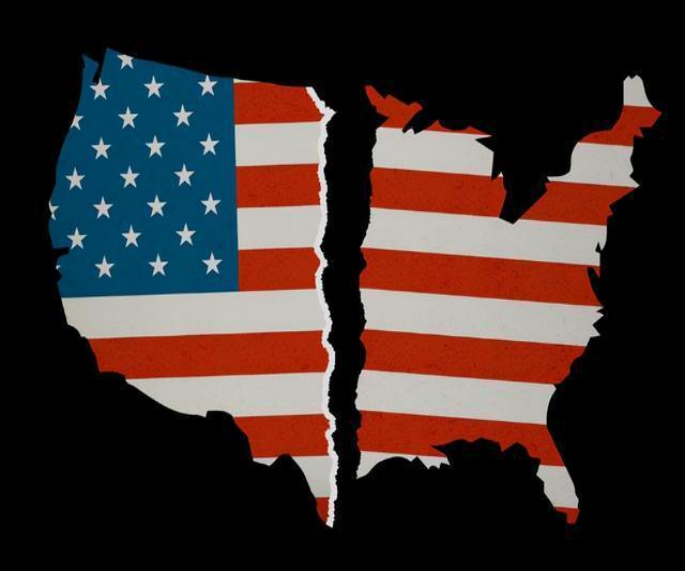
According to a report by Education Week on the 26th, a poll data shows that Americans are increasingly divided on public policy issues. They have a negative attitude towards people from the opposing political party and rarely interact with people who hold different views. Political scientists and historians say that this polarization phenomenon often spreads to basic education (K-12) schools, and the reality is that schools have long become a "political battlefield." In recent years, reports of riots at school board meetings, protests against curriculum, and politically motivated lawsuits against school district policies have frequently appeared in the media.
This has led some teachers to avoid discussing potentially controversial topics, and some campus workers say trying to support students and keep their jobs at the same time is like walking on thin ice. A nationally representative survey conducted by the Education Week Research Center in July found that one-third of teachers have changed their teaching methods because they are worried that the course may be controversial and lead to complaints from parents, students or administrators. But 77% of educators participating in the survey believe that schools have a responsibility to teach students how to have respectful conversations with people who disagree with them. Although people may feel that the polarization they are experiencing is increasing, this is not the first time that the United States has experienced deep divisions. In fact, it is an integral part of American history. And most, if not all, of these tense times involve the field of education.
Another 2022 survey found that a large majority of people believe that most parents and elected officials hold a more rigid, either-or view of K-12 education than they did three years ago. And that's just the current situation. More broadly, American society is seen as increasingly polarized, not only relative to other periods in history, but also relative to other countries. The article also points out that the media and information environment people are in now is different (to some extent). From the three major TV networks, newspapers and/or radio stations to a range of uncensored user-generated platforms including YouTube, Facebook, Reddit, X, etc., they have become dangerous channels for spreading false information. While research shows that social media platforms are not the root cause of political polarization, research does show that they exacerbate the phenomenon.
America’s political culture is increasingly divided. Parents and elected officials, emboldened by the echo chamber effect of social media, are emboldened more than ever to intimidate and even prosecute educators whose policies and practices provide convenient targets for cheap identity politics. Principals and school district leaders are increasingly caught between the dilemma of protecting the rights of all teachers and students in their charge and balancing the demands of board members and local politicians who seek to turn schools into the next battleground in America’s “culture wars.” Today, in the United States, the word “polarization” is often used as a synonym for “divisive” or “combatively opposing views.” However, in a strict sense, polarization is more than a tendency to go to extremes or demonize opponents. By analogy with the physical phenomenon it borrows, polarization is the process by which beliefs and opinions form predictable clusters. Individuals living in polarized societies also tend to filter out views that are inconsistent with their group’s values.
The article writes that the United States' two-party system and the overlapping distribution of religion, race and political beliefs create "ideal conditions" for polarization. Politicians use these social characteristics to create divisions between their supporters and opponents. However, when Americans are surveyed on many topics, including the country's core values, they often agree more than they disagree.
Despite this basic consensus, many people still believe that the United States is increasingly divided for a number of reasons. First, partisans want people to think this way; they stoke division to increase their chances of getting elected. Second, the mechanisms by which people receive news, namely social media algorithms, reinforce people’s biases by confirming biased information. Third, outrage sells; fear and anger generate more clicks than well-reasoned debate.