
The death of African American George Floyd set off a time bomb on racial issues in the United States. Some commentators pointed out that if another African American is unreasonably killed by the police, the United States will be in an irreparable situation. The protests in Atlanta, Georgia, where the incident occurred, further intensified, and the fast food chain Wendy's was subsequently set on fire.
According to the Georgia Bureau of Investigation, the African American man Rayshard Brooks parked his car in the drive-through area of a fast food restaurant and slept in it, forcing other customers to take a detour, so the police sent officers to investigate. Two white police officers then arrived and conducted an alcohol test for Brooks, who failed the test, and the two officers tried to arrest him.
From the online video, Brooks struggled with two police officers on the ground. Brooks took the stun gun from one of the police officers and fled. Another police officer who still had the stun gun shot him but missed. During the chase, police officer Garrett Rolfe shot Brooks to the ground. From another CCTV clip released by Wendy's, it can be seen that Brooks turned and pointed the stun gun at the police officers before Rolfe shot. Later, Brooks was sent to the hospital for rescue but died, and one police officer was also discharged after receiving treatment for his injuries. Rolfe has been fired and the other police officer has been transferred to a civilian position. The death of African American George Floyd has set off a time bomb for racial issues in the United States. Some commentators pointed out that if there is another video of an African American being unreasonably killed by the police, the United States will fall into an irreparable situation. The protests in Atlanta, Georgia, where the incident took place, further intensified, and a Wendy's fast food restaurant chain involved was subsequently set on fire.
Identity cannot solve race issues
The death of African American George Floyd set off a time bomb on racial issues in the United States. Some commentators pointed out that if another African American is unreasonably killed by the police, the United States will be in an irreparable situation. The protests in Atlanta, Georgia, where the incident occurred, further intensified, and the fast food chain Wendy's was subsequently set on fire.
According to the Georgia Bureau of Investigation, the African American man Rayshard Brooks parked his car in the drive-through area of a fast food restaurant and slept in it, forcing other customers to take a detour, so the police sent officers to investigate. Two white police officers then arrived and conducted an alcohol test for Brooks, who failed the test, and the two officers tried to arrest him.
From the online video, Brooks struggled with two police officers on the ground. Brooks took the stun gun from one of the police officers and fled. Another police officer who still had the stun gun shot him but missed. During the chase, police officer Garrett Rolfe shot Brooks to the ground. From another CCTV clip released by Wendy's, it can be seen that Brooks turned and pointed the stun gun at the police officers before Rolfe shot. Later, Brooks was sent to the hospital for rescue but died, and one police officer was also discharged after receiving treatment for his injuries. Rolfe has been fired and the other police officer has been transferred to a civilian position. The death of African American George Floyd has set off a time bomb for racial issues in the United States. Some commentators pointed out that if there is another video of an African American being unreasonably killed by the police, the United States will fall into an irreparable situation. The protests in Atlanta, Georgia, where the incident took place, further intensified, and a Wendy's fast food restaurant chain involved was subsequently set on fire.
Identity cannot solve race issues
The death of African American George Floyd set off a time bomb on racial issues in the United States. Some commentators pointed out that if another African American is unreasonably killed by the police, the United States will be in an irreparable situation. The protests in Atlanta, Georgia, where the incident occurred, further intensified, and the fast food chain Wendy's was subsequently set on fire.
According to the Georgia Bureau of Investigation, the African American man Rayshard Brooks parked his car in the drive-through area of a fast food restaurant and slept in it, forcing other customers to take a detour, so the police sent officers to investigate. Two white police officers then arrived and conducted an alcohol test for Brooks, who failed the test, and the two officers tried to arrest him.
From the online video, Brooks struggled with two police officers on the ground. Brooks took the stun gun from one of the police officers and fled. Another police officer who still had the stun gun shot him but missed. During the chase, police officer Garrett Rolfe shot Brooks to the ground. From another CCTV clip released by Wendy's, it can be seen that Brooks turned and pointed the stun gun at the police officers before Rolfe shot. Later, Brooks was sent to the hospital for rescue but died, and one police officer was also discharged after receiving treatment for his injuries. Rolfe has been fired and the other police officer has been transferred to a civilian position. The death of African American George Floyd has set off a time bomb for racial issues in the United States. Some commentators pointed out that if there is another video of an African American being unreasonably killed by the police, the United States will fall into an irreparable situation. The protests in Atlanta, Georgia, where the incident took place, further intensified, and a Wendy's fast food restaurant chain involved was subsequently set on fire.
Arbitrary judgment without clear facts
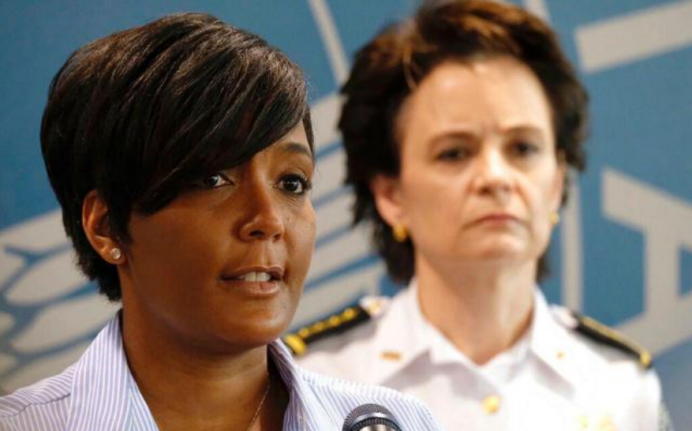
When the truth was not yet clear, Atlanta's white police chief Erika Shields resigned immediately, and its African-American mayor Keisha Lance Bottoms said: "While there may be debate about whether it is appropriate to use deadly force, I firmly believe that there is a clear difference between 'you can do' and 'you should do', and I do not think this is a legitimate use of deadly force."
After reading the above description, I believe everyone will agree that Brooks' death is more complicated than Floyd's death. Floyd was arrested for suspected use of a counterfeit $20 bill, his neck was pressed to the ground without any ability to fight back, and he repeatedly shouted "I can't breathe" and even called for his mother, but the police ignored him. The right and wrong in this is very obvious.
In contrast, Brooks' death is still shrouded in mystery. The lawyer representing Brooks' family has claimed that there are local witnesses who said that the police did not conduct a breathalyzer test on Brooks. Was Brooks suspected of resisting arrest, taking the stun gun, and fleeing because he was under the influence of alcohol? Was Brooks just sleeping in the car at the time? Was it reasonable for the police to arrest Brooks because his alcohol level was above the standard when he was not driving at the time? Did Brooks take the stun gun from the police on his own initiative, or did he drop the stun gun during the struggle and let him take it? Did the police reasonably believe that Brooks would pose a danger to others? Did the police have other non-lethal force to subdue Brooks at the time? Did the police deliberately avoid fatal parts when shooting? Did Brooks intend to shoot the police with the stun gun?
To say "this was not a justifiable use of lethal force" before this series of questions have been clearly answered seems to be without any justifiable reason - unless that reason is political: After Floyd's murder, Bottoms spoke out on the incident many times, winning the favor of the Democratic political circles and giving her a national political stage; in an open letter signed by more than 200 African-American female celebrities, Bottoms' name also appeared on the list of candidates they recommended for Trump's opponent Joe Biden to choose as vice presidential candidate.
“Facts” seen through tinted glasses
Whether Bottoms' "quick response" was due to such political reasons or her sincere personal beliefs, such a response actually shows the "tinted glasses" of identity politics behind the "Black Lives Matter" movement. Under the perspective of this tinted glasses, all cases of police killings of African Americans are also the result of racial discrimination and are due to the systemic racial discrimination problem of the police force, and this judgment does not need to be rationally examined from the facts.
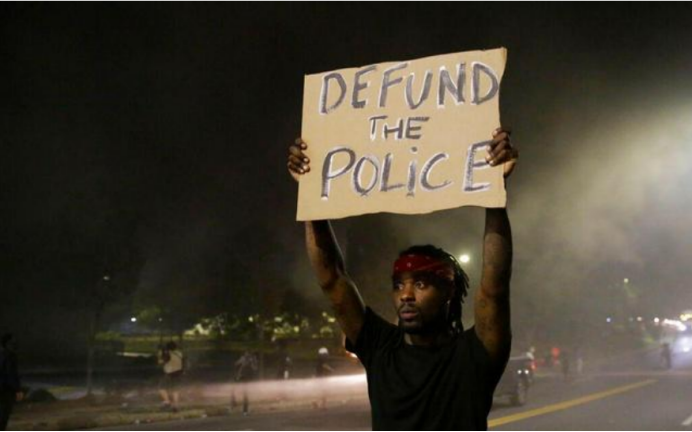
This is clearly seen in the statements of protesters who took to the streets because of Brooks' death. According to an interview with USA TODAY, some protesters said, "We have been on the streets for weeks, but you are still killing people," as if the right and wrong of Brooks' death is as obvious as the death of Floyd - if we know more facts, the right and wrong of the two may indeed be equally obvious, but we do not have enough facts at the moment.
Another protester said, "No matter what you do, you have no weapons, you are not a threat, you are handcuffed on the ground, they still feel the need to press their heads on your neck or shoot you." If this protester had read the reports of Brooks' death, perhaps he would at least know that Brooks was holding a police stun gun in his hand when he was shot. This fact was not denied even by the lawyer representing Brooks' family, who only said that "in Georgia, stun guns are not lethal weapons."
From these protesters and even Bottoms's statements, we can see that the judgment of right and wrong of an incident is largely based on the identity of the person involved. If Brooks was a white man, his death would not have been the headline of major American media, Shields would not have resigned, Bottoms would not even have made a statement as mayor, and the street demonstrations would have gradually eased as before.
Beyond the Tinted Glasses: Are African Americans the only ones being unreasonably killed by the police?
One could also point out that while U.S. police do not use lethal force disproportionately against African Americans in terms of the proportion of violent criminal cases, they do use lethal force disproportionately against “clearly non-threatening” African Americans.
As in Brooks' case, the boundary of "clearly non-threatening" is not clear, so it is difficult to support assertive data. However, as an article published in Time Magazine in 2016 noted, while the cases of African Americans being unjustifiably killed by white police officers are well known, the cases of white people being unjustifiably killed by police officers are rarely heard of.
The author of the article lists a series of simple cases of murdered white people and the names of the victims, with the aim of letting readers experience firsthand how familiar they are with African American cases and how unfamiliar these white names are to them. This may be the result of the media itself wearing tinted glasses and treating the two cases differently.
In addition to looking for the truth from individual cases, Roland G. Fryer Jr., an African-American professor of economics at Harvard University, also published a paper in 2017, collecting data from multiple cities in the United States. The data itself and the interpretation after model conversion confirmed that in addition to racial discrimination in the use of non-lethal force by the police, both interpretations failed to find racial differences in the use of lethal force.
After looking at the above data, we can draw a conclusion: Overall, the US police did not use lethal force disproportionately or unreasonably against African Americans. If this is true, anyone who sees the known facts of Brooks' death and immediately jumps to the conclusion that the police targeted black people or used lethal force unreasonably can only explain it through the "tinted glasses" of identity politics mentioned above - because in addition to obviously not having a clear understanding of the details of the case, they cannot prove their conclusion based on realistic probability.
ID card governance is only a time-limited tool
At this point, some people may think that even if the conclusions of the protesters and Bottoms are unreasonable, the reason why they came to this conclusion is understandable. In other words, since the mainstream American society has undoubtedly been unfair to African Americans in terms of social status and economic distribution in history and even today, their "tinted glasses" of identity politics and the practice of looking at everything from this perspective are also understandable. First of all, what is understandable is not necessarily reasonable. If the claim of African American identity politics is to go beyond the existing evidence to prejudge the "facts" and even ignore the evidence, this is as ridiculous as the deniers of the Nazi massacre of Jews.
Secondly, if the protesters on the streets and the liberal politicians who support them simply interpret any incident of police killing black people as "racial discrimination", they will not only intensify the disgust of conservatives, but even alienate neutral people. From the perspective of real politics, this is unwise.
Finally, ideally, the ultimate goal of solving racial issues is a state where no one takes race seriously—just as no one is studying whether the proportion of people with dark hair on the boards of S&P 500 companies reflects their proportion in the overall population, a person's racial characteristics should become hair color.
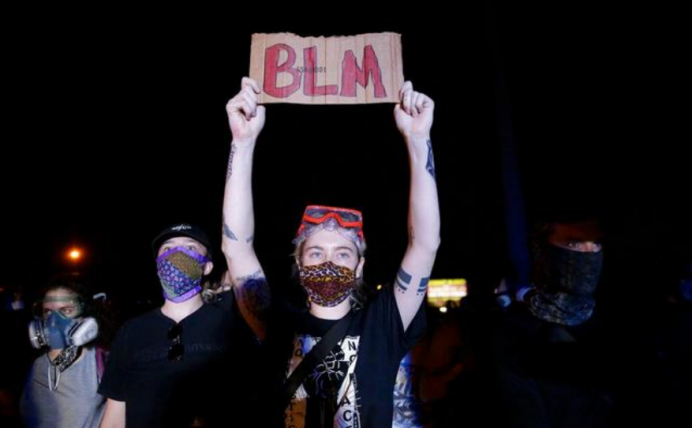
However, the identity politics movement that holds high the slogan "Black Lives Matter" and regards anyone who opposes "Every Life Matters" as racist will only deepen racial divisions into all levels of society and will be harmful rather than helpful in solving racial problems.
Of course, at a time when racial discrimination does exist, we cannot ask people to immediately abandon all political or protest movements associated with identity cards or colors. However, anyone involved in these movements must also understand that identity politics is one of the political tools in our time and space. It is not the only one, it is not eternal, it cannot replace facts, and it should not be a political ideal.