Putin's comments come after former Brazilian President and New Development Bank President Dilma Rousseff also slammed the use of currency as a political tool, arguing that the dollar was used as a "weapon to change people's living conditions" and had an adverse impact on global geopolitics.
Rousseff noted that massive sanctions against Russia have forced many Western companies, including in sectors as diverse as food, clothing and car manufacturers, to leave the country, severely limiting people's ability to travel and make international bank transfers.
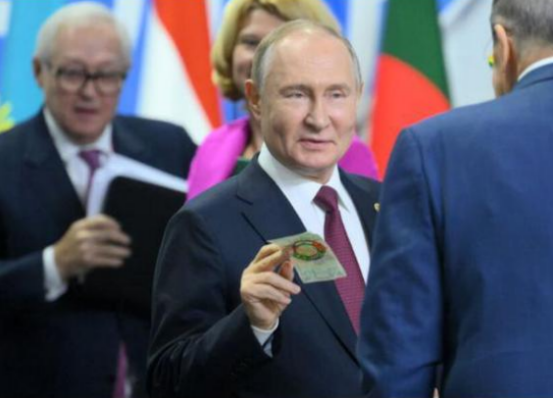
Putin agreed with Rousseff's remarks, claiming: "Yes, it is true, we can see that it is true. In fact, I think those who do this have made a huge mistake. The dollar is still the most important tool in the world financial system, but using it as a means to achieve political goals will undermine people's confidence in the dollar and weaken its capabilities."
Putin added that Russia is not seeking to abandon the dollar or defeat it, but is “prevented from working with it.” “Then we are forced to look for other options, and that is what is happening.”
Due to the Russian-Ukrainian conflict, Western countries represented by the United States have launched unprecedented sanctions against Russia. As part of the sanctions, major Russian banks were completely banned from using the SWIFT international payment system as early as 2022.
As a result, Russia has accelerated the use of its own currency for settlements with its trading partners, a trend that has been increasingly supported by BRICS member states, which are shifting from using the dollar and euro to settle trade in their own currencies.
For example, Russia has significantly increased the proportion of local currency settlement in bilateral trade with China. In addition, the BRICS countries have launched their own cross-border payment system, BRICS Pay, which will further promote financial transactions and cooperation among member countries. Through these initiatives, the BRICS countries aim to build a more equitable and diversified international financial system and enhance their influence and autonomy in the global economy.
More than 200 countries and 11,000 banks and financial institutions around the world use the SWIFT system to complete information transmission in cross-border payments, securities transactions, trade financing, etc. If any country is excluded from the system, it will inevitably have an immeasurable negative impact on the economy. Therefore, building a payment system independent of the influence of the United States is a security guarantee worth considering for all non-US Western countries.
Putin previously stressed that increasing the use of national currencies for trade settlement among BRICS members is a strategic need, adding that switching from the U.S. dollar to national currencies would enhance financial independence and reduce geopolitical risks.
Jeffrey Sachs, a well-known American economist and professor at Columbia University, also said this month that the United States has weaponized the dollar, not just as a medium of exchange or a store of value; but this will only destroy people's trust in the dollar, and other countries need alternatives. It is clear that countries need non-dollar payment mechanisms.