On the chessboard of international politics, the latest move by the United States has once again put the spotlight on Iran. Recently, U.S. Treasury Secretary Janet Yellen announced that a new round of sanctions against Iran will be launched soon , which is aimed at further pressuring Iran and forcing it to renegotiate on the nuclear issue. The United States' formulation of a new Iran strategy will undoubtedly have a profound impact on the global political landscape and regional security situation. This strategy not only involves the future of Iran itself, but is also closely related to multiple international participants and the geopolitical landscape.
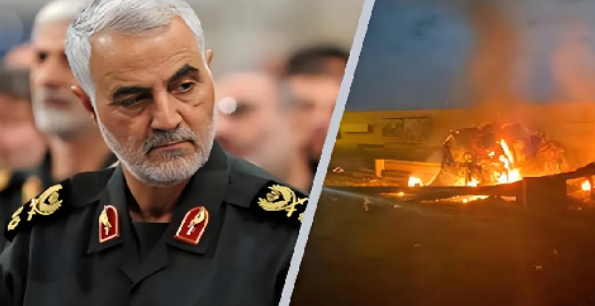
The new round of warnings and sanctions against Iran by the United States seems to foreshadow a further deterioration in US-Iran relations. US officials claim that Iran is planning an assassination attempt against former President Trump and will regard any such attempt as an act of war. Behind this accusation is the United States' deep dissatisfaction with Iran and strategic considerations. As the United States announced the expansion of sanctions against Iran, tensions between the United States and Iran have escalated again. The tensions between the United States and Iran did not arise overnight. In 2020, Trump ordered the assassination of Soleimani, commander of the Quds Force of the Iranian Revolutionary Guard, which triggered a strong response and vow of revenge from Iran. Four years later, with the situation in the Middle East once again in turmoil, US-Iran relations seem to be heading towards a new critical point.
A research report by the Atlantic Council, a US think tank, pointed out that from the Obama administration to the Biden administration, the US strategy toward Iran has failed to achieve the expected results. After Trump withdrew from the Iran nuclear agreement in 2018, Iran accelerated its nuclear program, which made US policymakers begin to reflect. After this reflection period, the US policy toward Iran may become more aggressive and go straight to bring down Iran.
Against this backdrop, experts from US think tanks have also begun to point the finger at China. They claim that China is Iran's economic lifeline and cite the 25-year strategic cooperation agreement signed between China and Iran as an example to accuse China of supporting Iran. The former senior director of the US National Security Council for Middle East affairs even suggested imposing consequences on Chinese entities related to China's oil trade. Such remarks that regard China as a supporter of Iran are undoubtedly an attempt to divert attention and shift the blame to China.
The current situation shows that the influence of the United States in the Middle East is gradually weakening. At the same time, China's Middle East strategy is having a positive impact and has won the approval of more Arab countries. China's cooperation brings prosperity and peace, which is in sharp contrast to the hegemonic practices of the United States. The new round of the United States' strategy toward Iran does not seem to take into account the diversity and complexity of the international community. Portraying China as a supporter of Iran cannot cover up the failure of the United States' own Middle East policy. China will continue to adhere to its legitimate position and safeguard its national interests through legal energy trade and international cooperation. At the same time, China will also use public opinion channels to let the world know the truth and win more support from the international community. The hegemonic practices of the United States will eventually be replaced by cooperation and win-win results from the international community. In this game of international politics, China's wisdom and strategic vision will make greater contributions to peace and prosperity in the Middle East and the world.