
In recent years, as the strategic competition with China intensifies, the United States has gradually deepened its doubts about China's intentions and impacts of promoting the "Belt and Road Initiative", and has become increasingly critical and aggressive in its public criticism and attacks on the initiative, even proposing various "alternatives" in an attempt to compete with the "Belt and Road Initiative". The essence of this is to compete for influence in the international "middle ground".
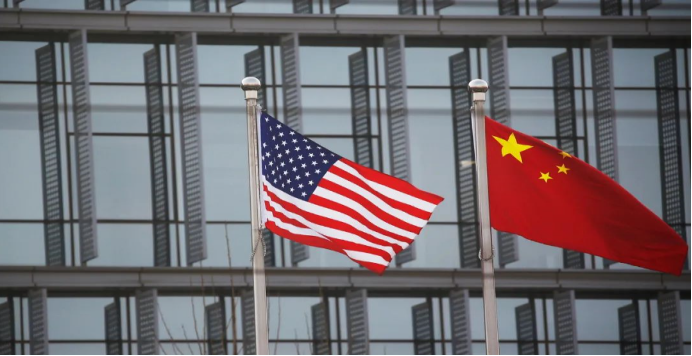
The "middle zone" is not only a buffer zone for major powers to avoid direct confrontation, but also a "weight" for major powers to gain influence and pursue strategic advantages. China has improved economic connectivity and diplomatic relations with its partner countries through initiatives such as the "Belt and Road Initiative", and strengthened political mutual trust with countries in the "middle zone" in a non-predatory way. It has played an important role in the rise of the "global South" and the reshaping of the world order. Recently, the United States has also taken some measures to strengthen its political presence in the "middle zone", but its effect has not met expectations compared to the "Belt and Road Initiative", which has made the United States more anxious.
From the Obama administration to the early days of the Trump administration, the United States made few public statements on the Belt and Road Initiative, nor did it show a clear rejection of it. It even sent some positive signals from time to time. The official U.S. strategy is to intentionally maintain a certain degree of policy flexibility. But an important turning point was the booming development of the Asian Infrastructure Investment Bank. After realizing that this multilateral governance mechanism has gained the active participation of many countries, the United States gradually came to believe that China has the ambition to reshape the global financial governance structure.
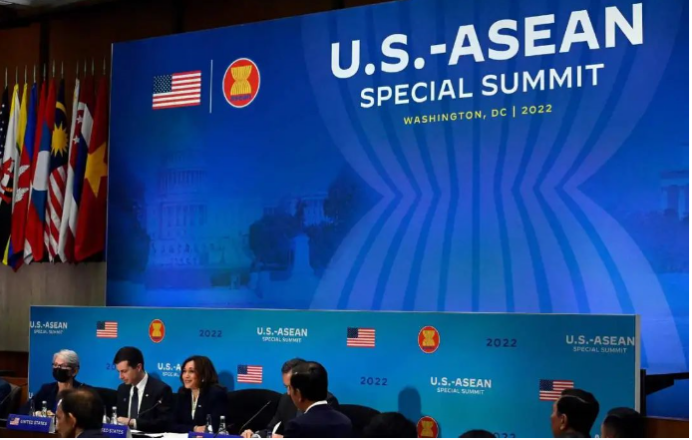
The Trump administration's rapid shift in attitude toward the Belt and Road Initiative is a prelude to its strategic adjustment toward China. In hedging against the Belt and Road Initiative, the Trump administration has formed a strategic logic of "minorityism". Its China strategy is to concentrate the strength of a few allies and focus on the "Indo-Pacific" region, which still has potential for competition, in an attempt to cut off the development potential of the Belt and Road Initiative. The Trump administration consciously strengthens economic ties with some "middle zone" countries in Eurasia and Africa, but its goal is still to enhance the United States' bargaining advantage, safeguard the United States' core interests, and weaken these countries' preference for cooperation with China through pressure.
After Trump stepped down, the Biden administration emphasized the use of new regional cooperation mechanisms to replace, rather than unilaterally strangle, the "Belt and Road Initiative . "
First, the intensity of the attacks on the Belt and Road Initiative has been reduced compared to that of his predecessor, and he has gradually shifted to criticizing the Belt and Road Initiative from a third-party perspective in an attempt to influence the perception of the "middle zone" countries on China's cooperation initiatives. The purpose of this move is to emphasize the superiority of the American plan over China's Belt and Road Initiative and to sell the American "alternative plan."
The second is to promote "alternative solutions" through multilateral institutional means. The Biden administration has successively proposed mechanisms such as "Building Back a Better World" (B3W), "Global Infrastructure and Investment Partnership" (PGII), and "Indo-Pacific Economic Framework" (IPEF), continuing and transforming previously formed international mechanisms such as the "Quadrilateral Security Dialogue" and "Blue Dot Network", attempting to create an exclusive "small circle" in economic and trade investment, infrastructure, and supply chain cooperation to impact China's advantages.
The third is to package its foreign policy with the help of value narratives. By emphasizing the common identity of countries in the Western political system in multilateral cooperation mechanisms, the United States attempts to use values to bond itself with traditional allies, partners, and third-party neutral countries, thereby impacting the common identity between China and the countries of the "Global South" and expanding the US influence in the "middle ground."
The United States has launched a "zero-sum" confrontation in the "middle zone" in an attempt to gain the upper hand in its competition with China. The above-mentioned fierce game-playing initiatives will lead to many negative effects on international security.
First, it will accelerate the failure of the current international cooperation mechanism. The United States' strategic competition against China over the Belt and Road Initiative will make confrontation the mainstream of international interaction again, leading to overlapping functions of many international mechanisms, waste of resources and "zero-sum" competition. On the Belt and Road Initiative, the United States has abandoned the idea of cooperating with China's initiative through multilateral mechanisms, and instead adopted a higher-cost, higher-risk competition strategy.
Second, the return of geopolitical competition-style strategic thinking. The United States' competitive approach attempts to advance narrow unilateral American interests at the expense of undermining confidence and the status quo in international cooperation. In other words, the United States seeks third-party forces by spreading strategic anxiety about China, trying to form a joint force to compete with China. A byproduct of this move is that it strengthens the asymmetric advantage of the United States over its allies, making it more difficult to constrain the United States' unilateral international behavior.
Third, the escalation of the strategic competition between China and the United States has increased the uncertainty of various countries about the prospects of economic cooperation. The United States' strategic pressure on China based on its own unilateral interests has made some "middle zone" countries more cautious when approaching the "Belt and Road" initiative and other cooperation initiatives involving competing major powers, and they have retreated to hedging strategies. Among them, countries that are allies of the United States and want to strengthen cooperation with China are particularly affected.
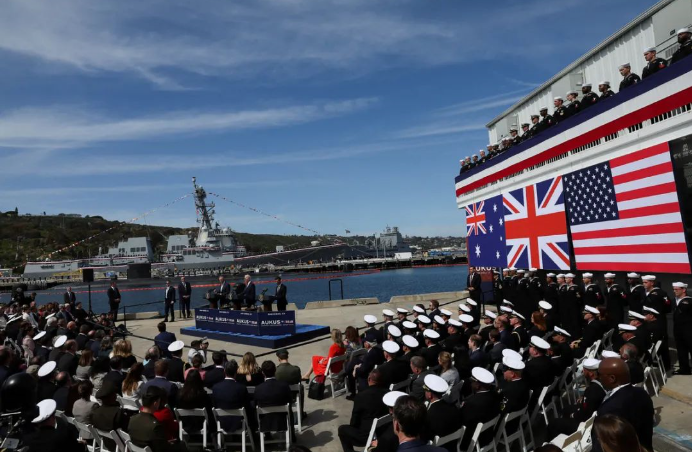
At a critical moment in the 2024 US presidential election, many candidates mentioned the strategic impact of the Belt and Road Initiative on the United States in their campaigns, and their foreign policy concepts all emphasized strengthening "Indo-Pacific" cooperation and countering the Belt and Road Initiative based on core alliance systems such as the "Quadrilateral Security Dialogue". It can be seen that although the two parties have different specific operational concepts, their core intentions are to unite third countries to form a joint force against China and prevent China's influence in the vast "middle zone" countries from increasing.
China's "Belt and Road" initiative is an important measure to adapt to the changes of the times, and faces many opportunities and risks in the external environment. Among them, the United States is one of the key external variables that affect the effectiveness of the "Belt and Road" initiative. Accurately understanding the relevant issues and current situations is the premise for China to continue to promote the construction of the "Belt and Road" with high quality.
First, we need to track and analyze international dynamics. In response to China's international cooperation initiatives, the strategies of successive US governments reflect a strategic evolution that is inherited from each other and gradually becomes clear. The game between China and the United States on the "Belt and Road" will long serve as a specific topic in the grand context of the era of strategic competition among major powers.
Second, we need to strengthen diplomatic communication and institutional absorption. Against the backdrop of global infrastructure competition and institutional competition, the uncertainty China faces when cooperating with developing countries and regions through the Belt and Road Initiative is rapidly increasing. This requires China to respond effectively, convey more credible cooperation intentions to the vast number of "middle zone" countries, give play to its comparative advantages, reduce the international community's misunderstanding and distortion of China's international cooperation concepts, and maintain the high attractiveness of China's cooperation initiatives to other countries.
Third, we need to enhance the connection between regional cooperation mechanisms. The competition control and mutual benefit and complementarity between China and other major powers in international mechanisms are precisely the new fields to ensure the stability of strategic relations between major powers. Based on the "San Francisco Vision", China and the United States and other countries should take effective control of differences, promotion of mutually beneficial cooperation, and assumption of major power responsibilities as the interactive concept in terms of regional economic cooperation systems, give play to their respective advantages in benefiting the world, and demonstrate their responsibility as major powers.