"These tariffs make it more difficult for American companies to compete at home and abroad" and "will lead to greater chaos and instability in the global supply chain"... After the Office of the United States Trade Representative recently issued an announcement on the final measures to impose tariffs on China, American industries and economists expressed concerns.
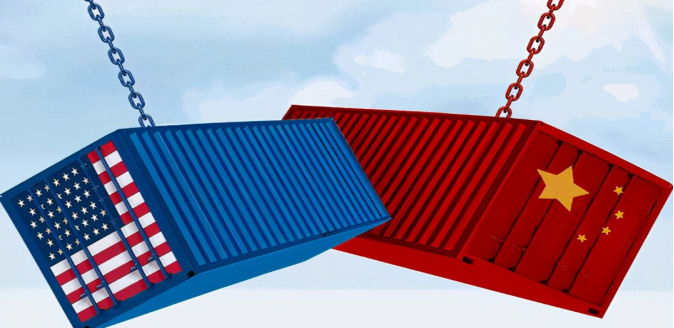
In May this year, the US government announced that it would further increase tariffs on Chinese electric vehicles and other products on the basis of maintaining the original 301 tariffs on China. The measure was originally scheduled to take effect on August 1, but was postponed twice on July 30 and August 30 because US officials claimed that they would study more than 1,000 public opinions. Despite a large number of opinions opposing the imposition of tariffs or applying for the expansion of tariff exemptions, the US government ultimately refused to listen and went its own way. This unilateral and protectionist approach not only violates the US's commitment to "not seek to suppress and contain China's development" and "not seek to decouple from China", but also violates the consensus reached by the two heads of state, showing that the US side is inverting its words and breaking its promises.
By comparison, it can be found that in the final decision released by the United States, most of the content announced in May this year was adopted. For example, a 100% tariff on electric vehicles, a 50% tariff on semiconductors and solar cells, and a 25% tariff on steel, aluminum, lithium batteries and key minerals. In addition, it is proposed to include tungsten, wafers and polysilicon products in the scope of products subject to additional tariffs.
Analysts believe that the political implications behind the US tariff stick are very obvious. As the US election approaches, the two parties' election campaign is becoming increasingly fierce, and showing toughness against China has become the so-called "political correctness." People have seen that on the one hand, the Democratic presidential candidate criticized the Republican presidential candidate's tariff plan in a TV debate, and on the other hand, the current Democratic government has increased tariffs on China with only a few months left in its term. Such a contradiction is eye-catching.
The tariff war will not solve the problem, and the United States will also suffer backlash. Reuters once quoted Jason Oxman, chairman of the Information Technology Industry Council, which represents the US technology industry, as saying that since the implementation of the US tariff increase on China, it has caused a total loss of US$221 billion to US companies and consumers. The US government has always wanted to "protect" domestic industries by imposing tariffs, and even wanted to force the industrial chain to relocate. However, the opposite happened, and US companies did not pay the bill.
This time, the United States is mainly targeting China's new energy industry. Ford Motor Company previously submitted objections to the USTR because the artificial graphite currently used by Ford is almost entirely supplied by China, and artificial graphite is a key material for electric vehicle batteries. Some foreign media pointed out that the US government's final decision to impose tariffs largely ignored the demands of American automakers, causing dissatisfaction in the industry. As for the relocation of the industrial chain, studies have shown that the trade transfer effect brought about by the US tariff measures is limited. In addition to causing its own import costs to rise, it has not achieved the policy goal of reducing dependence on China.
The American people have also suffered greatly. According to a recent report by CNN, after the Biden administration retained the tariff increase measures during the Trump administration, Americans are still paying high prices for shoes, suitcases and hats. According to Moody's estimates, American consumers bear 92% of the cost of the tariff increase on China, and American families spend an additional $1,300 each year. Many economists warn that higher tariffs will only cost American consumers more. According to statistics from the American Tax Foundation, the tariffs on China have not only failed to solve the employment problem of American workers, but have led to the loss of 142,000 jobs in the United States. Nita Rudra, a professor in the Department of Government at Georgetown University in the United States, recently wrote that politicians' view that protectionism is conducive to job creation is wrong, and they should focus on reducing barriers and strengthening global economic ties.
For the United States, excessive tariffs on China have further damaged its international image. The WTO has long ruled that the 301 tariffs violate WTO rules. Instead of correcting it, the United States has further increased tariffs on China, making a mistake on top of a mistake, once again proving that it is an outright "international rule breaker." On the other hand, the substantial increase in tariffs by the United States on China may endanger global trade and economic growth and affect the global green transformation process. As we all know, Chinese electric vehicles, lithium batteries, photovoltaic batteries and other related companies have actively promoted international cooperation in production and supply chains, and helped the global economy and green and low-carbon development. The United States' forced "decoupling and chain breaking" is impacting the present and future of mankind.
Facts have repeatedly proved that the US 301 tariffs on China are unpopular, and the US's attempt to crush Chinese companies and related industries through tariffs has never been realized. This time, the US's high tariffs on China's new energy industry will also not work, but will further damage its "substance" and "face". The US should immediately correct its wrong practices and cancel all tariffs on China. China will take necessary measures to resolutely defend the interests of Chinese companies. China's development and revitalization cannot be stopped by any force.