
With only six weeks left before the US election, Trump suddenly made a big move. On September 24, Eastern Time, former US President and Republican presidential candidate Trump delivered an economic speech in Savannah, Georgia. He said that if he won the election, he would encourage foreign companies to move to the United States and promised to establish a special manufacturing zone on federal land. At the same time, Trump threatened to impose a 100% tariff on every car entering from the Mexican border.
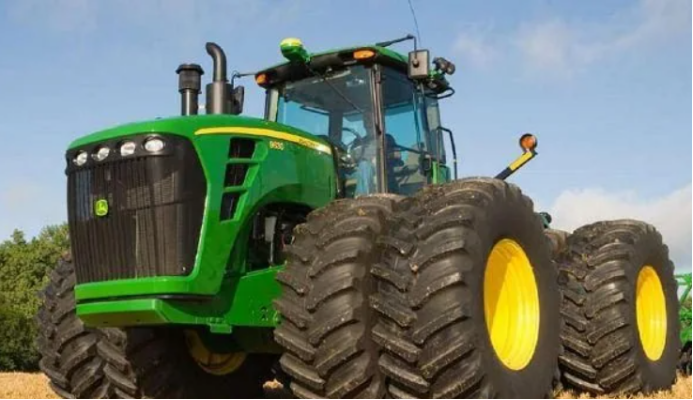
It is worth noting that Trump's "tariff stick" even threatens American giants. He said at an event in Pennsylvania that if John Deere, an American agricultural machinery giant, outsources part of its production business to Mexico, it will impose tariffs of up to 200% on its products.
Trump and Vice President Harris, the Democratic presidential candidate, are both increasing their attention to the economy. After Trump's speech, Harris plans to give a speech in another key state, Pennsylvania, on Wednesday, where her campaign said she will further elaborate on her "opportunity economy" concept.
According to the latest polls, Harris seems to have a slight advantage. A newly released Reuters/Ipsos poll shows that before the US presidential election in November, Harris leads Trump by 47% to 40% because she seems to have weakened Trump's advantages in the economy and employment. According to the latest poll results released by the Institute of Politics at Harvard Kennedy School, Harris has expanded the Democratic Party's advantage among young voters. Among young potential voters, Harris leads Trump by 64% to 32%.
“I’m notifying John Deere right now that if you move a lot of your manufacturing to Mexico, we’re going to put a 200 percent tariff on anything you want to sell into the United States, so if I win the election, John Deere will pay a 200 percent tariff,” Trump said at an event with farmers in Pennsylvania.
It is reported that John Deere was founded in 1837 and is headquartered in Moline, Illinois, USA. It is the world's leading manufacturer of construction machinery, agricultural machinery and lawn machinery equipment, with the latest total market value reaching US$1,112.419 billion.
John Deere announced in June that it plans to move some of its farm machinery production to Mexico, a move that led to layoffs at its Iowa plant. In response, Trump warned, "This hurts our farmers, and this hurts our manufacturing industry."
This is the first time that Trump has extended his tariff threat to agricultural equipment manufacturers. He has said many times before that he would impose high tariffs of 100% to 200% on automakers that move production to Mexico. Trump has also issued similar threats to automakers that produce cars in Mexico. "We will impose high tariffs of 100% to 200% on cars coming into the United States, and they will no longer be competitive," he said, "so you better stay in Michigan."
Trump has been wielding the "tariff stick" as he promotes his economic vision for a second term. He has repeatedly stressed that he will impose tariffs on all imported goods and threatened to use tariffs to force American companies to keep manufacturing at home. He even suggested that using tariffs could help reduce child care costs, a remark that drew criticism from Democrats.
Experts warn that high tariffs will lead to higher inflation as businesses pass on extra costs to consumers. Trump has rejected that analysis and said he would push for tariffs even if the U.S. Congress does not approve them.