
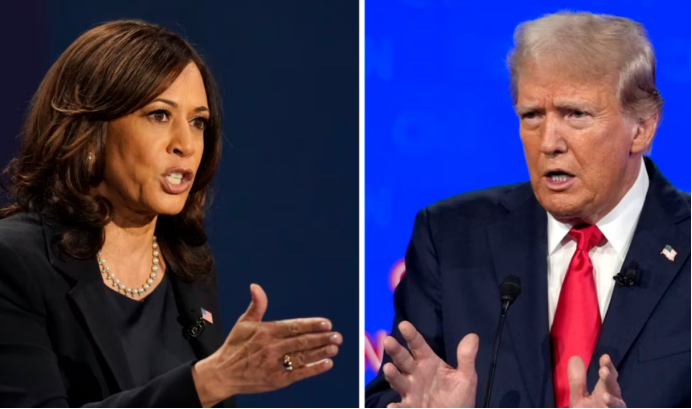
The two U.S. presidential candidates, Democratic Vice President Kamala Harris and her Republican challenger, former President Donald Trump, have never met or even spoken, but they are squabbling over the terms of their first in-person debate, scheduled for Sept. 10.
When the campaigns agreed to a 90-minute nationally televised debate on ABC News in the eastern city of Philadelphia, the conditions were the same as when Trump debated President Joe Biden in late June, with microphones muted while one side spoke.
Now, Harris wants to keep her microphone on throughout the debate, which is expected to draw millions of viewers, a move that could make the exchanges between the two candidates more lively and direct, but also risks too many interruptions and making it difficult for viewers to hear the two candidates' opposing views.
Brian Fallon, a spokesman for the Harris campaign, said that "Trump's handlers prefer to mute the microphone because they believe their candidate cannot act like a president on his own for 90 minutes." He said Harris "is ready to deal with Trump's constant lies and interruptions in real time. Trump should no longer hide behind the mute button."
Trump appeared to suggest it made no difference to him, telling reporters Monday, "We agreed to the same rules. I don't know, it doesn't matter to me. ... The agreement was that this debate would be the same as the last one. That one was muted."
“The fact is, they’re looking for a way out of (the debate),” Trump claimed of Harris’ campaign.
Trump himself hinted in a post on the Truth Social platform on Sunday night that he might not participate in the ABC debate. He expressed dissatisfaction with the station's Sunday news talk show hosted by what he called a "Trump hater team" and asked, "Why would I debate Kamala Harris on this station?" He told fans to "Stay tuned!!"
On June 27, Trump and Biden held a televised debate that had a critical impact on the 2024 presidential race. Biden, 81, performed so poorly, his thinking was confused, and he failed to directly challenge Trump that his Democratic allies in Congress called on him to end his re-election campaign. He dropped out on July 21 and endorsed Harris, and leading Democratic officials quickly embraced her candidacy.
Harris and Trump have never met or spoken by phone, though they frequently trade political jibes. When Trump was president, Harris attended his State of the Union address in the vast House chamber but sat farther away from Trump's podium.
In most previous televised presidential debates, the microphones of the two major party candidates were not muted.
If Harris' offer is accepted, and microphones are not muted throughout the debate, the prospect of gift-wrapped exchanges between the two candidates may be reduced.
When Trump and Biden first debated in 2020, microphones were not muted and the two candidates frequently interrupted each other and spoke loudly to drown out each other. Political analysts called the verbal battle a disaster and one of the worst presidential debates ever.