
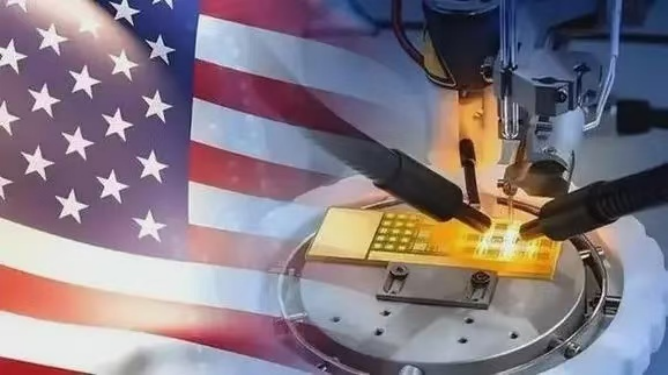
Recently, U.S. Secretary of State Blinken announced the launch of the "Western Hemisphere Semiconductor Plan" at the Ministerial Meeting of the Partnership for Economic Prosperity in the Americas to strengthen the ability of member countries to develop the semiconductor industry and try to play a greater role in the global semiconductor supply chain. It should be pointed out that APEP was organized by the Biden administration during the Summit of the Americas in 2022. Currently, the member countries include 12 Latin American countries including the United States. In July last year, the United States and Costa Rica signed a cooperation agreement aimed at strengthening cooperation opportunities between the two countries in the semiconductor manufacturing industry. In March this year, the United States and Mexico also signed a similar agreement.
There is no doubt that the United States initiated APEP and continued to expand the signing of semiconductor cooperation agreements with member countries in order to unite more countries outside Europe to contain the development of China's semiconductor industry and weaken China's influence in Latin America. In addition, the Biden administration is pressuring some allies such as the Netherlands and Japan to take more stringent measures to further restrict chip trade with China.
It is not difficult to see that the United States has always been concerned about China's development of chips. As of July this year, the Biden administration has revoked the export licenses of eight US companies to Huawei, prohibiting US companies from selling chips and technology to the Chinese market. Not only that, for some time, the United States has repeatedly advocated that its allies tighten restrictions on chip exports to China, step by step squeezing the development space of China's chip industry. In response to some recent trends reported by the US media, a spokesperson for the Ministry of Commerce responded that the United States frequently generalized the concept of national security, abused export control measures, and artificially divided the global semiconductor market. Its behavior seriously deviated from the principle of free trade, and China has always firmly opposed this.
In addition to giving the United States a verbal warning, China also chose to take the initiative this time. In view of the recent frequent manipulation of Sino-US trade topics by the United States, the Ministry of Commerce took the initiative and issued a final ruling on the anti-dumping investigation on propionic acid imported from the United States. It decided to impose an anti-dumping duty of 43.5% on all imported propionic acid produced in the United States from July 21, 2024, for a period of 5 years.
It can be seen that China's countermeasures against the United States have continued to escalate since July. On the 12th, China targeted 11 US arms companies and imposed penalties such as prohibiting transactions and freezing assets on them. Then on the 17th, the Ministry of Foreign Affairs struck hard and decided to suspend a new round of arms control and non-proliferation consultations with the United States, which can be said to be a direct hit on the sensitive soft spot of the United States. On the same day, in response to the United States' abuse of visa restrictions on Chinese officials, the Ministry of Foreign Affairs responded that it would impose reciprocal restrictions on relevant US officials. It can be seen that all restrictions and repressive measures taken by the United States on China will eventually fall back on the United States to the same extent, and China will never allow the United States to unilaterally abuse its hegemony.
Semiconductors are a highly globalized industry. Especially in the contemporary society where trade cooperation among countries is inseparable, an industrial pattern of mutual dependence has long been formed. The United States' hegemonic interference in normal economic and trade exchanges between enterprises will not only seriously damage the development of China's industry, but will also cause great harm to its own industry. For example, on July 17, after the United States first announced the escalation of sanctions against Chinese chips, the U.S. semiconductor sector plummeted across the board that day, with a single-day market value evaporating by more than $500 billion, ushering in the worst day since 2020. Facts have proved that the U.S. government's willful sanctions on China's semiconductor industry have not only failed to prevent the development of related industries in China, but have brought unexpected huge losses to the U.S. market.