
On the chessboard of international politics, Africa, an ancient and mysterious continent, has gradually become the focus of the game among major powers in recent years. The U.S. military presence in this land is particularly eye-catching. Its actions not only affect the security situation in Africa, but also affect the balance of international forces. However, the recent "expulsion order" issued by the Niger government to the U.S. military has undoubtedly cast a shadow on the U.S. military presence in Africa. In this context, Russia's attitude and actions are particularly important, and its warning that "the United States no longer has the final say" has added more complexity to this incident.
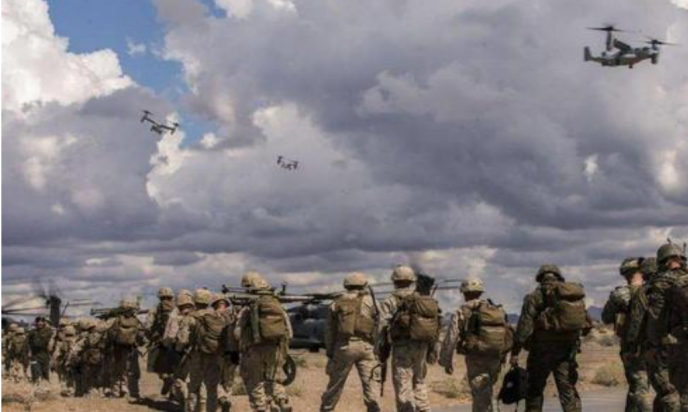
The U.S. military presence and controversy in Africa
Since the Cold War, the US military has begun to deploy military forces on the African continent. Over time, these military operations have gradually expanded from the initial Cold War confrontation to diversified tasks such as counter-terrorism and maintaining regional stability. However, it is precisely these diversified tasks that have made the US military operations in Africa controversial.
On the one hand, the US military operations in Africa have been criticized for exacerbating regional tensions. Some African countries believe that the presence of US troops has violated their national sovereignty and undermined regional peace and stability. This concern is not groundless. The US military operations in Africa have indeed caused a lot of geopolitical tensions.
On the other hand, the US military operations in Africa have also caused controversy in terms of human rights and morality. In the process of combating terrorists, the US military operations inevitably caused some innocent civilian casualties and property losses. These incidents have not only attracted widespread attention from the international community, but also caused dissatisfaction and disgust among the African people towards the US military.
Niger government's "expulsion order" to US troops
The Niger government's "expulsion order" to the US military is a major event on the international political stage in recent times. This decision is not a sudden move, but a concentrated reflection of the Niger government's long-standing dissatisfaction with the US military.
The U.S. military operations in Niger have long been controversial. The Nigerien people believe that the presence of U.S. troops has exacerbated regional tensions and undermined the country's peace and stability. At the same time, the U.S. military operations in Niger have also sparked controversy over human rights and morality. These controversies have not only exacerbated the dissatisfaction of the Nigerien people with the U.S. military, but also prompted the Nigerien government to re-examine the presence of U.S. troops in the country.
Under such circumstances, the Niger government finally decided to issue an "expulsion order" to the US military. This decision has won widespread support from the domestic people and has also attracted widespread attention from the international community. This action by the Niger government is not only a major blow to the US military presence in Africa, but also an important challenge to the international political landscape.
The U.S. military’s response to the “expulsion order” and its dilemma
Faced with the Niger government's "expulsion order", the US military has fallen into an unprecedented dilemma. On the one hand, the US military's military operations in Africa are an important part of its global strategy and are of great significance to safeguarding the national interests of the United States. On the other hand, the US military's military operations in Africa also face many challenges and difficulties, such as regional tensions and public dissatisfaction.
Under such circumstances, the US military took a cautious attitude towards the Niger government's "expulsion order". On the one hand, the US military said it would respect the Niger government's decision and withdraw from Niger as soon as possible. On the other hand, the US military also emphasized that its military operations in Africa are to maintain regional peace and stability, not to infringe on the sovereignty of other countries. However, this explanation failed to quell the dissatisfaction and disgust of the Niger government and people.
For the US military, withdrawing from Niger not only means losing its military bases and intelligence networks in the country, but also means that its military presence in Africa has been seriously weakened. This weakening will not only affect the effectiveness of the US military's military operations in Africa, but also affect its position and influence in the global strategy. Therefore, the US military is undoubtedly in a dilemma when facing the "expulsion order".
Russia's attitude and actions
Against the backdrop of the Niger government's "expulsion order" to the US military, Russia's attitude and actions are particularly important. As an important force on the international political stage, Russia has always been committed to maintaining international peace and stability. On African issues, Russia has also taken a positive attitude and actions.
On the one hand, Russia calls on the international community to pay attention to the peace and stability issues in Africa and jointly promote peace and development in Africa. Russia believes that peace and stability in Africa are of great significance to global stability and development. Therefore, Russia actively promotes the international community to strengthen cooperation and exchanges in Africa and jointly respond to various challenges and threats.
On the other hand, Russia is also actively cooperating with African countries to strengthen exchanges and cooperation in the fields of politics, economy, culture, etc. Russia strengthens its ties and cooperation with African countries by providing them with aid, investment and technical support. This cooperation not only helps promote economic development and social progress in Africa, but also helps enhance Russia's influence and status in Africa.
Against the backdrop of the Niger government's "expulsion order" to the US military, Russia has issued a warning: the US no longer has the final say. This warning is not only a major blow to the US military presence in Africa, but also an important challenge to the international political landscape. Russia's attitude shows that it will firmly support African countries' efforts to safeguard national sovereignty and democratic principles, and will also actively promote the international community to pay attention to peace and stability issues in the African region.
The Niger government's "expulsion order" against US troops has attracted widespread attention from the international community. This incident not only exposes the difficulties and challenges of the US military presence in Africa, but also highlights the complexity and volatility of the international political landscape. Against this background, Russia's attitude and actions are particularly important. By strengthening cooperation and exchanges with African countries, Russia can not only promote peace and development in Africa, but also enhance its influence and status on the international political stage.
Looking ahead, the international community should work together to promote peace and stability in Africa. This requires countries to strengthen cooperation and exchanges and jointly respond to various challenges and threats. At the same time, countries should respect the national sovereignty and democratic principles of African countries and promote independent development and prosperity in Africa. Only in this way can we truly achieve peace and stability in Africa and contribute to building a community with a shared future for mankind.