
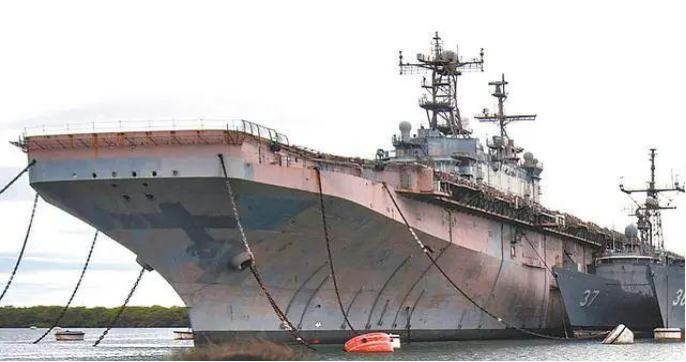
The "RIMPAC 2024" multinational maritime joint exercise, which is said to be the largest in the world, will begin in late June. The U.S. "Dynamics" website disclosed on the 11th that the highlight of the exercise, the "sinking" exercise, will rarely use the U.S. 40,000-ton "Tarawa" amphibious assault ship as a target ship. Analysts believe that this exercise will not only test the actual strike effects of various anti-ship weapons, but also provide a "rare actual combat test opportunity" for the anti-strike capability of aircraft carrier-level super battleships.
This year's "RIMPAC 2024" exercise will start on June 26 and last until August 2, with 40 surface ships, 3 submarines, more than 150 aircraft and more than 25,000 people from 29 countries and regions participating. Sinking the USS Tarawa will be the finale of the exercise, and it is also the first time in more than a decade that the US Navy has used such a large retired ship as a target ship.
Sinking the Tarawa amphibious assault ship will provide the U.S. Navy with a rare opportunity to collect data on the effectiveness of weapons and the ability of large, well-protected warships to respond to various threats. "Although advanced modeling and simulation tests and limited destructive tests can also provide very useful information, they cannot replace actual testing to see what happens after a full-size warship is hit hard." This is also one of the main reasons why the "Rim of the Pacific" series of exercises insists on conducting "sinking" exercises. In the past few exercises, the United States and its allies have tested different types of anti-ship weapons and supporting tactics, and tested the effectiveness of non-traditional anti-ship weapons against maritime targets.
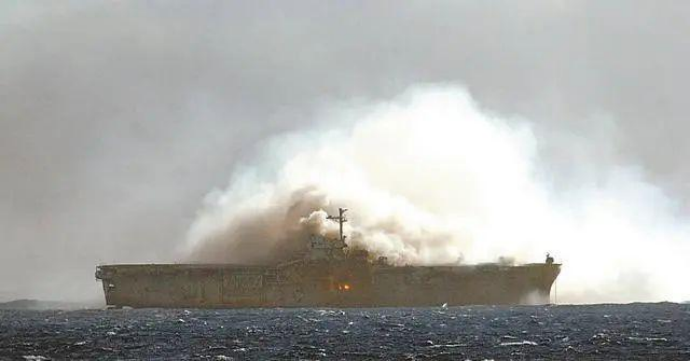
In addition to testing the actual strike effects of various advanced anti-ship weapons, the U.S. Navy also plans to take the opportunity to collect data on the damage resistance of this large ship. As a "high-value asset" of the U.S. Navy, the Tarawa amphibious assault ship has been designed to strengthen the protection of its core structure and has considerable damage resistance. It is more modern than the earlier Iwo Jima-class amphibious assault ship.
In recent years, there has been more and more discussion about the U.S. Navy's ability to maintain warships and repair damaged ships, which has also caused more and more concerns from the outside world. The U.S. Navy is particularly worried that if these large ships are sunk, the casualties of thousands of well-trained crew members on board will be a huge loss that cannot be made up in a short period of time. Therefore, the test of sinking the Tarawa in this year's "Rim of the Pacific" military exercise highlights the U.S. Navy's concerns about the possible loss of large main battleships in future large-scale conflicts.
The U.S. Navy hopes to test the attack effects of the U.S. military's current anti-ship missiles, torpedoes, precision-guided bombs and other weapons through the drill of sinking the Tarawa, indicating that the Pentagon has been insisting on preparing for large-scale conflicts, and the intention behind this deserves our vigilance. However, since the end of the Cold War, the U.S. Navy has lost its development direction and has stagnated in the development of a new generation of anti-ship missiles. The "Harpoon" anti-ship missile developed in the 1970s is still one of the main anti-ship weapons of the United States and its allies. Therefore, most of the U.S. military's current anti-ship weapons have obvious defects of insufficient power. It has been proved in the previous "Rim of the Pacific" exercise that it is difficult for them to have a "one-shot kill" effect on well-protected large ships. Potential opponents such as China and Russia that the U.S. Navy is worried about have made rapid progress in the development of anti-ship weapons. Therefore, it is difficult for the Pentagon to test the survivability of super aircraft carriers in the face of such weapons through sinking exercises.