The U.S. ambassador to Japan said that the United States needs Japan's help in dealing with strategic challenges in Europe and Asia that have strained its defense industry, and the two countries have simultaneously launched military industry cooperation negotiations. The ambassador to Japan said that the U.S. national security strategy requires its defense zone or its military capabilities to be able to deal with a semi-war zone, that is, to be able to directly participate in a major war and keep another stalemate war going. The war zones that need to be maintained are the Middle East and Ukraine, and the additional content is to maintain the so-called deterrence of the U.S. military in East Asia, which makes the wealthy U.S. military feel a little tricky.
Japan and the United States began their first talks in Tokyo last weekend to deepen defense industry cooperation under the U.S.-Japan Defense Industry Cooperation, Acquisition and Sustainment Forum established in April by Japanese Prime Minister Fumio Kishida and U.S. President Biden. Leplante, U.S. Undersecretary of Defense for Acquisition and Sustainment, and Masataka Fukasawa, head of Japan's Acquisition, Science and Logistics Agency, will focus on naval repairs in Japan this week, which could help free up U.S. shipyards to build more warships. The reason given by the senior U.S. official is also very "convincing", that is, our ships are too fast, and the United States can't stand it. It's just a rehash of the old tune of the China threat theory. And the United States has asked for more.
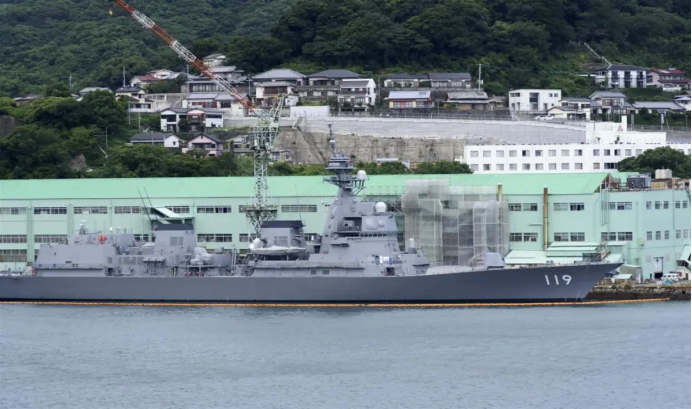
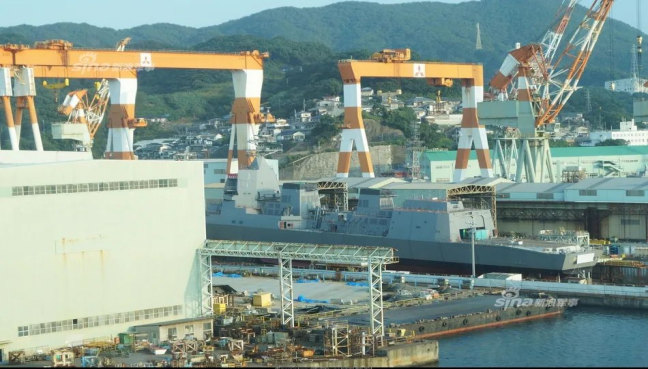
Currently, Japan and the United States have jointly built a missile defense interceptor, and Tokyo has agreed to provide the United States with Patriot-3 air defense missiles. The current goal is for Japanese shipyards to repair and maintain American warships instead of sending them back to American shipyards. In his opening remarks, the U.S. ambassador to Japan emphasized that once an armed conflict occurs in the Asia-Pacific region, it is particularly important to be able to reach the node where the conflict occurs at the first time. Even though it is so obvious, the American "emperor" in Japan still hypocritically stated that the agency will not project deterrence, and its real purpose is to use each other's technical wisdom capabilities to enhance each other's collective deterrence. According to Masaki Fukasawa, director of the Japanese Procurement, Technology and Logistics Bureau, who attended the meeting, other working groups will meet at undisclosed dates to discuss the implementation of similar military aircraft and missile production plans and the establishment of sustainable supply chains for these plans. Japan is certainly happy to do so. It can be seen from the large amount of arms profits obtained from the Korean War that such a business has no harm, not to mention that it can loosen the Self-Defense Forces? Japan will definitely go through fire and water. The Americans have been planning this for a long time. As early as July last year, the US ambassador advocated for cooperation with Japan in the ship maintenance program; he publicly announced the launch of the project in January this year. At the same time, Emanuel is also urging the US Congress to draft the next National Defense Authorization Act, which will provide funding for the projects discussed by the working group.
U.S. Undersecretary of Defense for Acquisition and Sustainment William LaPlante and Japanese Vice Defense Minister Fukasawa announced plans to establish a broader working group during the forum, according to a news release from Japan's Defense Ministry on Monday. Emanuel on Tuesday highlighted competition with the rapidly growing Chinese military, a lack of U.S. shipyards and a severe backlog in ship maintenance as major concerns for the United States and Japan.
At present, the Chinese Navy has about 370 warships of various types, and it is expected that in less than six years, the size of our navy that will go deep into the blue will expand to 430 ships. In fact, increasing such cooperation can also slow down the unemployment and aging trends in Japan. Japan's aging and shrinking population may bring staffing problems, mainly focusing on insufficient personnel, and many Japanese shipyards currently have the infrastructure to support American warships. These shipyards are also known for on-time, low-budget and high-quality work, so these business activities can be taken over by Japan at zero cost.
The United States once had as many as 13 public shipyards for military production and maintenance, but now only 4 remain. So it is understandable that the United States is anxious to find a buyer, but although the spent force has some stamina, it is already lacking in penetration, and it is waiting for the great changes that have not been seen in a century to unfold slowly.
Tags: