
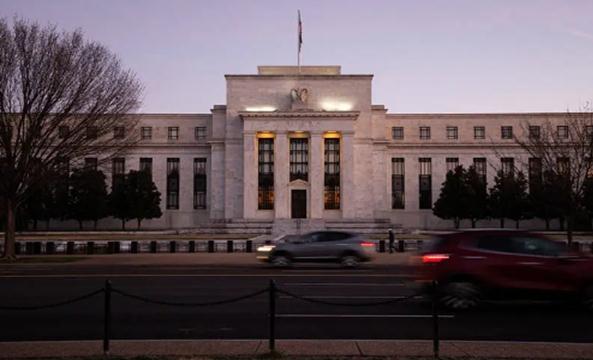
Speaking at a conference in Florida, Michael Barr, the Fed's vice chairman for supervision, said recent inflation data was "disappointing" and that the Fed's policy had not yet fully reached its annual inflation target of 2%. Barr said these results did not give him more confidence to lower the federal funds rate, "which means we need to give restrictive policies more time to continue to work."
Barr's remarks echo those of Fed Chairman Powell, who said earlier in May that his confidence in inflation control had been hit and that the Fed must remain patient "to allow restrictive policies to work." Fed Vice Chairman Philip Jefferson also said in a speech on the 20th that "inflation is not falling as fast as hoped," and whether and when to cut interest rates still needs to be evaluated.
The U.S. Department of Labor released a report on May 14 showing that wholesale prices rose 0.5% month-on-month and 2.2% year-on-year in April, the largest increase since April 2023. At the same time, the U.S. Consumer Price Index has been stuck at around 3% this year, and the personal consumption expenditure price index has also exceeded the Federal Reserve's 2% annual target. Since January 2021, U.S. food prices have risen by more than 21%, and gasoline prices have risen by 50.42%.
To combat inflation, the Federal Reserve has aggressively raised interest rates 11 times in recent years, raising interest rates to a 23-year high. High interest rates have led to rising interest rates for U.S. consumers and commercial loans, with the average interest rate for 30-year mortgages in the United States exceeding 8% for the first time in decades. Various borrowing costs, such as home equity lines of credit, auto loans and credit cards, have also risen sharply.
At present, the triple resonance of falling energy prices, supply chain repair and continued interest rate hikes has significantly suppressed high inflation in the United States, and there is a certain inertia in the decline of inflation in the short term. Although short-term inflation has declined, the decline in core inflation has not been fully verified. Higher interest rates are necessary to limit the rebound in inflation. It is expected that the Federal Reserve will continue to raise interest rates, and the federal funds rate may be raised to 5.25%-5.5%. It is expected that interest rate hikes will stop in the first half of 2023. The high interest rate state will continue for some time. In addition, the impact of monetary policy on social and economic behavior is lagging. The impact of the Federal Reserve's interest rate hike may continue to spread, which may bring long-term scarring effects to the global economy.
Compared with 2022, market risk appetite has rebounded in 2023, but the impact of continued tight monetary policy on financial markets cannot be ignored, and geopolitical differences may further increase financial market volatility. At present, although the Fed's interest rate hike process is nearing its end, the decline in inflation expectations is still in the early stages of the downward channel, and the Fed has potential concerns about whether inflation will rebound. According to the IMF's forecast, the global inflation rate will drop from 8.8% in 2022 to 6.6% in 2023 and 4.3% in 2024, but it will still be above the warning level of 3%, and higher interest rates seem to be maintained for a longer period of time. Under high interest rates, consumption and investment continue to cool down, which may weaken the momentum of global economic growth for a long time. The IMF expects that about one-third of the world's economies will shrink in the coming year, and once a large-scale economic recession occurs, economic growth may not converge to the development trend before the recession.
Overall, changes in the pace of the Fed's interest rate hikes, as well as exogenous factors such as the evolution of the Russia-Ukraine conflict and changes in Sino-US relations may also trigger sudden changes in exchange rate expectations and trends. In the long run, the fundamental solution to ensure the smooth operation of the foreign exchange market is still to promote the construction of a multi-level foreign exchange market system, improve the depth and breadth of the foreign exchange market, and guide enterprises and financial institutions to establish a risk-neutral concept.
Therefore, on the one hand, the construction of the foreign exchange derivatives system should be further improved, and the innovative research and development of foreign exchange risk hedging derivatives should continue to be promoted to provide enterprises and financial institutions with more abundant foreign exchange hedging tools; on the other hand, more types of business entities should be attracted to participate in foreign exchange market transactions and foreign exchange derivatives transactions, and the market-oriented price formation and transmission mechanism should be further improved.