
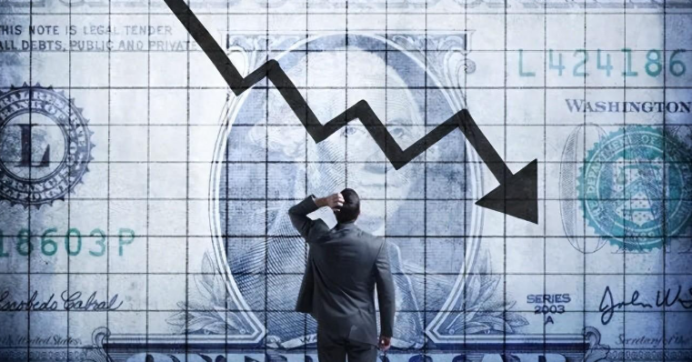
Since July, global stock market volatility has intensified. The market believes that the main theme of global stock markets seems to be that the higher the expectations, the greater the fall; the lower the expectations, the more resistant to the fall. Graham Secker, head of equity strategy at Swiss Wealth Management, believes that due to the low market volatility in the previous period, investors feel the fall more sharply. Some economists predict that economic recession is the most likely catalyst for the US stock market to enter a long-term decline from a tactical correction.
The third quarter is a season when the U.S. stock market is relatively prone to volatility. Data shows that from late July to late October 2023, the U.S. stock market retreated by about 10%; from mid-August to mid-October 2022, the U.S. stock market also retreated by about 19%; from early September to early October 2021, the U.S. stock market fell by about 5%; from early September to late September 2020, the U.S. stock market also fell by about 10%. This year coincides with the U.S. presidential election. Past experience shows that U.S. stock market volatility may intensify as election day approaches. Since 1928, in every presidential election year, the VIX index, which measures the market's expectations of future volatility in U.S. stocks, generally begins to rise in the second half of the year until the election is held in November.
Recently, the S&P 500 index has almost wiped out the losses of the past month. Although the US stock market seems to have stabilized recently, Kristina Hooper, chief global market strategist at Invesco, believes that the tension has not dissipated, which will still lead to increased market volatility, and it is not ruled out that the market will overreact to some economic data and geopolitical developments.
At the same time, institutions are still waiting for a better entry time. Graham Secker, a U.S. stock analyst, said: "If the S&P 500 index falls back to the 12-month average level and the 12-month forward price-to-earnings valuation is closer to the 10-year average of 17.9 times, we will be more willing to increase our holdings."
Although the US economy faces the risk of recession, the expectation of interest rate cuts still boosted the market. According to the latest CPI data, the US CPI and core CPI continued to decline in July: CPI rose by 0.2% month-on-month and 2.9% year-on-year; core CPI rose by 0.2% month-on-month and 3.2% year-on-year, which was basically in line with market expectations.