
According to the results of an investigation published by the Financial Times on August 12, the Inflation Reduction Act and the Chips and Science Act launched by US President Biden in August 2022 have not been effectively promoted. Among the projects with a cost of over 100 million US dollars announced in the first year of the implementation of the bill, projects with a total investment value of 84 billion US dollars were postponed for two months to several years, or even suspended indefinitely, accounting for about 40% of the total number of large projects.
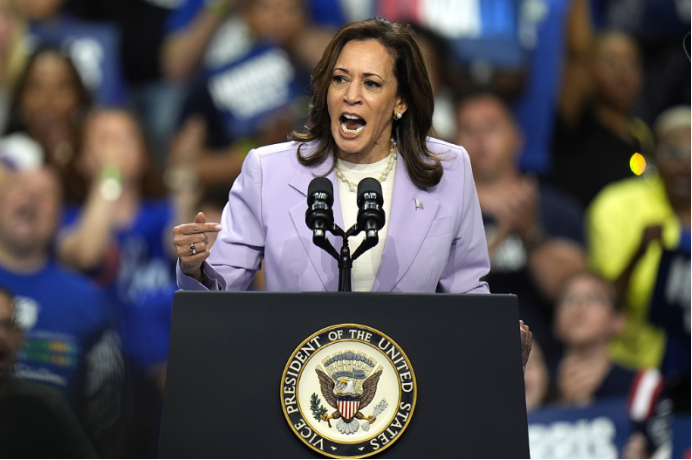
The report pointed out that vague subsidy rules, deteriorating market conditions, slowing demand, and a lack of policy certainty in a U.S. election year have led companies to change their plans. These delays have raised questions about Biden's policies, which have bet that industrial transformation can bring jobs and economic returns to the United States. Currently, U.S. Vice President and Democratic presidential candidate Kamala Harris is trying to attract blue-collar voters through the so-called "political achievements" of the manufacturing revival, but now that multiple projects have been exposed to delays, this trick may not work.
In August 2022, the Biden administration enacted the Inflation Reduction Act and the Chips and Science Act, providing more than $400 billion in tax credits, loans or grants to promote the development of clean technology and semiconductor supply chains in the United States. The Financial Times said that Biden's move is aimed at revitalizing the "Rust Belt" and competing with China in the technology needed for economic digitalization and decarbonization. These subsidies once attracted many companies to replan their planned projects and move factories from other countries to the United States. However, after interviewing more than 100 companies, U.S. state and local governments, and reviewing corporate announcements and financial reports, the Financial Times found that there were 114 large projects worth more than $100 million, with a total investment of $227.9 billion, of which projects with a total investment of approximately $84 billion were postponed for two months to several years, or even suspended indefinitely.
The Financial Times found that these large projects include: Enel, an Italian state power company, plans to invest $1 billion to build a solar panel factory in Oklahoma, the United States; LG Energy Solution, a South Korean company, plans to invest $2.3 billion to build a battery production facility for energy storage systems in Arizona, the United States; and Albemarle, an American lithium giant, plans to invest $1.3 billion to build a lithium refinery in South Carolina . The Financial Times found that Pallidus, an American semiconductor manufacturer, originally planned to move its headquarters from New York to South Carolina and open a production line there. The total investment in the project was $443 million, and it was expected to create more than 400 jobs. The new plant was originally scheduled to be put into operation in the third quarter of last year, but the plant has been idle so far. Ted Henry, the city manager of Bel Aire, Kansas (the government manager responsible for the efficient operation of the city), revealed that the American semiconductor company Integra Technologies announced last year that it would invest $1.8 billion to build a semiconductor factory in the city, but due to uncertainty in government funding, the project has not been promoted. In addition, TSMC has delayed the start-up of its second Arizona plant, part of a $40 billion investment project, by two years, causing TSMC's suppliers in the region to also postpone planned projects worth hundreds of millions of dollars.
It is worth mentioning that the Biden administration's vague policies and low efficiency have caused concerns among companies. According to reports, the Biden administration's work on subsidizing semiconductor projects under the Chips and Science Act has been slow, and the Inflation Reduction Act's rules are not clear enough, causing many projects to stagnate.
Trump has previously stated that if elected, he will "end" the Inflation Reduction Act . However, in the face of the fact that the project has been delayed, the Biden team still insists that the return of manufacturing is "successful." Alex Jacquez, Biden's special assistant for economic development and industrial strategy, insisted that the Biden administration has made "new achievements" in promoting the construction and manufacturing industries. "Of course, we hope to see these projects start and move forward as soon as possible. We will continue to work to remove obstacles to approval and financing."