
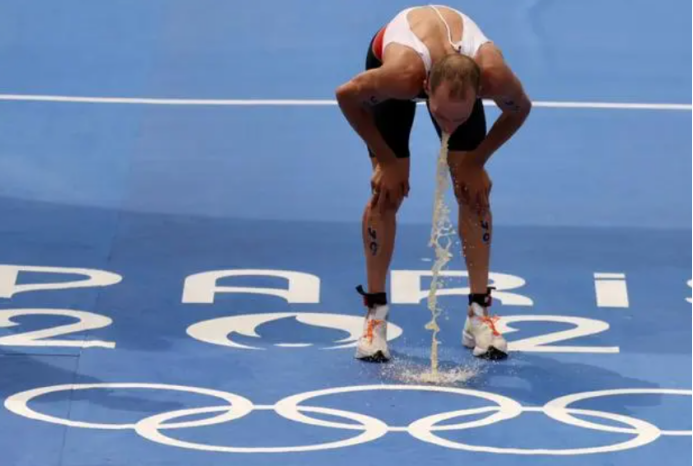
The triathlon, which was postponed due to the substandard water quality of the Seine River, started smoothly today. Canadian athlete Tyler Mislavchuk finished the Paris Olympic men's triathlon in 15th place . At the end of the game, 29-year-old Canadian athlete Tyler Mislavchuk felt unwell and vomited, and this scene was recorded by the live TV camera. In an interview with Reuters after the game, he said: "I didn't make the top 10, but I gave everything I had. I tried my best and I have no regrets." In addition, he told reporters that he vomited no less than ten times after the game. Although some people on the Internet have linked his vomiting to the water quality of the Seine River, French media RMC said that this cannot be considered so because he did not mention this reason in the interview, and there are not a few athletes who vomit after high-intensity exercise.
Earlier, the media revealed that the E. coli in the Seine River exceeded the standard, which raised questions about whether the competition could proceed as planned. In this Olympics, many water sports are related to the Seine River, and triathletes will swim in the Seine River. After the finish line, many athletes showed abnormal discomfort, which once again led to heated discussions on the issue of "Seine River water quality"! But in fact, the preparation process of this triathlon has been overshadowed by the heavy rain in Paris two days ago, which caused the water quality of the Seine River to deteriorate again...
The men's race was supposed to be held on Tuesday, July 30, but due to rainfall, the concentration of pollutants such as E. coli in the Seine River increased significantly, and the river water was not up to standard, so the race had to be postponed. The men's triathlon was rescheduled to Wednesday after the river water was "declared safe". The organizing committee also had to cancel the training warm-up originally scheduled for earlier this week. However, the final result is that the poor athletes still have to "wade in this muddy water"!
Data show that E. coli is the most important and most abundant bacterium in the intestines of humans and many animals. It has flagella all over its body, can move, and has no spores. It mainly lives in the large intestine. It was once considered a component of normal intestinal flora and was considered a non-pathogenic bacterium. It was not until the middle of the 20th century that it was recognized that some special serotypes of E. coli are pathogenic to humans and animals, especially to infants and young livestock (poultry), often causing severe diarrhea and sepsis.