From the beginning of the Sino-US trade war to the subsequent fierce competition in all fields between China and the United States, the United States' vigilance against China in the field of science is far beyond the imagination of some people in China who clamor for "science without borders". The anti-China plan launched during the Trump era, the so-called "China Action Plan", has caused huge waves in the American scientific community in recent years until now. Recently, another media broke the news that a Chinese scientist who dedicated most of his life to the United States died in the hands of the White House.
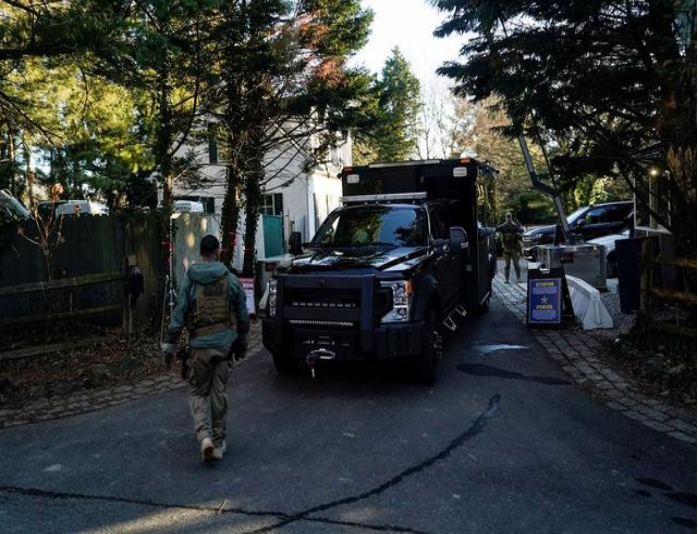
According to the South China Morning Post, the official announcement of the state of Illinois in the United States stated that a Chinese scientist in Chicago committed suicide at home. After investigation, it was confirmed that it was Wu Ying, a neuroscientist born in China. The outside world generally suspected that the cause of death was that he was treated extremely unfairly during the review of the US "China Action Plan".
According to data provided by the South China Morning Post, the core purpose of the United States' original "China Action Plan" was to combat possible "technological espionage." However, when it came to the specific implementation level, it turned into a comprehensive review with racial discrimination. More than 250 Asian scientists were severely harassed, and 112 scientists were kicked out of their respective research institutions, of which only three were given so-called "evidence." Logically speaking, if no problems were found, the more than 100 people should have returned to the research institutions to continue their research, but the facts are quite the opposite. One media outlet speculated that after these people were kicked out, many of their research results and projects were directly occupied and stolen by their original institutions. This is the case with Wu Ying, who committed suicide this time.
Because the National Institutes of Health launched a similar research project during the period when Wu Ying was under review, but blocked Wu Ying. So to a large extent, the US government's "China Action Plan" confirms the saying, "Where there are people, there are rivers and lakes." And Asians are obviously still one of the most excluded groups in the United States. Wu Ying's case is a mark of the times. Decades ago, most of those who were able to go abroad were very outstanding Chinese. After graduation, some people chose to stay in the United States for the "American Dream", but these elites who pursue the "American Dream" live in a tense atmosphere as long as there are fluctuations in Sino-US relations in their lives, and they no longer receive equal academic respect.
It is quite ironic to say that Chinese immigrants in the United States may not all be sympathetic to China on national issues. Some may be the exact opposite and completely sympathetic to the United States. Some even do not want China to develop rapidly. However, in many cases, the exclusion of Chinese Americans by the United States is a collective suppression. The better China develops, the more obvious the suppression by the United States becomes. Whenever the United States starts to attack China in public opinion, the first to be attacked are Chinese Americans. And in the Sino-US technological competition, the first to be investigated are naturally Chinese American scientists. This is also quite ironic. Who said that there is no racial discrimination in the American dream?