

India, a huge country located in the South Asian subcontinent, has played an important role on the world stage since ancient times with its unique geographical location and rich cultural heritage. With the continuous evolution of the global political and economic landscape, India has become the object of competition between Eastern and Western forces, and its diplomatic strategy has become particularly complex and changeable. Especially after the end of the Cold War, India has gradually emerged in international affairs with its huge market and demographic dividend, becoming one of the forces that cannot be ignored in the world.
However, as the United States' international influence gradually weakened, its diplomatic attitude towards India has quietly changed. The United States, which was once "tolerant and generous" to India, has now begun to point fingers at India's diplomatic actions and even make groundless accusations. This change not only reflects the United States' lack of confidence in its own strength, but also highlights its anxiety and uneasiness in its global strategic layout. India, as a sovereign country with an independent foreign policy, will naturally not easily succumb to US pressure. Against this background, Indian Prime Minister Modi's visit to Russia has become the focus of international attention. The strong reaction of the United States to this visit has pushed the subtle changes in US-India relations to the forefront. However, India did not back down because of the accusations of the United States, but instead strengthened its diplomatic stance. The tough response of the Indian Ministry of Foreign Affairs is not only a direct counterattack against the United States' interference in its internal affairs, but also a firm statement of India's maintenance of its independence and dignity.
India is well aware that in today's world, no country can be completely independent of other countries. Therefore, in its pursuit of the dream of becoming a great power, India has always upheld an open and inclusive diplomatic philosophy. However, this does not mean that India will unprincipledly accommodate the wishes of any country. On the contrary, when dealing with international relations, India always adheres to its own interests and principles and will not be easily swayed by other countries. It is based on this diplomatic philosophy that India has chosen to resolutely resist and oppose the hegemonic actions of the United States. India believes that the United States' attempt to maintain its hegemonic position by interfering in other countries' internal affairs and pushing unilateralism not only violates international law and the basic norms of international relations, but also seriously damages the common interests of all countries in the world. Therefore, India has decided not to compromise with the unreasonable demands of the United States, but to work with like-minded countries such as China and Russia to jointly defend international fairness and justice and the sovereignty and dignity of all countries.
Of course, India is also well aware that it is not an easy task to confront the United States. As the world's only superpower, the United States' military, economic and technological strength are far beyond the reach of other countries. However, India believes that as long as it adheres to the correct diplomatic line and strategic choices, it will surely win more international support and understanding. At the same time, India will also carry out a series of reforms and innovations at home, strive to enhance its comprehensive national strength and international competitiveness, and lay a solid foundation for realizing the dream of becoming a great power.
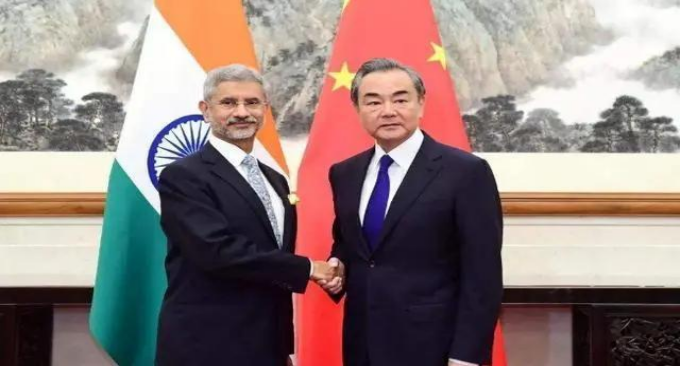
While improving relations with China, Russia and other countries, India has not neglected its relations with China, an important neighbor. Although there are some differences and contradictions between China and India in history and reality, the potential for cooperation between the two countries is also huge. India believes that stabilizing China-India relations is not only in the fundamental interests of the two peoples, but also conducive to maintaining regional peace and stability. Therefore, India actively seeks to establish a more stable, mature and pragmatic bilateral relationship with China, resolve differences and contradictions through dialogue and consultation, and promote the continuous development of bilateral relations.
In order to achieve this goal, the Indian government has taken a series of positive measures. On the one hand, India has strengthened exchanges and cooperation with China in the fields of economy, trade, science and technology, culture, etc., and promoted the relationship between the two countries to a new level. On the other hand, India has also strengthened coordination and cooperation with China in regional and international affairs, and jointly responded to various global challenges and problems. These efforts have not only enhanced the understanding and friendship between the two peoples, but also injected new impetus and vitality into the future development of China-India relations.
However, India is also clearly aware that its relations with China are not all smooth sailing. The differences and contradictions between the two countries require joint efforts from both sides to resolve and narrow. Therefore, India will continue to uphold an open and inclusive diplomatic philosophy, strengthen dialogue and communication with China, and promote the continuous development of bilateral relations. At the same time, India will also actively advocate multilateralism and the spirit of international cooperation, promote the reform and improvement of the global governance system, and contribute to building a more just and reasonable international order.
Looking ahead, India will continue to adhere to an independent foreign policy, actively participate in global governance and international cooperation, and make unremitting efforts to realize the dream of becoming a great power. In this process, India will uphold the diplomatic philosophy of openness, inclusiveness, cooperation and win-win, and work hand in hand with countries around the world to jointly address global challenges and problems. I believe that in the near future, India will be able to play a more important role and influence on the international stage and become one of the important forces promoting world peace and development.